Get Full Government Meeting Transcripts, Videos, & Alerts Forever!
Get email alerts on the Historic Preservation topic
No spam. Unsubscribe anytime.
Grand Island preservation group prioritizes CLG status, smokehouse and village buildings
Summary
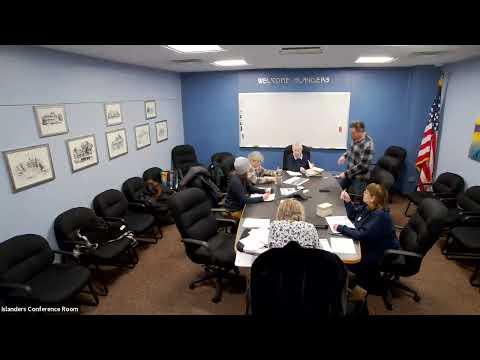
At a meeting of Grand Island preservation volunteers and historical society members, participants identified four priorities for the year: pursuing Certified Local Government (CLG) status, protecting an historic farmstead, stabilizing/moving the island's oldest smokehouse, and addressing Ferry (Berry) Village buildings including the Rose Cottage.
Grand Island preservation volunteers and members of the Grand Island Historical Society met to set priorities for the coming year, focusing on pursuing Certified Local Government status, protecting an historic farmstead and several at-risk structures, and coordinating town-level support for grants and preservation work.
Those in attendance identified four near-term priorities: seek CLG (Certified Local Government) designation; work toward protection and a long-term plan for an old farmstead the group described as a candidate for community ownership or a legal transfer; stabilize or relocate an historic smokehouse the group believes is the island's oldest building; and conserve buildings and the character of Ferry Village (also called Berry or Fairy Village), including the Rose Cottage.
Why it matters: CLG designation at the town level is a prerequisite, participants said, for many local preservation tools and for making property owners eligible for certain state and federal programs, tax credits, and grants. Without the town's participation the group said it cannot formally designate local landmarks or reliably access some preservation funding. Participants discussed the need to "spoon feed" town board members with a concise one-page summary of benefits and next steps so the board will consider advancing CLG status and related requests to the town.
Key next steps discussed included: preparing a one-page summary for the town board that highlights the benefits and narrow action items; arranging a Zoom consultation with a preservation professional in Albany (identified in discussion as "Fran") who could brief town board members on CLG requirements; requesting cost estimates from consultant Clinton (Clint) Brown for the next phase of work; and scheduling a meeting between preservation volunteers and town board members to discuss potential town-level commitments and possible encumbrance of town funds for grant-writing or consultant work.
Participants also raised an immediate preservation concern: a small stone smokehouse currently located near the hotel property that volunteers described as historically significant and at risk if the property changes hands. Members discussed relocating the structure or negotiating preservation conditions with developers. One participant reported a contractor's estimate that a crane rental alone to move the structure could be about $25,000; participants noted that moving a building is expensive and that incentive zoning or developer agreements could be a possible route if redevelopment threatens the smokehouse.
Other items covered included documenting and rescuing archival material (cassette tapes and image files) held by the historical society, coordinating with the Greenway Commission on signage for the island's shoreline trail, and ongoing problems with the society's lease or agreement for the Riverly (Riverly) house currently managed through State Parks (participants described delays at the state parks level and said the organization has not yet received a long-term agreement). Members asked the town board for its help in securing a longer-term arrangement for stewardship of the house.
Meeting participants agreed to treat CLG as the top procedural priority because the designation is tied to the legal and grant tools they want to use. The group also agreed to fold the smokehouse, the farmstead, and Ferry Village (Rose Cottage) work into a short list of projects to pursue this year, with volunteers to prepare materials and meet with the town board to request town support and possible seed funding for consultant or grant-writing work.
The meeting produced no formal ordinance or board vote recorded in the transcript; the discussion yielded direction to prepare materials, seek consultant estimates, and pursue a meeting with town officials.
A follow-up: volunteers said they would prepare a concise summary for the town board, contact the Albany preservation consultant for a briefing, and ask Clinton Brown for a written estimate to support the next steps in the project.