Get Full Government Meeting Transcripts, Videos, & Alerts Forever!
Get email alerts on the Placemaking topic
No spam. Unsubscribe anytime.
Waukesha council adopts William Street placemaking plan to guide future improvements
Summary
The Waukesha Common Council unanimously accepted a placemaking plan for William Street that lays out branding, short-term low-cost improvements and a long-term streetscape vision intended to help the city compete for grants and spur private investment.
The Waukesha Common Council unanimously accepted the William Street Placemaking Plan after a presentation by consultants from Ayers that outlined short-term branding projects and a long-range streetscape concept.
The plan, led by Melissa Hunt of Ayers, is intended as a nonbinding guide that would help the city and property owners pursue grants and prepare for future street reconstruction. “The intent was to think about what we could do short term, make sure we are engaging those property owners, business owners in the area, and then think about a long term plan over the next 10 to 20 years,” Hunt said during the presentation.
The council and the consultant stressed that the plan does not commit the city to spending. Hunt said the plan is designed to position the neighborhood for external funding, including competitive grants, and to create “shovel-ready” projects that could score well in grant reviews. Jennifer (city staff) and Alex (public works) noted existing grant programs — including Community Development Block Grant funds used downtown — that could be tapped for lower-cost items such as banners, wayfinding and branding.
The consultant presented three preliminary design concepts and a final concept narrowed to two options. One option included a proposed community garden on privately owned land; the other left that parcel open for other uses. Hunt described a series of low-cost interventions — signage, banners, lighting and small streetscape furnishings — intended to increase pedestrian activity and support local businesses while reserving larger utility and streetscaping work for a future capital improvement plan cycle.
Consultants estimated the costs for the smaller-scale placemaking items at the meeting as beginning “a few thousand dollars” but did not provide a definitive upper figure during the presentation; they emphasized that major streetscape changes, underground utility work and burying power lines would be substantially more expensive and would require inclusion in the city’s CIP. Hunt said the project team produced 12–13 iterations of the plan and worked with a branding firm to produce logos and marketing concepts the city can use.
Business owners spoke in support during the public-comment period. Jimmy Decolias, who identified himself as owning multiple properties on William Street, said he and other business owners “are in favor of the upcoming proposal.”
Council members and staff asked several implementation questions. Dean Lemke confirmed Carroll University was engaged in the process; Hunt said a university representative attended business and property-owner meetings. Alderperson Manion asked about parking; consultants and staff said parking was a major discussion point during design and that the final concept would reduce on-street parking by about eight spaces but rely on nearby lots and improved wayfinding to handle demand. “One of the things we identified is a way we could better have wayfinding signs because there is a city parking lot just across the street on Grand behind Taco John’s that has about 50 spots,” a staff member said.
Staff also described financing tools available to property owners. Jennifer said a Central City storefront loan program, initially funded with ARPA dollars, remains available as loans are repaid; downtown façade grants are also a possible source of funding, and the city had applied to the Wisconsin Economic Development Corporation for a small business development grant with results expected by the end of the month.
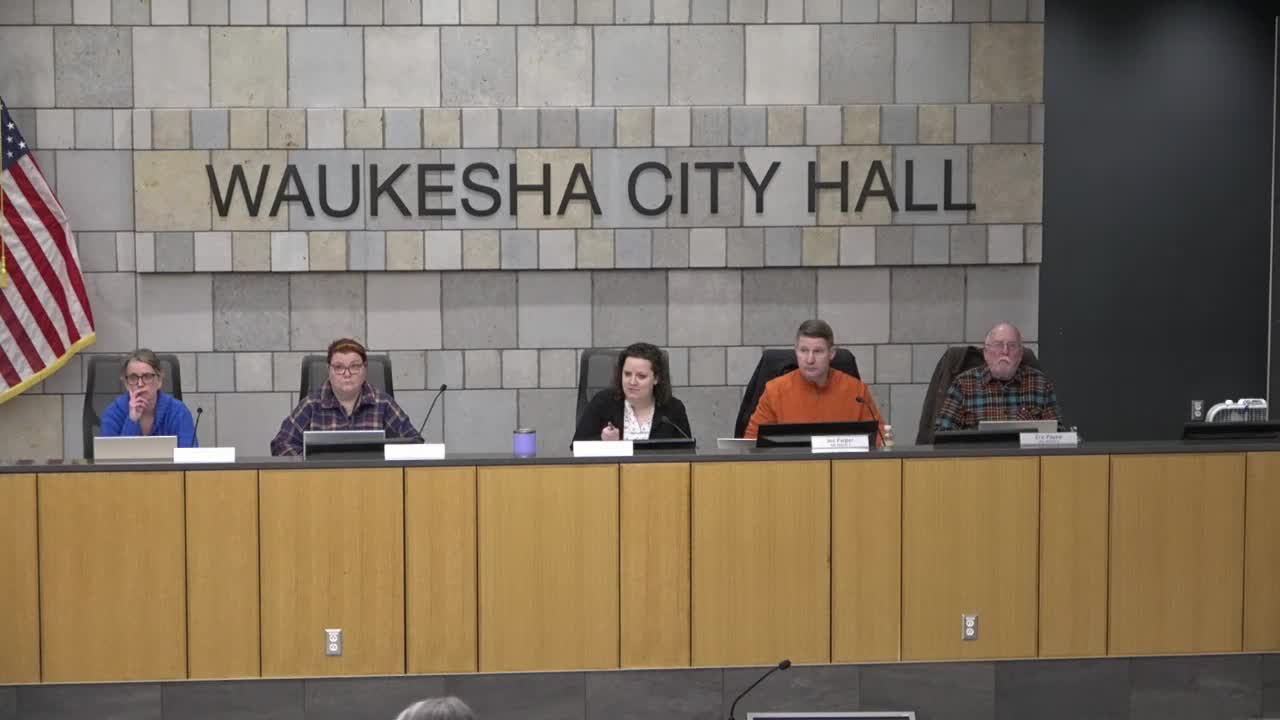
The council voted to accept the plan after deliberation. The motion to accept was made by Alder President Piper and seconded by Alderman Eric Payne; the vote passed unanimously.
The plan will be available in the council packet and the project team recommended city staff pursue grant opportunities and coordinate any future streetscape work with the Department of Public Works and the city’s five-year planning process.