Get Full Government Meeting Transcripts, Videos, & Alerts Forever!
Get email alerts on the Special Purpose Depository Institutions topic
No spam. Unsubscribe anytime.
Committee hears amendments to special-purpose depository law; discussion continued to Wednesday
Summary
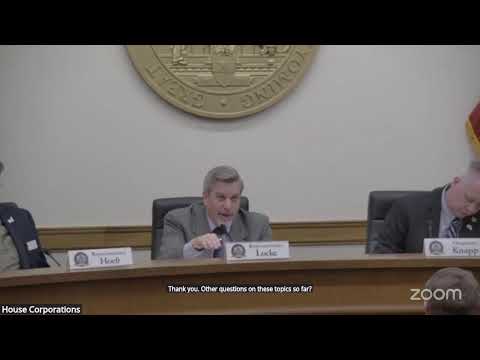
Senate File 95, proposing changes to Wyoming's special-purpose depository institution (SPDI) statute, drew an extended presentation from the floor sponsor and technical questions from the banking commissioner; the committee did not complete consideration and will resume the bill on Wednesday.
Senate File 95, legislation to amend Wyoming's special-purpose depository institution (SPDI) statute, was presented to the Corporations, Elections & Political Subdivisions Committee and drew detailed testimony from the sponsor and the state banking commissioner. The committee recessed consideration and agreed to resume the bill on Wednesday for additional testimony and questions.
Senator Roth, the bill sponsor, told the committee the legislation codifies several changes developed by the interim blockchain select committee and by stakeholders. Among the main changes Roth described were: a statutory pathway for an SPDI to convert to a state-chartered trust company; clarifications to allow retail (consumer) customers to use SPDIs without relying on circular "incidental" exemptions; and removal of a special supervisory fee that applied to digital-asset holdings. "These institutions are 100% reserve. There is no lending," Roth said as he outlined the statute and described why some SPDIs might prefer a trust charter for custody-only business.
Jeremiah Bishop, Wyoming state banking commissioner, testified on regulatory and technical implications. Bishop said a conversion from an SPDI to a trust company would primarily require winding down deposit-taking activities and returning customer deposits so the chartered entity becomes custody-only. Bishop highlighted capital and consumer-protection distinctions between SPDIs, trust companies and traditional banks and said conversion to a bank would raise separate, complex questions, including potential Federal Deposit Insurance Corporation involvement. "If you collect deposits, you're a bank," Bishop said, adding that a trust company has a different risk profile and lower capital pledge thresholds.
Committee members asked about FDIC insurance, consumer protections for retail customers and how many SPDIs operate in the state. Senator Roth and Commissioner Bishop said Wyoming has multiple chartered SPDIs and a mix of operating entities; Roth said the state "has 4 of these institutions currently operating," and Bishop later explained that charters and operational status vary and that conversions would be handled on a case-by-case basis with rulemaking and oversight.
The committee did not vote on the bill. Chairman Knapp proposed resuming the discussion Wednesday to allow additional stakeholders and the banking commission time to respond; Senator Roth agreed. The committee will reconvene the topic at its next scheduled meeting.