Get Full Government Meeting Transcripts, Videos, & Alerts Forever!
Get email alerts on the Registered Agents Records topic
No spam. Unsubscribe anytime.
Committee rejects bill to let local officials obtain registered-agent records without subpoena
Summary
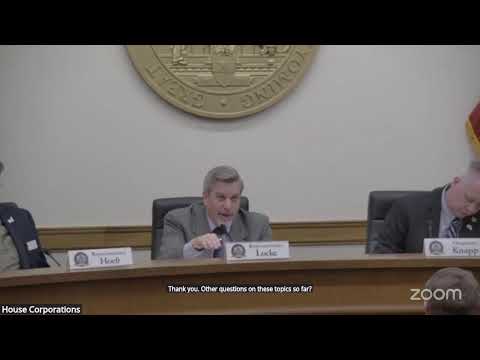
The Corporations, Elections & Political Subdivisions Committee voted 1-8 to defeat Senate File 59, a bill that would have allowed county assessors, treasurers and clerks to obtain information from registered agents for official investigations without requiring subpoenas or affidavits in all cases.
The Corporations, Elections & Political Subdivisions Committee voted 1-8 to defeat Senate File 59, a bill that would have allowed certain county officials expanded access to records held by registered agents.
The bill failed on a roll call after testimony from county assessors and the secretary of state over whether the measure would help identify fraudulent corporate filings or improperly expose confidential registered-agent information. Minority Leader Yin moved the bill; Representative Ekt seconded the motion. The committee recorded one yea and eight nays; the motion failed.
Proponents said the change would help local officials identify and respond to a recent surge of out-of-state corporate filings that local offices say can mask where businesses are actually operating. Tara Berg, who identified herself in committee testimony as the Fremont County assessor, said local staff had found what she described as an influx of filings with nonresidential or registered-agent addresses that made it difficult to determine whether businesses had taxable property in Wyoming. "When we first started this a year and a half ago, we had an influx of approximately 800 corporate filings that transferred from Nevada," Berg told the committee. Berg described sending notices seeking personal-property renditions to those addresses and sometimes receiving no cooperation from the registered agent.
Malcolm Mervin, identified as president of the County Clerk's Association, asked that county clerks be added alongside assessors and treasurers as officials who could access records under the bill. "We would ask that the county clerk be afforded similar tools to our partners, the assessor and the treasurer," Mervin said during testimony.
Opponents, including Wyoming Secretary of State Chuck Gray and staff, argued the existing statutory affidavit-and-dissolution process and public records already provide the tools assessors and other officials need and that broadening access to private registered-agent information would raise confidentiality and procedural concerns. "We have only received one direct complaint from them that actually resulted in a dissolution," Gray said, adding that the Secretary of State's office has dissolved entities when the submitted affidavits and evidence meet legal standards. Office staff and Gray said assessors and treasurers should notify the Secretary of State's office immediately when they suspect address fraud and work collaboratively to pursue dissolutions under the existing process.
Committee members debated two amendments to narrow or expand who could obtain information. An amendment to limit access to information "for an investigation related to official business" was offered but failed. A separate amendment to add "county clerk" to the list of officials who could obtain records was proposed and then defeated. After debate the committee took a roll-call vote on Senate File 59: Representatives Locke, Heft, Johnson, Lucas, Webb and Weber voted no; Minority Leader Yin voted aye. An absentee vote recorded for Representative Brown was no; Chairman Knapp recorded no. With one aye and eight noes, the committee did not pass the bill.
The vote leaves intact the existing statutory process requiring an affidavit from a person at an address before the Secretary of State proceeds with dissolution in many cases, and the Secretary of State urged continued direct communication between county officials and his office.
The committee moved on to other agenda items after the vote.