Get Full Government Meeting Transcripts, Videos, & Alerts Forever!
California hearing highlights SB 54 rollout, dispute over producer-led programs and enforcement
Summary
State officials, industry groups, environmental advocates and local governments told a California Senate informational hearing that Extended Producer Responsibility (EPR) can drive reductions in waste and redesign of products, but they disagreed about program design, enforcement and who should oversee implementation of new programs such as SB 54.
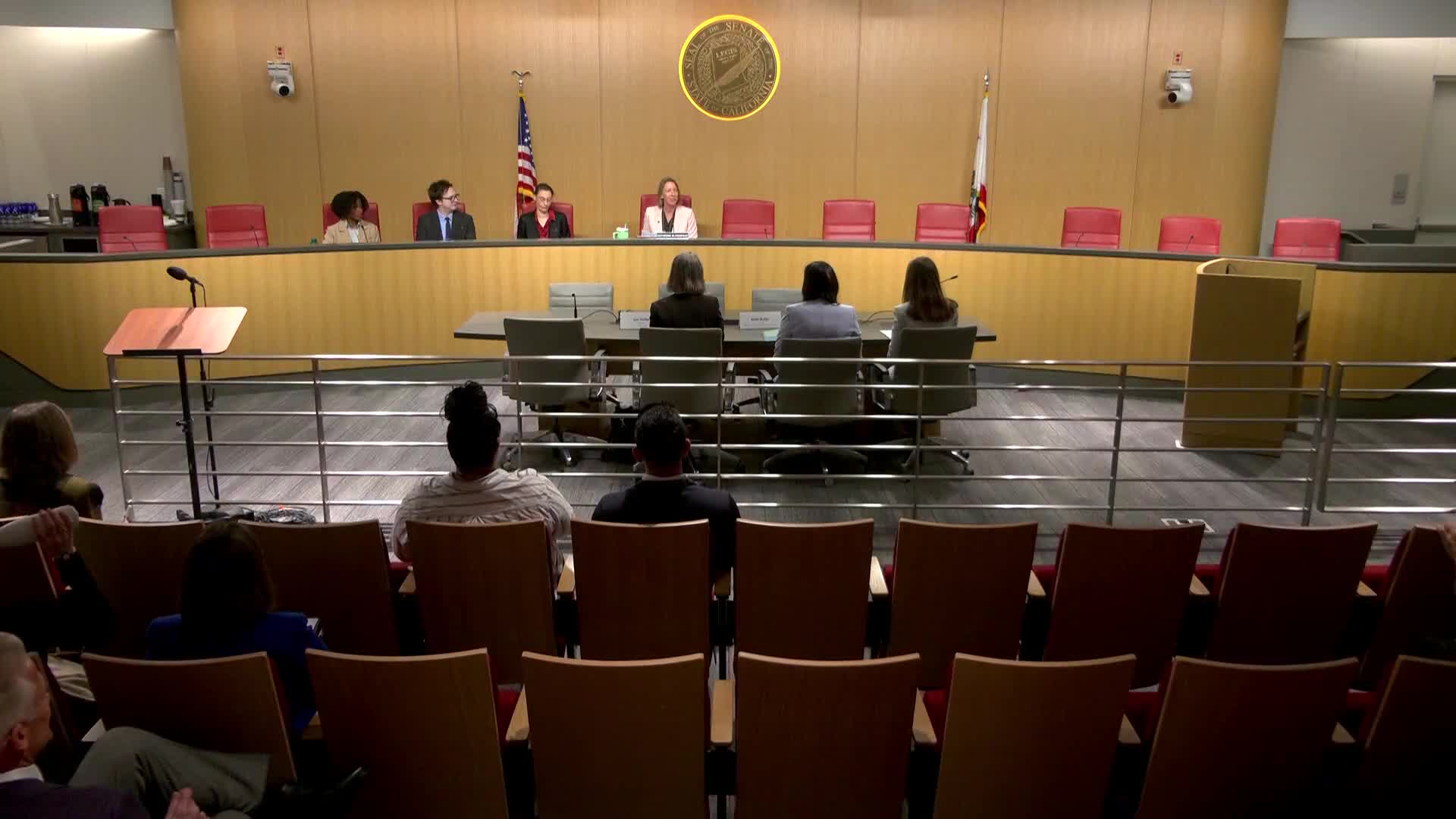
The California Senate Environmental Quality Committee convened an informational hearing on Extended Producer Responsibility (EPR) programs where state officials, industry representatives, environmental groups and local governments discussed the state's recent EPR laws and the challenges of implementation.
Madam Chair opened the hearing by saying the session would address "Extended Producer Responsibility in Action, Policy Progress and Pitfalls" and that she was "a strong believer that EPR can drive real world systems level change and help the state reaches waste diversion and recycling goals." The chair noted that regulations implementing SB 54 are "top of mind" and said the regulations "must be authorized by March 8," a deadline she urged be met so the law can begin operating.
The hearing brought into relief three core fault lines: how prescriptive statute and regulations should be versus relying on producer responsibility organizations (PROs) to implement programs; how enforcement should be structured and resourced; and which products are suitable for EPR.
Zoe Heller, Director of the California Department of Resources, Recycling and Recovery (CalRecycle), described CalRecycle's role in implementing EPR and the agency's checklist of elements for successful programs. "EPR makes industry responsible for funding these programs," Heller said, adding that California's EPR programs have recovered "34,000,000 gallons of paint, 11,000,000 mattresses, 1,000,000,000 pounds of carpet" since inception. She summarized key program components the agency expects: clear roles and responsibilities, enforceable performance standards (including "free and convenient collection sites"), reporting and auditing…
Already have an account? Log in
Subscribe to keep reading
Unlock the rest of this article — and every article on Citizen Portal.
- Unlimited articles
- AI-powered breakdowns of topics, speakers, decisions, and budgets
- Instant alerts when your location has a new meeting
- Follow topics and more locations
- 1,000 AI Insights / month, plus AI Chat