Get Full Government Meeting Transcripts, Videos, & Alerts Forever!
Get email alerts on the Uconn Budget And Research topic
No spam. Unsubscribe anytime.
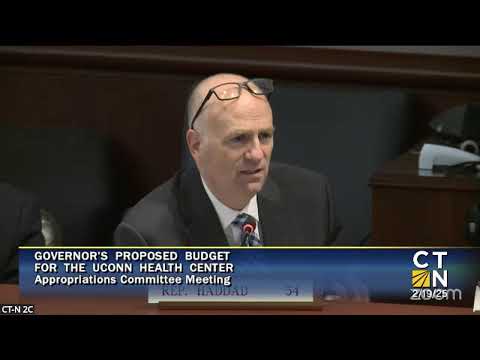
UConn and UConn Health warn of ARPA cliff and research funding threats; Stamford housing deal draws questions
Summary
UConn and UConn Health told the Appropriations subcommittee that expiration of one‑time ARPA funds and a possible federal cap on indirect research costs pose material risks to the institutions' budgets, even as university leaders pointed to gains in enrollment, fundraising and research activity.
University of Connecticut and UConn Health leaders told the Appropriations Committee—s Higher Education Subcommittee they are pursuing revenue increases and efficiency gains but face sizable gaps if one‑time ARPA funds are not replaced and if proposed federal limits on indirect research costs are enacted.
Budget picture: UConn administrators said the university has sought to grow enrollment, research activity and fundraising to reduce reliance on state operating support. System figures presented to the subcommittee showed a multiyear funding gap driven by the removal of one‑time funding; university finance staff cited a shortfall scenario that would leave the university facing a multi‑tens‑of‑millions deficit under the governor—s proposed operating numbers. The university—s finance team asked for institution‑level quarterly budget projections and said the university would continue its strategic enrollment work and cost‑containment measures.
Research funding threat: University leaders expressed concern about a federal proposal (reported in the hearing) to cap indirect cost recovery at 15% for certain federal grants. UConn officials said indirect costs fund critical laboratory infrastructure, technician support, software and other research necessities, and warned a cut in indirect rates would reduce research capacity and could cause broader economic damage to university‑linked innovation activity. UConn and UConn Health are coordinating with peer institutions and federal contacts to press for clarity and to explain the economic impact of such a cap.
Fundraising, endowment and enrollment: University presenters reported growth in admissions and fundraising: the president noted the university accepted 1,300 additional students in the most recent cycle, research expenditure reached a historical high and annual private fundraising averages increased (presenters said recent three‑year fundraising averaged roughly $130 million vs. about $80 million historically). They also noted the endowment was above $600 million and that the university planned a capital campaign seeking $1.5 billion.
UConn Health and legacy items: UConn Health leaders said clinical revenues are growing and that legacy fringe liabilities tied to hospital operations were addressed earlier via state action; they flagged an item in the current governor—s proposal (a fringe/differential line item) that does not appear in the governor's budget for the next year and could affect UConn Health operations. Health officials also discussed the need to shift the clinical enterprise over time away from state support through efficiency, partnerships and revenue growth.
Stamford housing controversy: Several committee members raised a separate, localized issue: a private building at 1201 Washington Blvd. in Stamford was the subject of an RFP and a prospective transaction that could create space for student housing but would also displace roughly 94 current residents, according to constituent complaints. University staff said the owner approached UConn and that the RFP anticipated a cost‑neutral arrangement with no state funds; university enrollment staff said they anticipated a need for about 50 additional beds for the Stamford campus in the fall and agreed to meet with local officials and representatives to discuss resident impacts and relocation assistance.
Medicaid/DSH and other revenue flows: UConn Health staff noted it participates in state programs that bring federal dollars into the state; they said a portion of the federal reimbursement associated with care of Medicaid patients has historically been deposited into the state general fund and that UConn Health directly receives a smaller share (the hospital reported receiving roughly $8.5 million of a larger federal flow that the CFO estimated at about $35 million in a prior year). UConn Health said it continues to press for resources the clinical enterprise needs while pursuing efficiency savings and partnerships to reduce ongoing reliance on state support.
Next steps lawmakers requested: UConn and UConn Health were asked to supply institution‑level quarterly budget reports, enrollment projections and the university—s strategic enrollment plan; lawmakers also asked for documentation about the Stamford site engagement and any plans to offer relocation assistance to affected residents.
Ending note: University and health system officials said they would provide the requested materials to the subcommittee working group and continue to brief the Legislature as federal policy and state budget proposals evolve.