Get Full Government Meeting Transcripts, Videos, & Alerts Forever!
Get email alerts on the Downtown Social District topic
No spam. Unsubscribe anytime.
Downtown business owners pitch year-round social district; council asks staff to prepare application and draft resolution
Summary
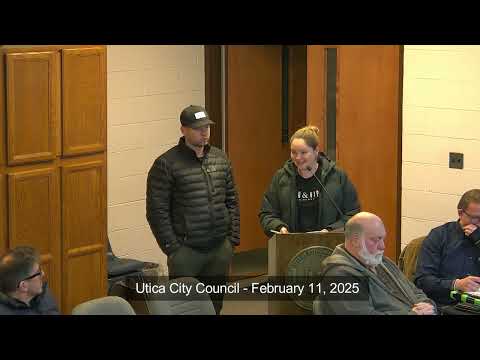
Business owners who operate downtown restaurants and bars asked the Utica City Council on Feb. 11 to create a designated Social District that would allow customers to purchase alcohol in approved “to‑go” containers and carry it within a defined downtown area.
Business owners who operate downtown restaurants and bars asked the Utica City Council on Feb. 11 to create a designated Social District that would allow customers to purchase alcohol in approved “to‑go” containers and carry it within a defined downtown area.
Anna, identified as a co‑owner of Vienna and Vinor Vibe, and Michael, owner of Host Utica, told council they and several other downtown retailers want the city to apply to the Michigan Liquor Control Commission (MLCC) to register a Social District that would include Memorial Park and contiguous sidewalks and permit patrons to walk from business to business with sealed social‑district cups. “Customers would be able to leave the premises and drink alcohol outside,” Anna said during the presentation.
Council members expressed broad support for the concept but pressed for details about enforcement, seasonal limits and city costs. Chief Klusny (chief of police) advised starting with a smaller pilot period rather than year‑round operations to give law enforcement time to develop staffing and enforcement plans. He said the city needs to test how to ensure people do not open containers while driving and how officers would manage crowding and compliance.
Other council members said a longer season could help downtown businesses: “Given any opportunity for these businesses to succeed 365 days a year … is a win for the city of Utica,” Councilmember Dionne said. Councilmember Sikora and others said they preferred a pilot window (for example, spring through fall) with the option to extend if the program proves successful.
City staff and several council members raised cost and logistics questions. Council members asked who would pay for perimeter signage, special trash cans and additional DPW or overtime collection; Superintendent Diamond flagged likely needs for added trash pickup and possible overtime. The city attorney and city clerk described the procedural steps: the city must first adopt a resolution authorizing the Social District and then submit the MLCC application; individual businesses would also need approval and an amended liquor license to participate.
Business proponents said they would fund cups, stickers and promotional social‑media marketing and would coordinate signage and a social‑district committee. They proposed using QR codes on signs and a branded cup to help educate visitors. Owners also suggested kickoff events and potential pop‑up retail to increase foot traffic.
Council did not vote on a final ordinance or resolution. Instead members asked the applicants to work with the city attorney and clerk to draft the resolution, a map of the proposed district and the required MLCC application materials and asked staff to return the package for council consideration next month. Mayor Calandrino said the council wanted to “make sure we’re doing this the right way” before taking a final vote.
What happens next: city staff will review the draft materials and submit a draft resolution and MLCC application for council packet review at the next meeting; council indicated it will consider a pilot season and a fee/maintenance plan tied to any required DPW or police costs.