Get Full Government Meeting Transcripts, Videos, & Alerts Forever!
Get email alerts on the Sidewalks Pedestrian Safety topic
No spam. Unsubscribe anytime.
Venice council pauses Bayshore sidewalk design, orders broader study and community workshops
Summary
After weeks of heated public comment, Venice City Council directed staff to pause the current design for a proposed Bayshore Drive sidewalk, hold community workshops and engage a consultant to evaluate options for the full Bayshore–Laguna corridor, with a status report due March 11.
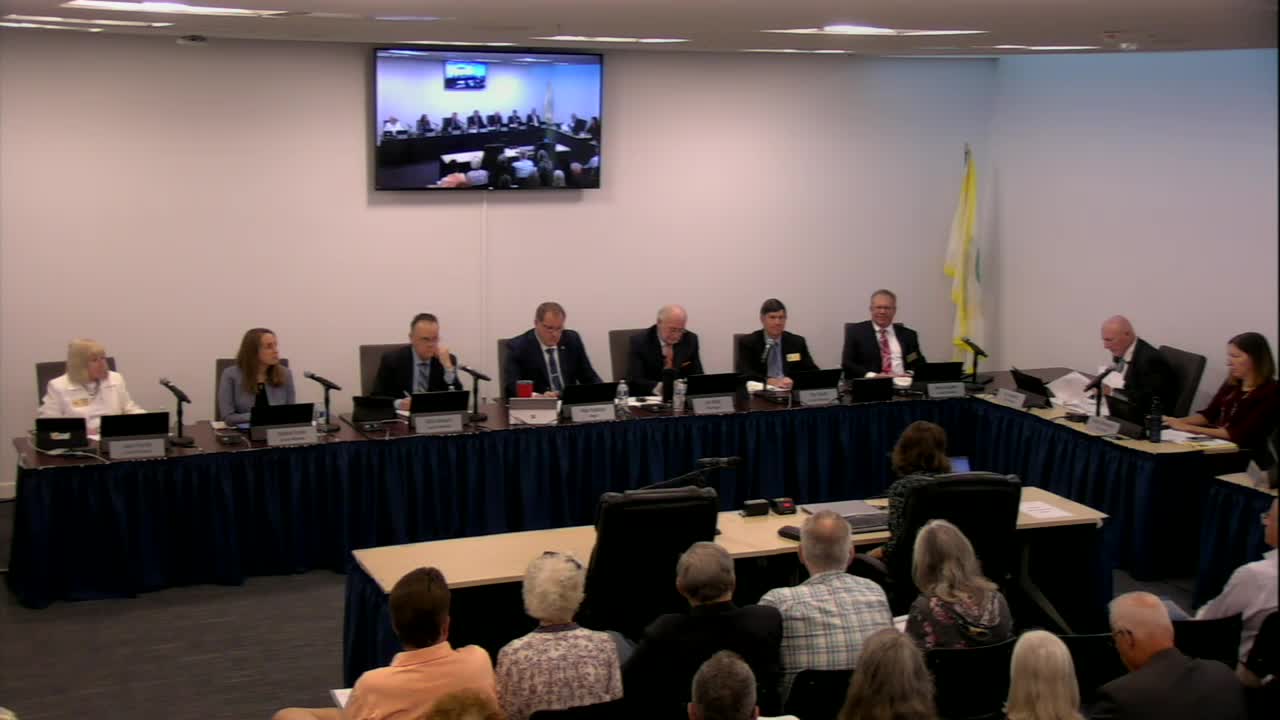
Mayor Nick Pashoda and the Venice City Council on Feb. 25 directed city staff to pause the current design for a proposed sidewalk on the 300 block of Bayshore Drive and to convene community workshops and a consultant-led review of options for the entire Bayshore–Laguna corridor.
The council’s action, proposed by Mayor Nick Pashoda and seconded by Vice Mayor Bolt, follows more than two hours of public comment in which residents on both sides of Bayshore Drive described safety concerns, drainage and property impacts. The motion asked staff to develop a conceptual plan for the whole corridor and to return to council with a schedule; council members narrowed a return-status date to the March 11 meeting.
Why this matters: The city has counted pedestrian-safety warnings and traffic complaints since 2017 and earlier, and staff materials and residents’ testimony said the corridor funnels local, tourist and commercial traffic into a narrow section of road with little or no shoulder. Opponents of the city’s current plan said a sidewalk on the west side would intrude into front yards, disrupt functioning drainage systems and reduce property values; supporters said the road’s narrow cross-section and repeated near-misses create a real safety hazard that sidewalks would address.
Residents’ testimony
Linda McCollum, a West Side resident, told the council: “It’s unanimous on the west side of the street that none of us want those sidewalks.” She and other speakers said planting, irrigation and existing drainage could be damaged by a sidewalk placed on private front-yard areas.
Kevin Collins, also a West Side resident and former road-construction contractor, disputed the premise that the project addresses pedestrian safety and argued instead that the corridor’s problem is speeding. “This is a speeding problem. It’s not a safety problem,” he said, calling the published $500,000 estimate “outdated” and saying a current, independent estimate would be “closer to a million dollars.”
On the other side of the debate, Sam Humphreys, an East Side resident who walks frequently, described repeated close calls while walking on Bayshore and said the street’s lack of a clear pedestrian lane makes it unsuitable for some users. “I cannot tell you the number of times I’ve practically had to dive into a culvert to avoid being hit by a car,” Humphreys said.
Jim Leftwich, who lives on the West Side, urged the council to consider alternatives and emphasized detours residents can use: “If that was a kid standing next to me, what would that have been like?” he said, urging the council to consider east-side placement or other traffic-calming changes instead of the current design.
Council direction and staff response
Assistant City Manager James Clinch and Assistant City Engineer John Kramer told council that the city could pause the current one-block design and ask the contracted designer to expand scope and produce a corridor-wide conceptual plan. Kramer said the program schedule has slipped from a summer start toward fall, and Clinch said the work would be coordinated with utilities because a force-main/water-main project is planned for the area in the coming years. Council members stressed the need for prompt follow-up; the city manager and staff agreed to return with a status report at the March 11 meeting.
The motion that passed directed staff to hold community workshops and to engage a consultant to evaluate “best options for the entire stretch of Bayshore through Laguna” and to “determine a project that suits the majority of the residents,” while pausing the current design work so the city would not construct a sidewalk that would be disrupted later by utilities work. The motion was proposed by Mayor Nick Pashoda and seconded by Vice Mayor Bolt; council voted to approve it and set a staff report return for March 11.
Costs, schedule and next steps
Speakers, staff and council discussed multiple cost estimates. Residents and some council members cited prior project allocations in city budgeting ($450,000–$500,000 was mentioned at the meeting) and warned those figures might understate the total construction and drainage work required. Staff said design scope, consultant fees and construction phasing would be clarified in the next report; they also said funding sources could include the city’s capital budget and gas-tax or reserves and that a phased approach to construction is likely.
What the motion does not do
The council’s action did not authorize construction, pick a side of the street, change the city’s right-of-way lines or set a construction contract. It paused the existing final design and directed a planning and engagement process to produce alternatives, phasing and cost estimates for council review.
Ending
Council members urged neighbors to participate in the workshops and to bring specific trade-off ideas to the table. The city will post meeting notices and schedule information; staff will return to council March 11 with a work plan and timeline for the expanded study.