Get Full Government Meeting Transcripts, Videos, & Alerts Forever!
Get email alerts on the Utilities Water Rates topic
No spam. Unsubscribe anytime.
Port Arthur council adopts short-term water rate increase, applies larger hike to commercial customers
Summary
After hours of debate about utility finances and impacts on residents, the Port Arthur City Council approved a six-month rate amendment that raises residential rates by 5.6% and commercial/industrial rates by 11.5%, intended to reduce an end-of-year deficit and limit transfers from the general fund.
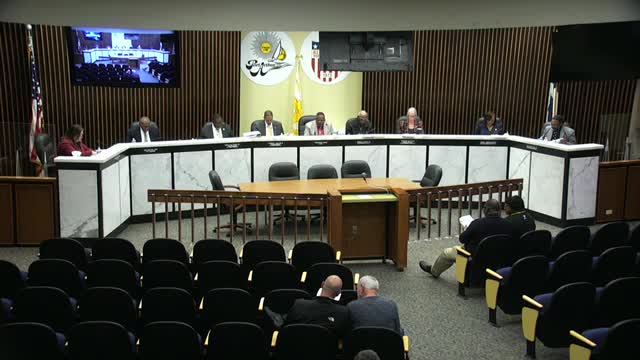
Port Arthur — The Port Arthur City Council voted on Feb. 11 to approve a short-term adjustment to city water and sewer rates, adopting an amendment that applies a 5.6% increase for residential customers and an 11.5% increase for commercial and industrial accounts for the remainder of the current fiscal year.
Council members debated multiple options for rate changes during a lengthy discussion that focused on how to reduce a projected utility fund deficit without triggering a much larger jump for industry accounts alone. City staff presented revenue scenarios showing that residential accounts produce roughly $24 million in annual revenue while the largest single industrial customer—Cheniere—accounts for most of the industrial receipts. Staff said the city needs additional revenue in the coming six months to reduce the amount the general fund would otherwise have to cover.
The amendment approved by the council was offered after members rejected an initial set of proposals. In discussion, Councilman Doucette said the city had waited too long to address the utility shortfalls and argued a balanced approach was necessary: “I’m glad we finally decided to bring it in this manner so we could get something done,” he said during debate. Supporters of the amendment said spreading the increase limits the sudden burden on any single customer class and reduces near-term transfers from the general fund to the utilities fund.
City staff told the council the chosen combination would generate roughly $900,000 to $1.2 million toward reducing the year‑end deficit under current projections; staff cautioned that those projections do not include any further emergency repairs, change orders or unanticipated system failures that could increase costs before the fiscal year ends on Sept. 30. Staff also said the new rate schedule will be implemented for six months and will take effect in April, meaning it will not cover a full budget year.
Public commenters urged caution. A resident, Gloria Sanchez, questioned staff about account counts; staff replied there are about 19,000 total accounts, roughly 17,000 of which are residential. Other speakers asked council members to prioritize protections for low-income and elderly residents; council members said existing senior discounts and previously enacted protections remain in place and that council would consider additional assistance policies if needed.
The council’s vote followed motions and an amendment process during which members proposed higher commercial increases to reduce the deficit further. Staff said each additional 1.5% applied to the commercial base would produce roughly $177,000 in six months. Council members noted the city’s aging water and sewer infrastructure, recent emergency work, and the risk that continued unplanned repairs would require additional general‑fund transfers.
Mayor Thurman Bill Barty and council members framed the increase as a stopgap measure designed to limit immediate fiscal damage and provide a small cushion while staff and elected officials plan longer-term solutions. Council members also discussed placing longer-term options—such as annual, small inflation-based adjustments or targeted revenue measures—on future agendas and including utilities planning in budget preparation.
The council approved the amendment by voice vote. According to staff projections presented at the meeting, the adopted option reduces the projected deficit but does not fully cover capital needs; staff said work remains to determine funding for long-term capital projects such as pipe-replacement crews and other infrastructure upgrades.
The ordinance (PO 7316) was amended on the council floor and approved with the residential 5.6% / commercial 11.5% split. Council members said they will revisit rate policy as part of next year’s budget process and as new information about revenues, emergencies and industrial water use becomes available.
Ending — The adjustment applies for the remainder of the fiscal year beginning April 1; staff said a review and additional budget planning will follow during the spring and summer.