Get Full Government Meeting Transcripts, Videos, & Alerts Forever!
Get email alerts on the Corrections Budget topic
No spam. Unsubscribe anytime.
Corrections seeks millions for pay, maintenance, long-term acute care and security upgrades
Summary
The Georgia Department of Corrections told the House Appropriations Committee it needs multiple FY26 budget increases to fund a 4% pay increase for correctional officers, expand medical capacity with an on‑site long‑term acute care unit and pay for major lock‑and‑control and maintenance projects.
The Georgia Department of Corrections told the House Appropriations Committee it is seeking several FY26 budget increases to address staffing, health-care and security needs while replacing aging infrastructure.
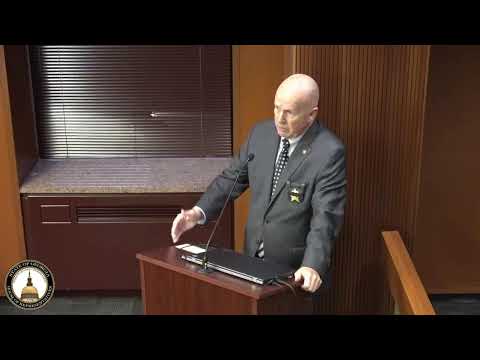
At a committee hearing, a department representative said the department recommends a 4% salary increase for correctional officers spread across programs and estimated that the request to support that increase would cost roughly $9.6 million; the department’s internal calculation provided to the House Budget and Research Office was about $11.9 million. The representative also said the department requests funds to address supervisory compression, additional step increases and targeted raises for behavioral health counselors and selected trades positions.
The department described a plan to add correctional officer positions to improve staffing ratios. The presentation said Georgia is currently operating at roughly a 1:4 officer-to-offender ratio in some facilities and that the department’s consultant goal is roughly 1:11; the department said the plan would add 882 positions over 18–24 months and that FY26 personnel costs to support new hires and annualize prior hires are substantial.
Health care and off-site costs were a focus. The department told the committee that it pays roughly $2,000 per day for off‑site care for long‑term acute care patients — “that's about $16,000,000 annually” — and proposed a $6,200,000 capital request to build an LTAC unit inside prison walls to reduce those off‑site costs. The department said the LTAC unit’s return on investment would break even in the first year because of reduced off‑site medical costs and fewer officer transports.
Security and deferred maintenance demands were emphasized repeatedly. The department requested additional funding for lock-and-control projects, explaining that many facilities average 36 years old and that door frames and control systems need replacement as well as new locking hardware. The presentation sought $15,000,000 in additional critical maintenance added to a base of $60,000,000, plus a separate $19,200,000 request to fund dedicated maintenance “Tiger teams” and lock-and-control work. The department explained supply constraints for specialized locking hardware and said manufacturers’ limited capacity and design work extend procurement timelines.
Officials discussed modular secure units (referred to in the hearing as “max mods” or modular high-security pods) as an option to house inmates during construction and hardening projects; the department said the first units could arrive by summer and full installation would continue through the year. Committee members pressed for on-site inspections and demonstrations before committing large sums to untested products.
The department also referenced investments in safety technology: body cameras, off‑site mail screening, tablets for offenders, a digital forensics unit and an “overwatch” analytics unit added in the amended budget. Those items were described as force multipliers to support operations.
Committee members repeatedly raised concerns about staffing and day‑to‑day supervision. The department said fully staffed shifts can include about 18–20 officers for facilities that hold 1,500–1,800 inmates, but current staffing shortages and posts at hospitals or off‑site care can reduce those numbers. Committee members called those shortfalls a public‑safety concern and pressed for faster procurement and more immediate fixes.
The department framed the total capital ask that included LTAC and other construction items as part of a broader FY26 request intended to address longstanding deferred maintenance and operational shortfalls.
The hearing produced questions and discussion but no committee vote or formal action on the requests.