Get Full Government Meeting Transcripts, Videos, & Alerts Forever!
Get email alerts on the Unemployment Insurance topic
No spam. Unsubscribe anytime.
Committee Hears Divided Testimony on Bill Allowing Unemployment Benefits for Striking Workers
Summary
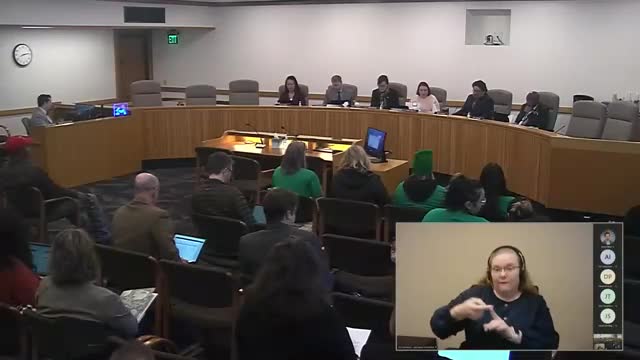
Senate Bill 916 would allow workers on strike to collect unemployment insurance in some cases; the Senate Committee on Labor and Business held a lengthy public hearing Feb. 11 with extensive testimony for and against and scheduled further informational sessions with the Employment Department.
The Senate Committee on Labor and Business held an extended public hearing Feb. 11 on Senate Bill 9 16, legislation to make striking workers eligible for unemployment insurance (UI) under specified conditions. Supporters said the change would help level bargaining power and protect workers and families; opponents said it would alter the purpose of UI, raise costs for employers and taxpayers, and could incentivize longer strikes.
Committee staff summarized the bill: it would amend existing law to specify that an otherwise-eligible individual is not disqualified from UI for any week the Employment Department director finds the individual unemployed because of a labor dispute at their place of work; the measure declares an emergency and is effective on passage, according to the summary read at the hearing.
Multiple labor and education unions, frontline health care workers and an economic research analyst urged the committee to support SB 9 16. Jenny Spinning, a nurse care manager at Providence and a member of the Oregon Nurses Association, said she and thousands of nurses are on strike and described personal financial hardship: “Providence is literally starving me out of house and home as I raise my voice to fight for patient safety,” Spinning said. Lindsay Ray, president of the Beaverton Education Association, said educators feared losing wages and that UI could allow members to stand up for contract terms without immediate destitution.
Union witnesses emphasized that strike funds typically do not replace full wages and that UI benefits are a partial replacement; Katie Tyson of the Oregon AFL-CIO said UI’s purpose includes protecting families after a loss of income and noted that UI is a partial wage-replacement program, not a full-pay substitute. Joe Basler, executive director of Oregon AFSCME, said strikes are difficult to organize and are “the absolute last resort” used to secure fair contracts.
Business groups and local chambers opposed the bill. Anthony Smith, Oregon State Director of the National Federation of Independent Business, argued UI is intended for those who lose work “through no fault of their own” and warned that extending benefits to striking workers would increase unemployment insurance costs and shift expenses to employers and local taxpayers. Paloma Sparks of Oregon Business and Industry and Josh Tompkins of the Washington County Chamber raised similar concerns, warning the change could tip bargaining leverage and raise UI tax burdens for employers statewide.
Daniel Perez, an economic analyst with the Economic Policy Institute, presented modeling that estimated the fiscal impact would be small: EPI’s analysis found the bill would amount to roughly one-quarter of 1% of statewide UI expenditures under baseline assumptions and under a conservative, high-assumption scenario would remain under 1% of statewide UI expenditures. Perez also noted national and state data indicating most strikes are short: SB 9 16 requires a seven-day waiting period before a striking worker would be eligible for UI, and strike-tracker data show many strikes last fewer than a week.
Committee members pressed witnesses on costs and administration. Members asked whether UI benefits could be clawed back if an employer later negotiated back pay; committee staff said the bill operates within the existing UI system and that the agency would be asked Thursday to explain current administration and recoupment rules. Members also raised the role and sufficiency of union strike funds and whether a hybrid approach—share costs between unions and UI—would reduce employer impacts.
Chair Taylor announced an informational hearing for Thursday that will include the Employment Department director and unemployment insurance staff to review calculations, definitions (including labor-dispute language), and anticipated fiscal effects. The committee closed the public hearing Feb. 11 without taking a vote.
The bill remains under committee consideration; the committee asked staff to distribute comparative analyses of New Jersey and New York legislation that grants UI eligibility to some striking workers and to provide detailed actuarial estimates before further action.