Get Full Government Meeting Transcripts, Videos, & Alerts Forever!
Get email alerts on the Education topic
No spam. Unsubscribe anytime.
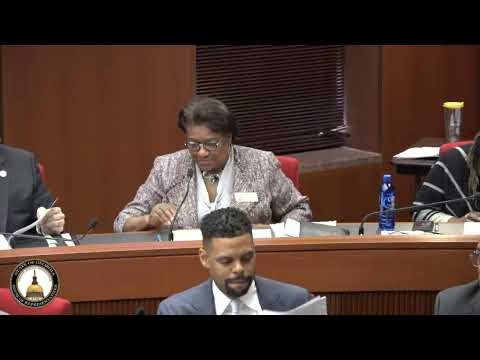
Superintendent Woods tells House Education Committee safety, literacy are top priorities
Summary
At a meeting of the Georgia House Education Committee, Superintendent Woods outlined the Department of Education's 2025 priorities — school safety, statewide literacy efforts and supporting teachers — and answered members' questions about resource officers, literacy coaches, cybersecurity and workforce supports for educators.
Superintendent Woods, state school superintendent, told members of the Georgia House Education Committee that school safety and literacy are the Department of Education’s top legislative priorities and outlined specific funding and policy areas the department wants lawmakers to consider.
Woods told the committee the department’s strategic plan centers the whole child and that the department proposes sustaining a school safety coordinator role currently funded by ESSER (Elementary and Secondary School Emergency Relief) dollars. “We only get 1 shot. There is no redo. There is no reset,” he said, arguing that coordinated expertise and liaison work with agencies such as GEMA are needed to prevent and respond to crises.
The superintendent highlighted a set of proposals and initiatives he said the department is emphasizing: establishing a literacy coach in every public school, expanding and sustaining school resource officers who build relationships (not only enforcement), ensuring crisis-alert systems statewide with funding for initial and recurring costs, bolstering bus- and cafeteria-related safety vigilance, and funding cybersecurity and PeachNet connectivity for schools. Woods said the state saw reading gains in areas where on-site literacy coaches were deployed.
He also proposed providing fourth graders with a ‘‘pocket constitution’’ booklet as a low-cost literacy and civics tool; described work to align career- and technical-education pathways and articulation agreements with the Technical College System of Georgia and the university system; and suggested exploring block grants and other flexibility for local districts to tailor resources.
Committee members asked about specific items Woods raised. On school resource officers, Woods emphasized training and relationship-building: officers should be proactive supports who cultivate trust and not create a “jail-like” environment in schools. On mental-health and post-incident supports, Woods pointed to federal, state and local resources that are sometimes deployed after a crisis and said some benefits (including certain permanent-disability benefits) already exist but that gaps in leave and counseling deserve attention.
Woods proposed expanding compensation incentives for educators who earn leadership degrees, extending step raises to encourage retention, and increasing minimum personal days for teachers and classified staff from three to five. He said cybersecurity threats including phishing and content controls are a growing expense districts need to fund. He reported the department and partner groups are reviewing Apex and other platforms to be sure the state gets appropriate value and noted the governor’s office and state agencies are involved in broader workforce and education alignment work.
Woods closed by urging committee members to focus early in the session on safety and literacy and to work with local delegations on reforms that can be implemented at the district level.
Woods and the chairman agreed to continue follow-up discussions; several members indicated they would press the department for further detail on costs and implementation plans for literacy coaches, SRO training standards and statewide crisis-alert systems.