Get Full Government Meeting Transcripts, Videos, & Alerts Forever!
Get email alerts on the Land Use Buffers topic
No spam. Unsubscribe anytime.
Saratoga Springs council approves temporary buffer rules for nonresidential development adjacent to homes
Summary
Council approved a pending ordinance (Resolution R25-04) establishing temporary buffer requirements between new nonresidential development and existing residential areas, including masonry walls, increased setbacks and screening trees; staff will refine standards over six months.
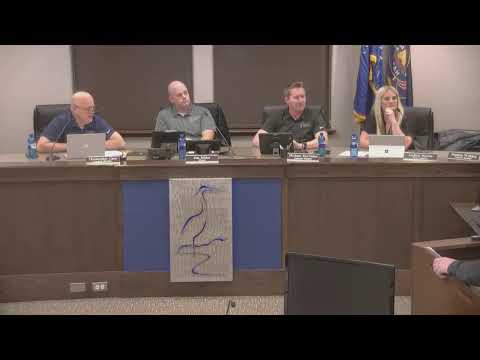
The Saratoga Springs City Council on Feb. 4 approved a pending ordinance, Resolution R25-04, that establishes temporary buffer requirements where new nonresidential development adjoins existing residential areas.
The ordinance, adopted unanimously, requires an increased setback, a six-foot masonry wall along the property line, one tree per 15 linear feet for screening, and prohibits drive-through lanes between a nonresidential building and an adjacent residential property line. The city will also set a minimum 20-foot setback from the outer edge of any drive-through lane to an existing residential property line, with listed exceptions for separation by roadways, canals, trails wider than 8 feet or power line easements.
Council members and staff said the measure is intended as an interim standard to set expectations for developers while staff crafts a more detailed policy. A staff member told the council the temporary rules will remain in place for about six months while planning and public comment continue.
Councilwoman Barton and other members recommended adding a note that the required screening trees be chosen for appropriate mature height and screening characteristics rather than large canopy species unsuited to Saratoga Springs’ climate. The motion approved by the council included that clarification: the trees used for screening should be of an appropriate height as will be outlined in the eventual policy.
Council discussion touched on whether similar protections for changes in grade between residential developments should be considered for residential-only development; one councilmember asked staff to review grading-buffer options for residential projects as a separate effort.
The council voted unanimously to approve the pending ordinance and referred it back to staff and planning for refinement and public review.
As approved, Resolution R25-04 acts in addition to existing setback and buffering requirements in the city’s Land Development Code (Title 19). The council and staff said they expect to return with a more detailed, permanent code amendment based on public feedback.