Get Full Government Meeting Transcripts, Videos, & Alerts Forever!
Get email alerts on the School Athletics Projects topic
No spam. Unsubscribe anytime.
Parents press Queen Creek Unified over Dec. start for $2.7M turf project, cite displacement and procurement concerns
Summary
District staff say a $2.7 million water-conservation grant requires early spending and that a job order contract (JOC) lets the district proceed; parents and boosters urged postponing a Dec. start, saying daily busing and lost fundraising will harm track and field and other spring sports.
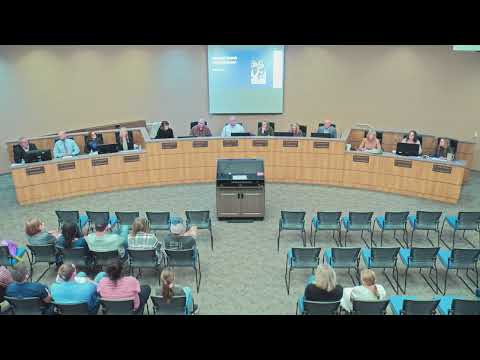
Queen Creek Unified School District officials told the governing board the district accepted a $2,700,000 water-conservation grant to replace the turf at Queen Creek High School and that a December construction start was selected in part to meet a grant 5% expenditure requirement in 2024. At the board meeting, parents and booster leaders said the December start would displace track and multiple soccer programs, disrupt major fundraising meets and impose significant transportation and financial burdens on families.
The district presented the turf work during a construction-update segment. District staff said the project team chose a Dec. 9 start date to ensure compliance with the grant’s early-expenditure requirement and to allow completion well before the next school year. “This improvement will not only save taxpayer dollars because of the grant, but it will provide improved opportunities and access to Queen Creek High programs, such as marching band, soccer, football, flag football, etcetera,” district staff said during the presentation.
Staff explained procurement was handled through a job order contract (JOC) under a cooperative purchased agreement (1GPA contract 1215 PV-2), a method the district said streamlines procurement for small-scale public projects by providing pre-vetted vendors and negotiated pricing. Staff also said the selected contractor has prior experience installing artificial turf at several Arizona high schools and that the project schedule includes allowances for weather and other delays.
Several parents and program volunteers urged the board to postpone the start until April to avoid displacing practices and to preserve the district’s largest track meets, which serve as a major fundraiser for equipment and team travel. Katrina Visic, who identified herself as a single parent of eight, said the displacement “is a huge financial and time hardship” and that busing solutions, while helpful, do not fully address her family’s ability to transport children for pre-season practice. Kirsten VanderWall, president of the Track and Field booster club, told the board she feared the December start “will irreparably harm the future success of our program” and asked administrators to “push to April 30” so spring sports are not uprooted.
Other speakers criticized the district’s stated procurement justification and the speed of the schedule. A public commenter accused staff of prioritizing the grant award over community notice and urged the board to pause the work so the project could be competitively rebid; a different commenter described the procurement explanation as “misleading” and said the board and staff had “dropped the ball.”
District staff responded specifically to concerns about displaced practices and spectator access. They reported negotiating with Arizona Athletic Grounds to use Field 5 (instead of Field 15), securing a West Parking Lot access point and arranging staff with a golf cart to assist spectators. Staff also said they obtained a bus to transport student-athletes back to Queen Creek High after practices when needed. The district described these steps as mitigation measures while the turf project proceeds.
The board did not take a formal vote about the turf start date at the meeting. Several public speakers asked the board to direct staff to revisit the schedule and procurement choices; staff said they had already presented the stated reasons and would follow up on logistics. The district characterized the turf replacement as enabled by the water-conservation grant and framed the JOC/cooperative procurement as a standard method for smaller, time-sensitive projects.
Supporters and skeptics asked the board for additional outreach and transparency about the schedule, alternate practice sites and the financial impact on booster fundraising. District staff agreed to follow up with parents on pre‑season transportation and on possible alternate venues for fundraising meets.
Ending: The turf project remains scheduled to begin in December under the terms presented by staff; parents and program leaders asked the board to consider postponement or additional mitigation to avoid disrupting track, soccer and other spring activities.