Get Full Government Meeting Transcripts, Videos, & Alerts Forever!
Get email alerts on the Facilities Schools Of Distinction topic
No spam. Unsubscribe anytime.
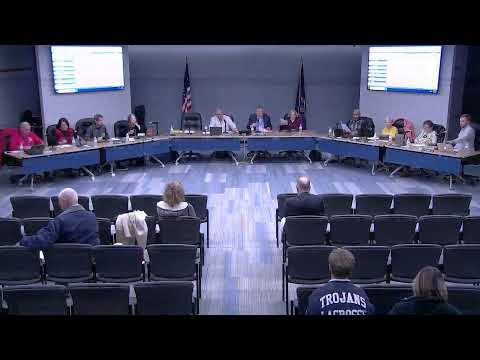
Chambersburg board votes 9-0 to move forward with $170 million feasibility plan for 'Schools of Distinction'
Summary
The Chambersburg Area School District board on Dec. 2 adopted the feasibility study recommendation known as Scenario 4 — a proposed reconfiguration that would create K–3, 4–6, 7–8 and 9–12 groupings — and authorized next steps toward a roughly $170 million facilities investment tied to the district's 'Schools of Distinction by 02/30' initiative.
The Chambersburg Area School District Board of Education voted unanimously Tuesday to adopt a facility feasibility recommendation known as Scenario 4, kicking off planning for a roughly $170 million investment tied to the district's “Schools of Distinction by 02/30” initiative.
Superintendent Chris Bigger presented the recommendation and told the board “we are recommending scenario 4, which has the grama configuration of k to 3, 4 to 6, 7 a, and 9 12,” language used in the study materials provided to the board. The motion to adopt the feasibility study was moved and seconded and passed on a roll-call vote of 9–0.
The board's approval authorizes the district to move to the next phases of the feasibility process: finalizing architectural contracts and developing project phasing and cost estimates. Board President Ed Norcross framed the vote as part of a broader branding and long-term investment plan, repeating the district goal of “Schools of Distinction by 02/30.”
Board members spent part of the discussion addressing concerns about the size of a consolidated 4–6 school under Scenario 4. Board members and staff said design and program choices can make large buildings feel smaller, and cited options the architects will examine, including smaller “houses” or wings, looping (teachers remaining with the same students for multiple years) and concentrated, self-contained schedules for the 4–6 grade band.
Bigger and other presenters told the board the program and facility priorities for the feasibility recommendation are: addressing struggling middle-school infrastructure, relieving overcrowding in elementary schools, and expanding career-technical and magnet-school programming. Board members and staff noted efficiencies and improved specialized spaces — gyms, music and art rooms, and auditorium space — as benefits of larger consolidated facilities.
Votes at a glance
• Agenda item 2.03: Motion to adopt the meeting agenda. Motion by Mr. Hajduk; second by Mr. Walker. Voice vote: ayes carried.
• Consent agenda (items 7.01–7.07): Motion by Mrs. Gaugler; second by Mrs. Gauss. Voice vote: ayes carried. (Included a request to apply for PA solar grants for candidate school sites; staff said application would not commit the district to construction.)
• Consent agenda (items 8.01–8.13): Motion by Mr. McKee; second by Dr. Diller. Voice vote: ayes carried.
• Item 10.01: Motion to adopt the facility feasibility recommendation (Scenario 4 as presented). Motion by Mrs. Gaugler; second by Dr. Diller. Roll-call vote: Dr. Diller — yes; Mrs. Gaugler — yes; Mrs. Gauss — yes; Mrs. Harbaugh — yes; Mr. Hajduk — yes; Mr. McKee — yes; Mr. Norcross — yes; Mr. Raber — yes; Mr. Walker — yes. Outcome: approved, 9–0.
Board members and the superintendent emphasized that the vote approves the recommendation and the next planning steps; it does not itself authorize bond issuance or construction contracts. The board directed staff to proceed with architectural contracting and phasing work needed to present cost estimates and borrowing questions at future meetings.
The vote follows months of public meetings and district-led feasibility work tied to the district’s “Schools of Distinction” planning. Norcross said the plan “will lay the groundwork for the next 20 years.”