Get Full Government Meeting Transcripts, Videos, & Alerts Forever!
Get email alerts on the Short Term Rentals topic
No spam. Unsubscribe anytime.
Goshen planning board weighs broad changes in proposed short-term rental law
Summary
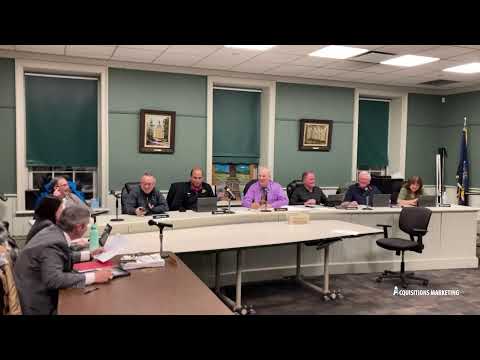
The Goshen Planning Board spent more than two hours reviewing a redlined draft local law to regulate short-term rentals, debating definitions, safety requirements, parking, maximum occupancy and enforcement tools before voting to send comments and a draft to the Town Board for consideration.
Goshen Planning Board members and staff spent the bulk of a meeting reviewing a redlined draft local law meant to regulate short-term rentals, focusing on definitions, on-site safety and utilities, limits on occupancy and parking, and enforcement and notification procedures.
Board members said the draft must make clearer where short-term rentals would be permitted, whether they should require site-plan review or special permits, and whether stricter rules should apply in small‑lot residential areas. The board voted to authorize its attorney to prepare a letter and the board’s suggested redline for the Town Board’s consideration.
The discussion moved line by line through the draft. Staff and counsel described the version under review as a zoning‑level local law that would establish permit and operational requirements for properties used for short-term rental occupancy. Several members said the town board — not the planning board — is the legislative body that can decide whether to allow short-term rentals in particular zoning districts, but the planning board said it would send detailed technical and policy comments.
On definitions and scope, members asked the drafters to explicitly distinguish between “bed-and-breakfast,” “lodging/boarding house,” “hotel/motel” and a short-term rental and to add or relocate definitions so the provisions are clear and self-contained. One member recommended adding a cross-reference or copying definitions from chapter 97 so readers do not have to look in multiple chapters.
On evidence and presumption of use, board members debated whether the presence of a vehicle or an unoccupied owner’s unit should be treated as presumptive evidence of short-term rental activity. Counsel and staff recommended treating such facts as “factors” rather than automatic presumptions.
Safety and utilities drew sustained attention. The draft requires applicants to submit floor plans that show bedrooms, egress, smoke detectors, carbon monoxide detectors and the locations of utility shutoffs. The board asked the draft to be explicit that any conversions or living spaces used for sleeping must meet building and fire‑safety code egress and alarm requirements. Members also suggested removing or narrowing a proposed allowance for counting “full‑size convertible sleeping accommodations” (sleeper sofas) toward permitted occupancy, saying such furniture should not be a substitute for legal bedrooms.
The board worked through the draft’s maximum‑occupancy language and landed on a formulation the board agreed it would recommend to the Town Board: occupancy must not exceed the limits imposed by the New York State building code and, in any event, no more than two people per permitted bedroom shown on the submitted floor plan and a hard cap of 12 people per short‑term rental unit. The board also recommended posting the maximum occupancy on the premises and in application materials.
Members pressed for clearer water and septic language. The draft required private well owners to meet applicable water quality standards. Planning staff and board members noted that New York State does not specify a single well‑testing suite for private residences; the board asked that the law require certified‑lab testing (for example, a New York State–certified laboratory) on permit issuance and periodically thereafter, with the Town Board to adopt a specific test schedule (for instance, every four years) by resolution.
Parking, access and nuisance control were central topics. The draft would require applicants to show on‑site parking areas “improved with asphalt or other suitably improved surface.” Board members recommended clarifying that parking must be on a defined impervious or prepared surface (pavement, gravel, similar) and not on lawns; they discussed whether additional parking expansions should require permit review or amended site‑plan review, and whether the code enforcement officer should be able to approve limited, properly permitted driveway expansion under performance rules. Members noted that the town already has a prohibition on parking on town streets and that, while police currently do not strictly enforce the rule absent signage, signs in limited locations could enable enforcement.
Enforcement, emergency contact and response times prompted debate. The draft requires an owner or designated agent reachable by phone to be available 24/7; members insisted the rule must allow for faster responses to certain complaints (garbage in public right‑of‑way, parking obstructing traffic, hazardous conditions) and suggested the law require an on‑site or locally based agent able to respond within an hour for emergencies and within a shorter timeframe than the general 24‑hour standard for non‑emergencies. The board discussed remedies including fines, permit suspension and revocation and recommended that the draft clearly state that failure to allow inspections or to comply with enforcement orders could be grounds for immediate suspension or revocation.
On notice and neighbor input, the board recommended standardizing notifications to nearby property owners. The draft would require the applicant to notify property owners within 500 feet of the proposed short‑term rental by certified mail; board members endorsed that radius as consistent with notice used for other local reviews and asked that neighbors be given 30 days to submit objections that would be forwarded to the Town Board if an administrative appeal or a special permit is required.
Board members also proposed policy options for the Town Board to consider: restricting short‑term rentals to commercial or Hamlet zoning districts, requiring site‑plan or special‑use review for conversions of single‑family dwellings, adding minimum lot size or lot‑area thresholds, and clarifying rules for accessory structures, tents and RVs. Several members said those are legislative policy choices for the Town Board rather than technical edits for the planning board.
At the end of the meeting, the planning board voted to authorize its attorney to prepare a letter and a redline version of the draft local law for submission to the Town Board, along with a list of the planning board’s technical and policy comments.
What happens next: the Town Board will receive the planning board’s comments and a redline and may schedule further public hearings, revise the draft, or pursue an outright ban in certain districts if it determines a ban is legally defensible. The planning board emphasized that many of the remaining decisions — permitted districts, use classification, and whether short‑term rentals require a special permit — are policy matters for the Town Board to resolve.