Get Full Government Meeting Transcripts, Videos, & Alerts Forever!
Get email alerts on the Council Compensation topic
No spam. Unsubscribe anytime.
Easly City council debates ordinance to update council pay and expense rules
Summary
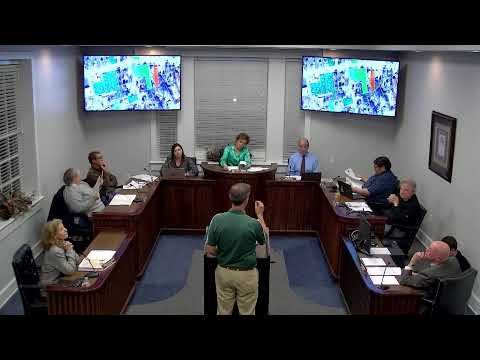
Easly City councilors spent the bulk of their Dec. 9 work session discussing the second reading of Ordinance 202411, which would amend Section 30.08 of the Easly City Code to change how the mayor and council are paid and reimbursed for official expenses.
Easly City councilors spent the bulk of their Dec. 9 work session discussing the second reading of Ordinance 202411, which would amend Section 30.08 of the Easly City Code to change how the mayor and council are paid and reimbursed for official expenses.
Councilors noted the last adjustment to the compensation amount was made in 2008 and that any new salary established by ordinance could not take effect until after the next election. Council members emphasized the immediate issue is the expense allowance for 2025 because, under current practice, the city has paid a monthly expense allowance without requiring receipts; councilors cited a 2014 attorney general opinion saying expense allowances require documentation or a different structure.
Under the current structure described in the work session, councilors receive $600 per month plus a $100 monthly expense allowance (total $700) and the mayor receives $1,250 per month plus a $300 expense allowance. Staff explained the draft ordinance would roll the existing expense allowance into a larger inclusive salary beginning Jan. 1, 2026 (so the monthly payment would replace the two separate payments), while reimbursements for out-of-city travel would remain eligible under the city’s expense reporting procedures.
Councilor Jim Robinson said he would move to amend the ordinance to add a procedural requirement modeled on a Greenville County ordinance that would bring the council’s compensation adjustment onto a recurring schedule — described in the discussion as a standing item to consider every 24 months as part of the budget process. Robinson and other councilors said any periodic increase would still require a council vote and would not be automatic.
City staff (legal counsel) clarified that by state law a salary change adopted now could not legally take effect until after the next election, so the council faces a one-year timing gap for 2025 that the ordinance language and any amendment must address. Councilors discussed two near-term options: (1) amend the ordinance to require receipts for expense reimbursements for 2025 and retain capped reimbursements (council $100/mayor $300) for that year, or (2) remove the separate expense allowance from the ordinance and allow the increased salary to incorporate ordinary elected-official expenses beginning with the ordinance’s effective date in 2026.
No formal vote was taken in the work session. Councilors instructed staff to draft amendment language ahead of the business meeting so the group can decide whether to adopt the ordinance as written or approve the proposed amendment incorporating the procedural language discussed.
What’s next: staff offered to prepare text amendments before the city’s business meeting; any final action on Ordinance 202411 and any amendment will occur at that later public meeting and would be subject to state timing rules about effectiveness after elections.