Get Full Government Meeting Transcripts, Videos, & Alerts Forever!
Get email alerts on the Avian Influenza Response topic
No spam. Unsubscribe anytime.
Georgia Department of Agriculture details rapid response after H5N1 detections in backyard and commercial flocks
Summary
State veterinarians and industry leaders described recent detections of highly pathogenic avian influenza (H5N1) in Georgia, emergency response steps taken at affected farms, and collaboration with industry and state partners to contain spread and protect the food supply.
State veterinary and agriculture officials updated the House Agriculture & Consumer Affairs Committee on a recent cluster of highly pathogenic avian influenza (H5N1) detections, including rapid depopulation, disposal, and decontamination steps at affected premises and expanded surveillance in surrounding zones.
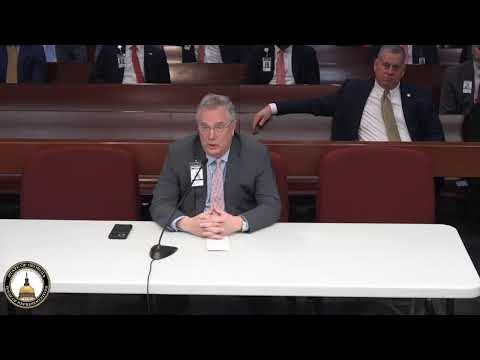
Jane Marie Hennebell, Georgia’s state veterinarian, said the national H5N1 outbreak has been ongoing since 2022 and has affected more than 145 million birds across all 50 states and one U.S. territory; she said more than 17 million birds were affected in the previous 30 days. Hennebell summarized Georgia’s detections: backyard flock cases in May 2022 (Toombs County) and August 2022 (Henry County), a November 2023 detection in a commercial raised-for-release waterfowl operation in Sumter County, and new detections in January 2025 — a Clayton County backyard flock (Jan. 9) and two Elbert County commercial operations (Jan. 16–17).
Hennebell said the department deploys a rapid response team on detection and uses three primary tools: depopulation, disposal, and cleaning and disinfection. She said the two closely located Elbert County commercial sites completed depopulation activities within about 48 hours, disposal was completed the following week, and the farms were undergoing thorough cleaning and disinfection. She estimated virus‑elimination activities for those premises would take about two weeks to complete but noted timelines vary by farm size and housing type.
Director Harlan (surname not specified in transcript) described enhancements to the department’s law‑enforcement and emergency‑management capabilities since Commissioner Harper took office and said law enforcement secures affected premises to control movement in and out of sites. He credited state partners — county governments, Georgia Forestry, USDA Wildlife Services and the National Veterinary Services Laboratory, GEMA Homeland Security — for providing water, personnel, equipment, surveillance and coordination support during the response.
Mike Giles, president of the Georgia Poultry Federation, said industry and state agencies work closely during outbreaks. He said poultry companies conduct testing within control zones and coordinate sample delivery to laboratory networks; enhanced sampling and permit controls on movements are used to prevent infected birds from reaching processing plants. Giles emphasized that production and the food supply remain safe and continued, and noted that nationwide egg‑layer losses since late October 2024 total about 33 million hens, which has placed upward pressure on egg prices nationally.
Committee members asked about human‑health risks, “gain‑of‑function” research concerns and wild‑bird reservoirs. Hennebell said the detections the state is seeing are linked to wild migratory birds and that the virus has circulated in wild bird populations globally since the mid‑1990s and more recently established itself on U.S. flyways; she cited Department of Natural Resources surveillance showing about 14% prevalence in sampled wild birds in the most recent fall/winter sampling period. On gain‑of‑function concerns, officials said the department’s statement to local communities indicates research activities are not a source of the state detections and that the current cases stem from wild birds.
Officials described the department’s outreach in a six‑mile radius around detections: backyard flock owners are being contacted and commercial movements within the radius are controlled; the department encouraged backyard owners to report sick birds and offered the department as a resource. The committee received offers from EPD and the Department of Agriculture to provide additional data and to continue coordination as response and surveillance continue.