Get Full Government Meeting Transcripts, Videos, & Alerts Forever!
Get email alerts on the Staffing Model And Budget Cuts topic
No spam. Unsubscribe anytime.
Principals, teachers and union reps urge SFUSD not to cut site staff; cite safety and program impacts
Summary
Dozens of principals, assistant principals, teachers and union leaders told the San Francisco Board of Education that a proposed core staffing model and looming budget cuts threaten assistant principals, counselors, social workers, reading specialists and librarians across the district.
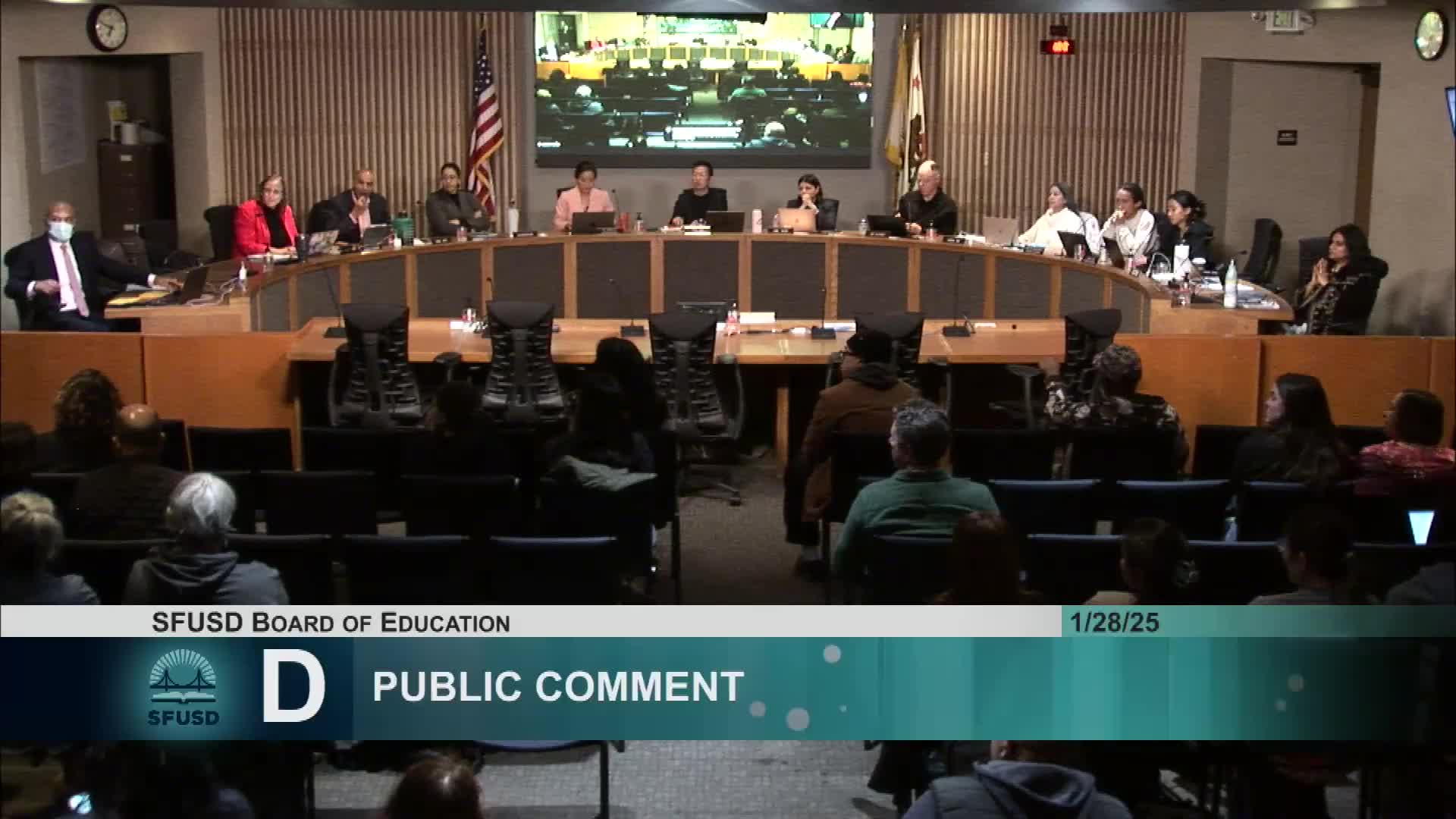
Dozens of principals, assistant principals, union leaders and teachers told the San Francisco Board of Education during the meeting’s public‑comment period that a proposed “core” staffing model and impending budget cuts would remove essential site personnel and damage student support, safety and instruction.
Speakers from elementary, middle and high schools described the same themes: assistant principals (APs), counselors, social workers, nurses, reading specialists and library staff are central to meeting the needs of students with disabilities, newcomers, English learners and students experiencing trauma. A common complaint was that central office staff and site leaders were not given sufficient time or transparency to engage in budget decisions. Many speakers urged the board to allow schools to use grant and PTO funds to preserve positions.
Student and staff speakers included Naomi Castillo, a seventh‑grader at Presidio Middle School; Sarah Saldanha, principal at Gene Parker and United Ed Administrators member; Krishna Kasabam, principal at Lafayette Elementary School; Sunny Wong, assistant principal at Ulloa Elementary; Anna Clafter, president of United Administrators of San Francisco and principal at Independence High School; Gina Scherr (reading specialist); Stella Kim, principal at Ruth Asawa School of the Arts; Detrice Rogers, principal at Galileo Academy; Abby Matthews, assistant principal at Lowell High; and many other school leaders and union representatives. Their statements included both personal examples and schoolwide data points that they said demonstrated harms from proposed staffing changes.
Examples and specific testimony included: - Naomi Castillo (7th grade student, Presidio Middle School) said counselors make school “feel like a safe place” and urged counselors be included in base staffing. - Krishna Kasabam (Lafayette Elementary principal) said Lafayette has “over 70 IEPs” and will have 502 students next year; she called for an assistant principal to manage the caseload and supports. - Sarah Saldanha (Gene Parker principal) and many site leaders urged the board to include assistant principals at elementary schools with many students on IEPs to protect administrators’ capacity and legal compliance. - Gina Scherr (reading specialist) warned that eliminating PTO‑ or grant‑funded reading specialists would cut early intervention for students who struggle to read, including students at risk for dyslexia. - School leaders from alternative and continuation programs (Downtown High, IB Wells, New Traditions) said their students have high levels of academic and social‑emotional needs and that cuts to APs, counselors and clerks would jeopardize graduation and safety. - Several principals and union leaders described delays and obstacles in using Student Success Fund grant dollars, and urged the district to ease contracting and allow rollover or extensions so school plans can be implemented.
Speakers repeatedly asked the board to involve site leaders collaboratively when shaping staffing and budgeting decisions. Commenters cited concrete operational problems: principals said they are attending multiple IEPs per week without adequate administrative support; others cited chronically absent students, hospitalizations for mental health (a principal reported three hospitalizations in a single month), and growing caseloads for counselors and social workers.
Public commenters also flagged possible unintended budget impacts if site‑level PTO funds are restricted from being used for positions. Multiple speakers said such restrictions would eliminate locally funded positions that keep students supported.
The board and superintendent acknowledged the public concern. Superintendent Su apologized for delays in sharing a detailed staffing model and said site leaders would receive district budget numbers in early February and be able to engage with central staff before final school‑site budget decisions. Board members asked for clearer executive summaries in future monitoring materials and pushed staff to identify where cuts could be made furthest from students.
The public comment period was long and frequently interrupted by speaker changes; speakers urged the board to protect counseling, APs, social work, nursing and literacy positions as it shapes the final staffing model and budget for 2025‑26.