Get Full Government Meeting Transcripts, Videos, & Alerts Forever!
Get email alerts on the Unrwa Ban topic
No spam. Unsubscribe anytime.
Israel says law will bar UNRWA from operating in Israel as it takes effect Jan. 30
Summary
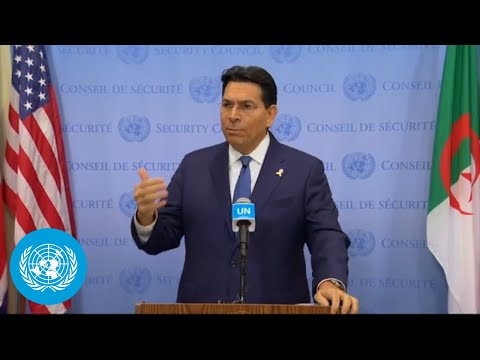
Israel's ambassador to the United Nations, Dani Danon, told a Security Council briefing that Israeli legislation barring the United Nations Relief and Works Agency (UNRWA) from operating in Israel will take effect in 48 hours on Jan. 30 and that Israel will terminate collaboration and contact with the agency.
Israel's ambassador to the United Nations, Dani Danon, told a Security Council briefing that Israeli legislation barring the United Nations Relief and Works Agency (UNRWA) from operating in Israel will take effect in 48 hours on Jan. 30 and that Israel will terminate collaboration and contact with the agency.
Danon said the law requires UNRWA to cease operations and evacuate premises it operates in Jerusalem, including properties he named as Malodafna and Kfar Akeb, and forbids UNRWA from maintaining any representative, office, service or activity within Israel. "No sovereign state should facilitate the operation of an agency that threatens its national security and blatantly violate[s] its laws," Danon said. He accused the agency of failing its mandate and of "constant refusal to address the widespread infiltration of its ranks by Hamas and other terrorist organizations."
Danon told reporters that the decision followed "decades of betrayal by an agency that has placed political agendas, neglect, and cover ups over humanitarian principles," and said Israel remains "committed to its obligations under international law" while it seeks to work with other U.N. agencies it views as not "tainted by terror." He also said Israel had received a four-page response from the U.N. secretary-general to a letter Israel sent on Friday and that Israeli officials were in communication with the U.N.
Reporters at the briefing pressed Danon on how services would be managed once the law takes effect. Pamela Falk of U.S. News & World Report asked specifically how schools and basic services such as garbage collection would be administered after the law is in force. Danon responded that "UNRWA is replaceable," saying other agencies and nongovernmental organizations would have to increase their roles. He said the legislation concerns activities "in Israel" and does not permit Israeli authorities to act inside Gaza, adding that the transfer of functions would be "a gradual process until other agencies will step in and would take their positions in Gaza."
When asked whether Israel would take responsibility for services in Gaza, Danon said, "No. We have no intention to go back and rule Gaza," and reiterated that other NGOs would need to increase activities. Danon also said Israel plans to continue communicating with the U.N. and expects to increase cooperation with other humanitarian agencies, naming the World Food Programme as one example.
Danon asserted that substantial sums had been spent in Gaza on education and health under UNRWA's mandate and questioned the results; in translation he said, "Tens of 1,000,000,000 of dollars were spent in Gaza and they don't have proper school system. They don't have proper health system." He did not provide supporting documentation for that figure at the briefing.
Reporters asked about the safety of UNRWA staff in Gaza and the West Bank. Danon said staff in those areas were "safe" but added that officials in Israel would not protect UNRWA staff operating under UNRWA's mandate inside Israel once the law takes effect.
The immediate operational effect on humanitarian assistance in Gaza and the West Bank remained unclear at the briefing. Danon stated that the law cannot be enforced inside Gaza and that Israel would seek to work with other U.N. agencies and NGOs to avoid a vacuum. He said the Jerusalem headquarters of UNRWA would not continue after the law takes effect, but he repeatedly described a transition to other agencies as a "gradual process."
Questions remain about which agencies will assume responsibility for services previously administered or supported by UNRWA, how coordination between Israeli authorities and international agencies will be structured, and how services in Jerusalem named by Danon will be transferred. Danon said he would present numbers to the council to show UNRWA's current involvement in humanitarian aid and to support his contention that it is replaceable.