Get Full Government Meeting Transcripts, Videos, & Alerts Forever!
Get email alerts on the Peace Agreement Implementation topic
No spam. Unsubscribe anytime.
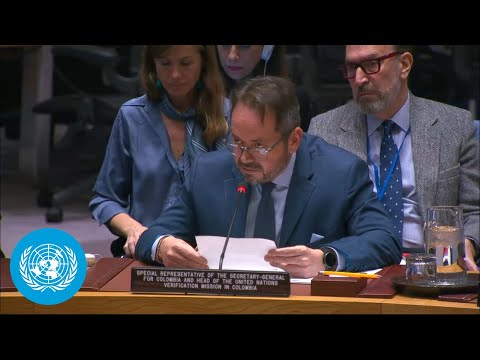
UN envoy says Catatumbo violence threatens implementation of Colombia’s 2016 peace agreement
Summary
Carlos Ruiz Massieu told the council that recent killings and displacement in Catatumbo are undermining the gains of the 2016 peace agreement and called for resources, coordination and protection for civilians, ethnic communities and reintegration programs.
Carlos Ruiz Massieu, a speaker to the council, told the United Nations Security Council on Jan. 1 that a surge of violence in the Catatumbo region is jeopardizing implementation of Colombia’s 2016 peace agreement and urged armed groups to stop attacks on civilians.
“If it places at risk the civilian population, including community leaders and peace signatories,” Ruiz Massieu said, “I condemn these killings, which are an attack against peace itself.” He told the council the violence since late last week had claimed “dozens of civilian lives,” including former combatants and local leaders, and had displaced thousands.
The council was briefed that the attacks in Catatumbo followed an assault by the National Liberation Army (ELN) in an area where a rival armed group referred to in the briefing as EMBF is present. Ruiz Massieu said the confrontations reflect clashes between armed groups in areas with a limited state presence where they “compete for control over illegal economies.” He repeated calls for armed groups to allow “unhindered access for humanitarian responders.”
Why this matters: Ruiz Massieu framed the violence as both a humanitarian emergency and a political risk for Colombia’s broader peace process. He said the events erode trust and legitimacy that the parties and communities need for negotiations and long-term implementation of the agreement.
Ruiz Massieu also described specific implementation priorities that he said require more political will, clearer objectives and protected funding. He welcomed President Petro’s reported assurance that budgets for the peace agreement will be protected and singled out the Ministry of the Interior’s Rapid Response Plan and newly established territorial packs as instruments meant to speed development and infrastructure in prioritized regions. “The success of the Ministry of the Interior’s Rapid Response Plan … will depend directly upon the availability of resources,” Ruiz Massieu said.
He highlighted several technical areas where funding and coordination are needed: adjudication and formalization of land in rural reform, accelerated implementation of the peace agreement’s ethnic chapter for Afro-Colombian and Indigenous communities, and faster application of gender provisions in coordination with the National Action Plan on Women, Peace and Security. Ruiz Massieu said these measures require “adequate funding, a territorial approach, proactive leadership and constant engagement with women's organizations.”
On reintegration, Ruiz Massieu described a Jan. visit to the Tierra Grata territorial area for training and reintegration in Cesar, where he said former combatants had built “over 70 permanent dwellings” and started productive projects such as a shoemaking factory and a road paved with a nearby community. He cautioned, however, that “significant challenges are yet to be addressed to ensure that the projects are sustainable, housing is improved, and security guarantee.”
Ruiz Massieu also addressed transitional justice and the Special Jurisdiction for Peace (SJP). He said the SJP has produced indictments of 158 individuals considered mainly responsible for serious crimes committed during the conflict and has contributed to establishing truth, but expressed concern about “disagreements between the jurisdiction and those appearing before it with regard to the schedule and the scope of the proceedings.” He urged continued constructive dialogue and coordination among the ministries of defense and justice and the agency for reincorporation and unity, and said implementation of the SJP’s measures will require “the allotment of the resources necessary.”
Throughout his address, Ruiz Massieu framed the 2016 peace agreement as the central instrument for consolidating peace, saying “only by fully and deeply implementing the agreement, bringing a comprehensive presence of the State to the long marginalized areas, can the country expect to overcome the factors that continue to foster conflict.” He closed by asking the Council to maintain unanimous support for the verification mission.
The briefing referred repeatedly to humanitarian assistance provided on the ground by UN teams and local verification staff who assisted evacuations of at-risk persons, including ex-combatants. Ruiz Massieu praised the “dedication of our colleagues on the ground” and said UN humanitarian colleagues were offering support to affected populations.
The council hearing as recorded did not show any formal vote or decision appended to the briefing. The remarks combined reporting of recent violence with recommendations for additional resources and stronger coordination among Colombian state entities and international partners.