Get Full Government Meeting Transcripts, Videos, & Alerts Forever!
Get email alerts on the Housing Homelessness topic
No spam. Unsubscribe anytime.
North Star Collaborative reports $40 million-plus in funding, asks cities and county to ease rules for more housing
Summary
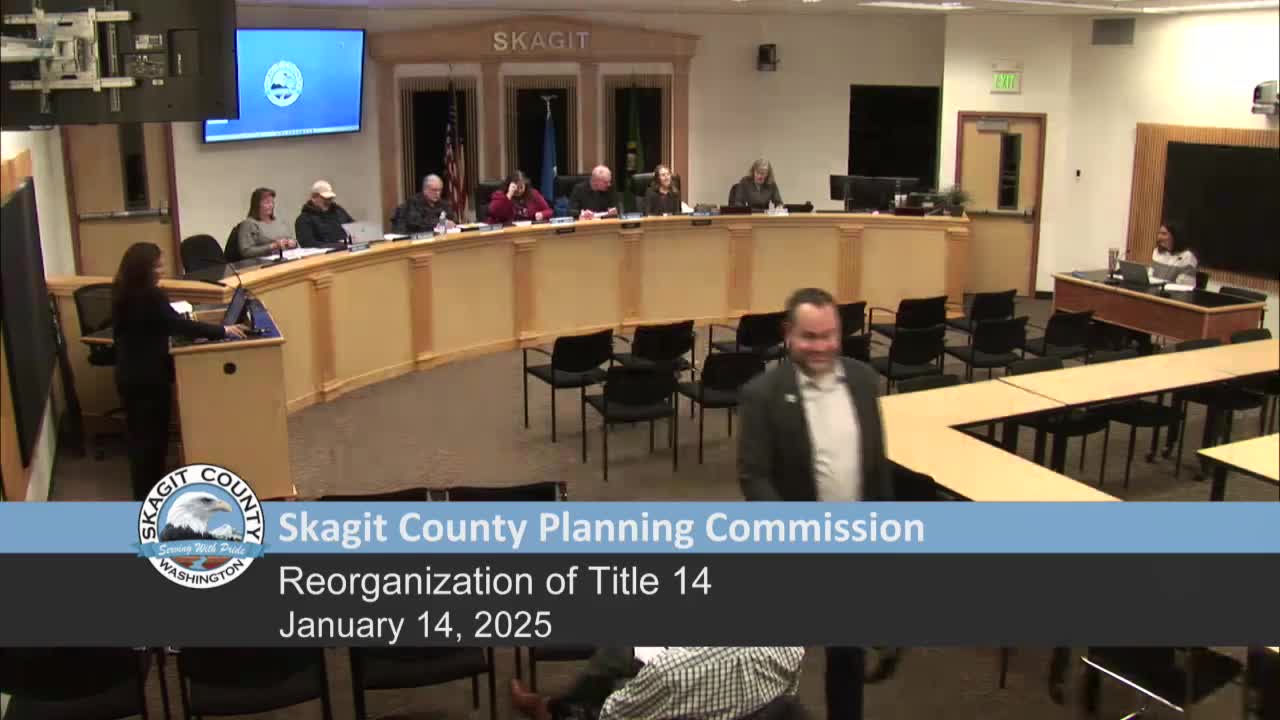
Monica Negrilla, Skagit County’s director of strategic initiatives, and George Kosovich, manager of Community Services in Skagit County Public Health, told the Planning Commission on Jan. 14 that the North Star Collaborative has secured more than $40 million for regional housing and behavioral‑health initiatives and is pursuing cross‑jurisdiction policy changes to speed production of affordable housing.
Monica Negrilla, Skagit County’s director of strategic initiatives, and George Kosovich, manager of Community Services in Skagit County Public Health, told the Planning Commission on Jan. 14 that the North Star Collaborative has secured more than $40 million for regional housing and behavioral-health initiatives and is pursuing cross‑jurisdictional policy changes aimed at increasing housing supply and treatment capacity.
What North Star is: Negrilla said North Star is a multi-jurisdiction partnership formed in July 2022 that is led by a leadership team composed of the four mayors (Mount Vernon, Burlington, Sedro‑Woolley and Anacortes) and the county commissioners, supported by an advisory group and technical task forces (housing; recovery/behavioral health; and co‑response). The collaborative focuses on the county’s most vulnerable population segments — particularly those with chronic homelessness and high system costs — so funds and services target people who use intensive crisis and emergency services.
Funding and projects: Negrilla and Kosovich said more than $40 million has been secured for housing and behavioral-health work. The presenters highlighted the Skagit Star Center, which broke ground in 2024 and is scheduled to open in early 2026; the facility will include a higher-level detox unit that accepts first-responder drop-offs, 16 crisis-stabilization beds and 16 co‑occurring-treatment beds. The county and partners also have secured funds for shelter services and nonprofit housing developments, including a Volunteers of America affordable-housing project in Burlington that will include units for low‑income families and veterans.
Housing strategy and local regulatory changes: Kosovich described a publicly endorsed “call to action” signed by the county commissioners and the four mayors that identifies four near-term policy changes intended to speed production of affordable housing: - Allow mixed‑use development outright in commercial corridors and transit‑served areas. - Adopt by‑right permitting for identified residential zones (remove discretionary review where code standards are met). - Reduce parking requirements for affordable-housing projects in transit‑accessible areas. - Reduce impact fees for affordable housing, especially for smaller‑unit types.
Kosovich said these steps are likely to affect city projects and urban‑area development most directly, and he invited Planning Commission members to look for regulatory opportunities in draft comprehensive plan materials and other code updates.
Data and rationale: Kosovich summarized data showing rising housing costs and links to homelessness: countywide average rent for a two‑bedroom unit was reported as about $1,407; the point‑in‑time (PIT) count last year recorded about 512 people experiencing homelessness in Skagit County, and school‑district reporting identified 801 students experiencing homelessness under McKinney‑Vento definitions. Kosovich said research points to housing cost and vacancy rate as primary drivers of homelessness.
Questions and concerns from commissioners: Commissioners asked about the Star Center’s opening date and service levels (Negrilla said early 2026; the Center will include detox, crisis stabilization and treatment beds). Commissioners also raised concerns about community perceptions of low‑barrier housing and asked how positive outcomes and neighborhood protections would be communicated and enforced. Kosovich and Negrilla said transparency, local coordination and pilot models that integrate supportive services are part of the Collaborative’s approach.
Next steps: North Star staff said they will keep engaging jurisdictions and the public and will provide project and funding details as development proposals are refined. They asked Planning Commission members to consider regulatory changes that would facilitate affordable housing production and to coordinate with city planners and consultants working on comprehensive‑plan updates.