Get Full Government Meeting Transcripts, Videos, & Alerts Forever!
Get email alerts on the Public Health Fees topic
No spam. Unsubscribe anytime.
Skagit County Board of Health adopts revised fee schedule, effective Feb. 1
Summary
The Skagit County Board of Health adopted a revised public health schedule of charges after a public hearing and brief comments. The changes raise several permits to better reflect staff time and reduce reliance on general-fund subsidies; the on-site septic repair fee increased about 46% and the county set an implementation date of Feb. 1.
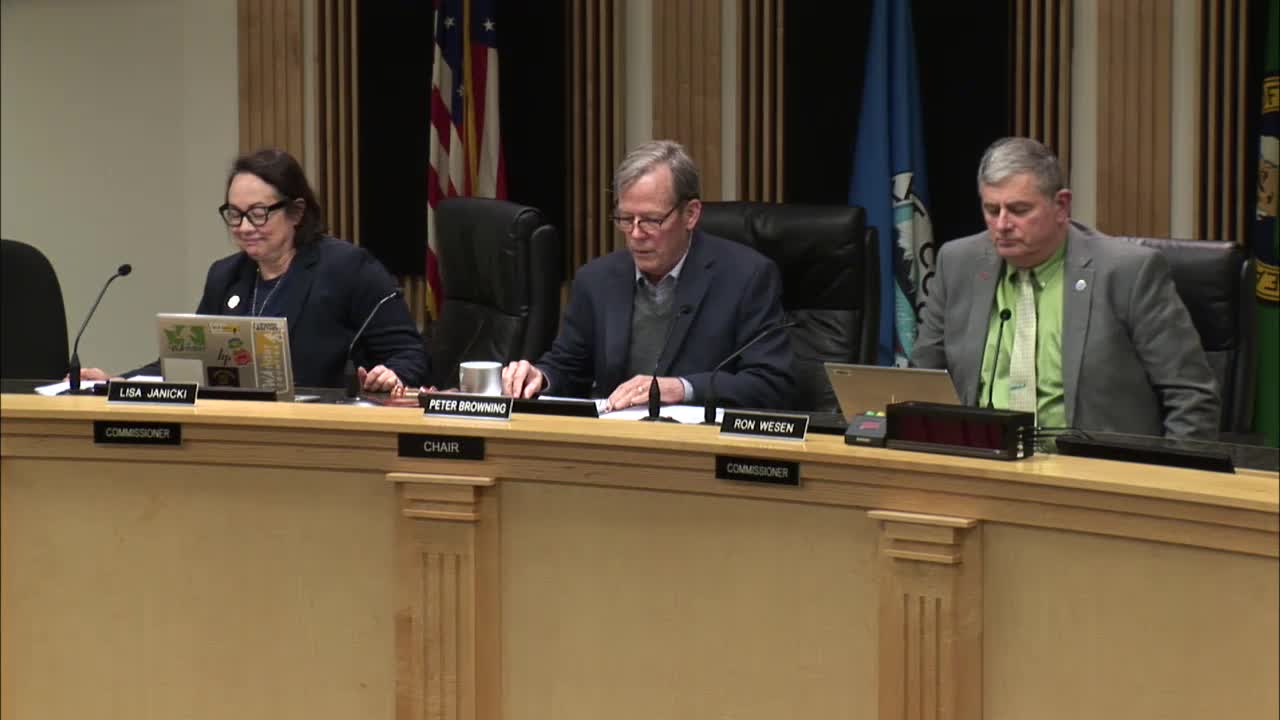
Skagit County’s Board of Health on an affirmative voice vote adopted a revised schedule of public health charges after a public hearing in which staff described outreach and one written comment on septic repair fees.
The action, taken by the Board of County Commissioners while sitting as the Board of Health, implements updated permit and inspection fees for food-service establishments, on-site septic systems, drinking-water systems, solid-waste facilities and other environmental-health services. The county set a Feb. 1 effective date for the new schedule and plans annual updates each Feb. 1 under the three-year schedule presented to the board.
Britt Fapp Dutton, Skagit County environmental health manager, said the department conducted outreach before the hearing, sending a notice to 858 recipients by subscription and recording a 91% delivery rate and a 66% open rate. "For the public comments, we received 1 comment," Fapp Dutton said, referring to a written submission about the on-site septic repair fee.
Fapp Dutton said the county’s time-study analysis and earlier pandemic pause in work on the fees contributed to the revisions. The county used a time-based approach to align fees with the staff time needed for reviewing plans, doing site visits and inspection follow-up, she said. For example, the department’s analysis showed about 4.5 staff hours for a new septic-system review and design task. The county proposed an average fee increase of about 15% across environmental-health fees; some permit categories rose less than that, and others rose more.
The on-site septic-system repair permit received one of the largest increases, Fapp Dutton said. "It's about 46%," she said, adding that the repair fee had been heavily subsidized from the general fund in the past and that current repair assistance and low-interest loans have reduced the need for that subsidy. She said the proposed fee is intended to reflect the actual cost of the service and that a repair often requires substantially the same design review work as a new installation.
Food-service permit fees also rose, the manager said. Risk-level 1 food-establishment permits (the lowest risk tier) were increased roughly in line with the overall average, while risk-level 2 and 3 permits saw larger increases near 30% to better reflect staff time.
During the hearing, Margo Gillespie, solid waste division manager, spoke in support of the department’s approach and said the county has built increased solid-waste fees into its budget planning. "I just wanted to speak in support of the health department and this new fee schedule," Gillespie said, and noted that funding from Ecology can be variable and that local fee revenue provides a more sustainable base.
Commissioners also discussed homeowner installations for septic systems. Staff said the homeowner-installation fee (listed in the schedule at $480) reflects extra inspection time needed when a homeowner, rather than a certified installer, performs the work. The department said homeowners may install simple gravity systems but not alternative systems that require specialized installers.
The board closed the public hearing after the single written comment and moved to adopt the resolution approving the revised schedule of charges. The motion to adopt was seconded and approved by voice vote. The board also approved the Board of Health minutes from Dec. 17 by voice vote earlier in the meeting.
The county’s presentation noted that on-site systems typically last about 20 to 30 years with regular maintenance and that repair or replacement costs for homeowners can be substantially higher than the permit fee itself. Fapp Dutton said the fee change should be viewed in the context of available repair rebates and low-interest financing options that the department publicizes to residents.
The board’s resolution sets the new charges to take effect Feb. 1 and schedules annual Feb. 1 adjustments for the coming years under the adopted schedule. No formal dissent or roll-call vote was recorded in the meeting transcript; the board approved the resolution by affirmative voice vote.