Get Full Government Meeting Transcripts, Videos, & Alerts Forever!
Get email alerts on the Municipal Budget topic
No spam. Unsubscribe anytime.
Board of Appeals adopts two‑year departmental budget amid discussion of surcharge reserves
Summary
The San Francisco Board of Appeals adopted its FY26–27 departmental budget after staff presented revenue and expenditure projections and commissioners discussed surcharge adjustments, reserves and the controller’s role in setting surcharges.
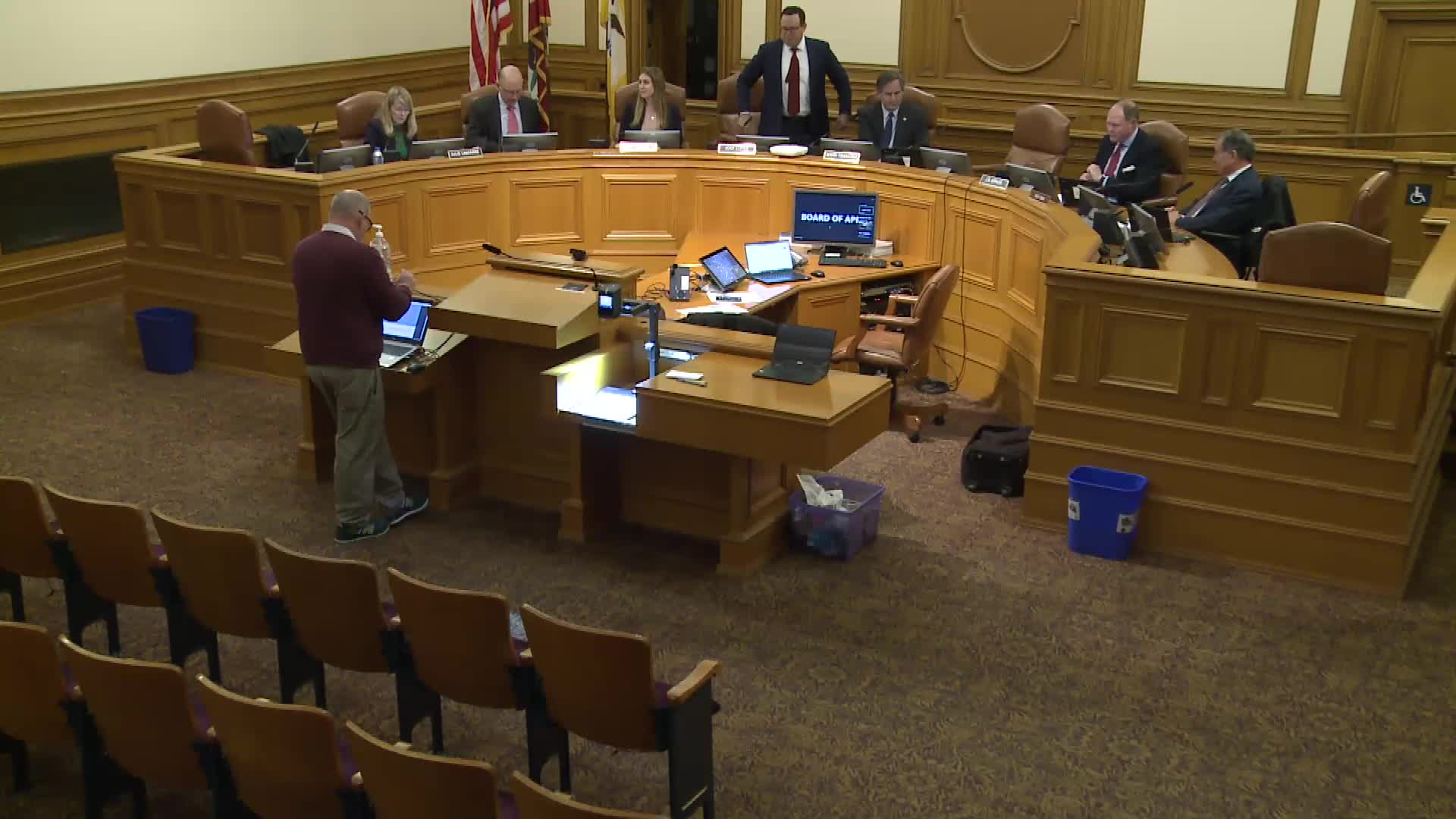
The San Francisco Board of Appeals on Feb. 12 adopted its departmental budget for fiscal years 2026 and 2027 after a staff presentation and discussion about surcharge revenue, reserve levels and the role of the controller’s office in adjusting rates.
Executive Director Julie Lamar presented the board’s budget overview, saying surcharge revenue — collected on new and renewed permits — accounts for roughly 99% of the board’s revenue while filing fees contribute about 1%. Lamar told commissioners that the board’s expenditures are primarily personnel (about 66%) and interdepartmental services (about 30%), including legal counsel, broadcast services and information‑technology costs.
Lamar said the board’s projected FY25 revenue and a six‑month report show a surplus driven by lower appeal volume in recent years; the board’s expected appeal volume in FY25 was 55% below the 10‑year historical average, she said, citing factors such as changes in statewide law and the overall volume of permitting. Commissioners discussed how to treat a rising surplus. Commissioner Rick Swig urged the board and staff to ask the controller’s office to establish a target reserve — a cap for accumulated surplus used to buffer year‑to‑year fluctuations — rather than allowing ad hoc surcharge adjustments. "We should set a guideline as to not to exceed reserve, because reserves are there for the ebbs and flows of volumes of activity to our board," Swig said.
Lamar said she was already in discussions with the Controller’s Office and the Mayor’s Budget Office and recommended the comptroller perform a surcharge analysis in April; the controller will determine whether surcharges should be adjusted to cover projected expenditures. Planning and board staff also noted that filing fees have not changed since 2010.
After discussion, Commissioner Swig moved to adopt the departmental budget for FY26–27. The motion passed 4–0 (Lopez, Trezwina, Epler and Swig voting aye). The board’s adopted budget will be subject to the controller’s surcharge analysis in April and to the usual permitting‑to‑permit fee adjustments during the two‑year cycle.