Get Full Government Meeting Transcripts, Videos, & Alerts Forever!
Get email alerts on the Budget Finance topic
No spam. Unsubscribe anytime.
DBI budget review proposes phased fee increases, $3M tech reserve; community groups warn of steep cuts
Summary
The Building Inspection Commission on Jan. 15 reviewed the Department of Building Inspection proposed two‑year budget that phases in fee increases to reach full cost recovery by FY 2027 and would establish a $3 million technology reserve, while department and community representatives warned proposed general‑fund cuts could sharply reduce community outreach services.
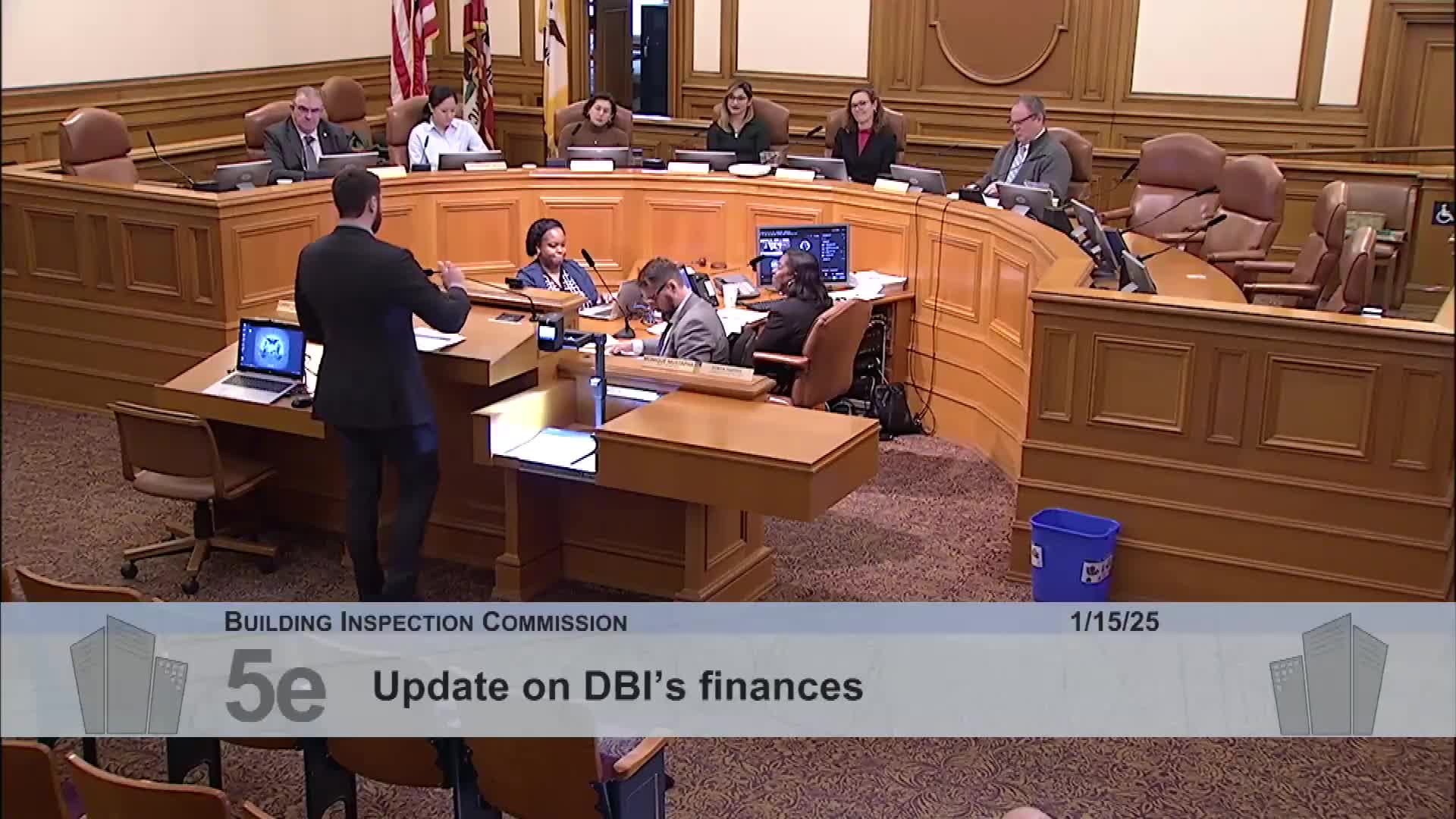
The Building Inspection Commission on Jan. 15 reviewed the Department of Building Inspection—(DBI) proposed budget for fiscal years 2025—6 and 2026—7, a presentation that included planned stepped fee increases, a proposed technology reserve, and the effect of a mayoral directive to reduce general‑fund support by 15%.
DBI Deputy Director for Administration Alex Koskinen said the department is proposing two additional years of stepped fee increases intended to reach full cost recovery by FY 2027. "The third and fourth fee increase—... will get us to cost recovery unless something crazy happens in the economy," Koskinen said. He also said DBI plans to reestablish a technology reserve and deposit $3,000,000 in the first year to begin replacing the department—s aging permit tracking and other legacy systems. "We are reestablishing this technology reserve, which will likely be approximately a 3% surcharge on fees," Koskinen said.
Why this matters: DBI is a predominantly fee‑funded department. Commissioners were presented with an analysis showing current fee revenue at about $60 million, full cost recovery estimated near $93 million, and a proposed step that would produce roughly $75 million in year two of the plan. Absent higher general‑fund support, DBI proposes increasing user fees to cover operating costs and rebuild reserves that were drawn down after the pandemic.
Public commenters and commission discussion focused heavily on the budget—s funding for community‑based organizations (CBOs) that perform tenant outreach and support the department—s code enforcement outreach programs. Lisa (Chinatown Community Development Center) told commissioners the proposed cuts would be substantial for service providers. "So now we're facing about a total of 25% cut for our next fiscal year, which is a quarter of our budget," she said, describing program staff reductions that would follow.
DBI staff outlined the budget tradeoffs: the city—s incoming mayor instructed departments to plan for a 15% reduction in general‑fund support, which would widen the gap between current revenue and full cost recovery and increase pressure on fees and reserves. Koskinen said DBI will work with the mayor—s office on exceptions and on the final staffing case: "We will be able to request positions and our critical positions like our inspectors and our plan checkers, we can backfill to make sure that we can continue to provide our core services," he told the commission.
Commissioners asked for more analysis of tradeoffs and the consequences of potential cuts. Several commissioners said the commission should prepare recommendations for the mayor and Board of Supervisors to protect CBO funding or identify options to preserve those services, including using reserves or accelerating fee adjustments. Commissioner Alexander Toot said the commission could offer a "menu of options" for covering a possible shortfall to the CBO line.
Public commenters also raised operational concerns tied to DBI systems and recordkeeping. Jerry Drantler, a frequent commenter on permitting issues, asked, "Why is the department still using job cards in 2025? It seems archaic," and requested that DBI use its financial model to show how reductions to CBO funding would affect inspection staffing and service levels.
Next steps: This was the commission—s first of two budget hearings; staff said a second hearing is scheduled, and the department will submit its budget to the mayor and supervisors in the standard city schedule. Commissioners requested follow‑up information, including (1) specifics on how an identified internal permit sign‑off error was handled procedurally (without personnel details), (2) an analysis quantifying the staffing or service impacts of reductions to CBO funding, and (3) a written set of options the commission could send to the mayor and Board of Supervisors.
No formal vote on DBI—s budget was taken at the Jan. 15 meeting; commissioners heard the proposal and directed staff to provide follow‑up information.
Ending: The commission will take the budget up again at a special meeting on Feb. 12 and at its next regular meeting on Feb. 19, after which DBI—s submission will enter the mayor—s and supervisors— phases of the city budget process.