Get Full Government Meeting Transcripts, Videos, & Alerts Forever!
Get email alerts on the Measure I Bond Oversight topic
No spam. Unsubscribe anytime.
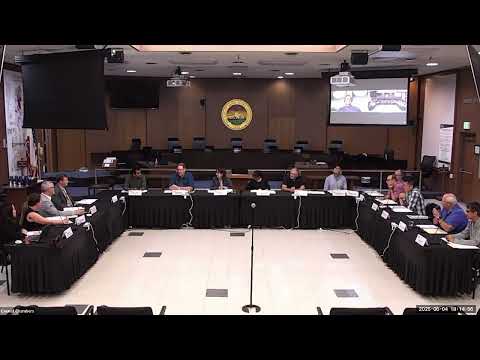
Santa Clara oversight committee holds orientation on Brown Act, public records and Measure I bond process
Summary
Newly formed Measure I Bond Compliance Citizens Oversight Committee received training on open-meetings and records laws, committee bylaws and the city's plan for issuing $400 million in general obligation bonds; members were told the first working meeting is planned for August.
The Santa Clara Measure I Bond Compliance Citizens Oversight Committee convened for an orientation meeting to review its duties overseeing the city's $400 million Measure I general obligation bond and to receive training on state open-meeting and public-records requirements, city officials and bond counsel said.
The orientation introduced committee members to procedural rules they must follow when discussing bond-related business and summarized the bond issuance process, including the city's plan to issue the authorized bonds in multiple series rather than all at once.
The committee was created by the voter-approved Measure I expenditure plan and is charged with informing the public about bond spending activities, reviewing project phases for consistency with the expenditure plan before City Council consideration, and reviewing annual audits that confirm bond proceeds were spent as promised. "You are entrusted with the responsibility of reviewing the expenditures to ensure that they align with the Measure I expenditure plan," Assistant City Manager Liz Klotz told the panel.
Glenn Guggins, the city attorney, led the training on the Brown Act and the California Public Records Act. Guggins said a core Brown Act principle is that "local legislative bodies . . . can only deliberate and take action at public meetings," and warned committee members about so-called "serial meetings" and the limits on using social media to discuss committee business. He told members to avoid email or social-media chains that could combine into a prohibited quorum of communications and to "not reply all" to staff emails when doing so would create deliberations outside a posted meeting.
On public records, Guggins said records generated in the course of the committee's work are broadly subject to disclosure: public records can be "any sort of document or information generated as the final output of a business process or business decision," and members should expect to search personal devices if a records request covers communications they created. He cautioned that committee members are not required to file Form 700 financial-disclosure forms for this role, but they remain subject to common-law bias rules and the city's local ethics policies.
Guggins also explained the committee's membership rules and the role of alternates. He said the City Council selected an "active" alternate structure: alternates receive the same meeting materials as primary members and will serve and vote when a primary member is absent.
Scott Ferguson of Jones Hall, the city's bond counsel, presented a "Bonds 101" overview. Ferguson said Measure I authorizes the city to issue up to $400 million in general obligation bonds but "the bonds won't be issued all in 1 go." He summarized key constraints and operational details: tax-exempt municipal bonds generally must be spent within about three years of issuance for the tax treatment to apply, rating agencies and a municipal adviser typically participate in pricing and structure, and a trustee bank holds bond proceeds and pays investors the scheduled debt service. Ferguson said bonds commonly carry terms of about 30 years and noted that issuance costs and professional fees are paid from bond proceeds.
City staff and counsel described the near-term schedule the committee will see. Staff said the City Council is expected to adopt a resolution to authorize a tax levy (to be delivered to the county assessor in time for the tax roll) and that the oversight committee's first working meeting is planned for August, when members will select a chair and vice chair and review a proposed first-phase project schedule. Staff described aiming to issue an initial series by the end of the calendar year if the phases and Council approvals proceed on the proposed timeline.
Members asked about contingencies and cost overruns. A staff speaker said the city builds contingencies into project budgets and added, "I think it's a 25%" when describing common contingency assumptions, and staff and counsel said projects awarded or started before bond proceeds arrive can be reimbursed later if they meet the legal look-back rules (staff cited an approximate 18-month reimbursement look-back window).
Committee members also raised practical questions about communication between members, project dashboards and timing of work. Guggins reiterated that informal individual conversations with members of the public or staff are not by themselves a Brown Act violation, but that members should avoid a series of communications that effectively involve a quorum of the committee.
No formal committee votes on bond actions were recorded at the meeting. The session closed after questions and staff said it will circulate scheduling information for the August meeting.
Next steps for the committee include the August working meeting to review staff's proposed phase 1 project schedule and to elect committee leadership; staff will provide materials and a proposed phase schedule in advance so members can assess whether recommended projects conform to the Measure I expenditure plan.