Get Full Government Meeting Transcripts, Videos, & Alerts Forever!
Get email alerts on the Water Treatment topic
No spam. Unsubscribe anytime.
Richmond officials outline causes and fixes after water‑plant turbidity incident, institute weekly basin cleanings
Summary
City officials said a turbidity event at Richmond's water treatment plant forced two boil‑water advisories, prompted new weekly basin cleanings, a task order to engineers and consideration of alkalinity augmentation to reduce future risk.
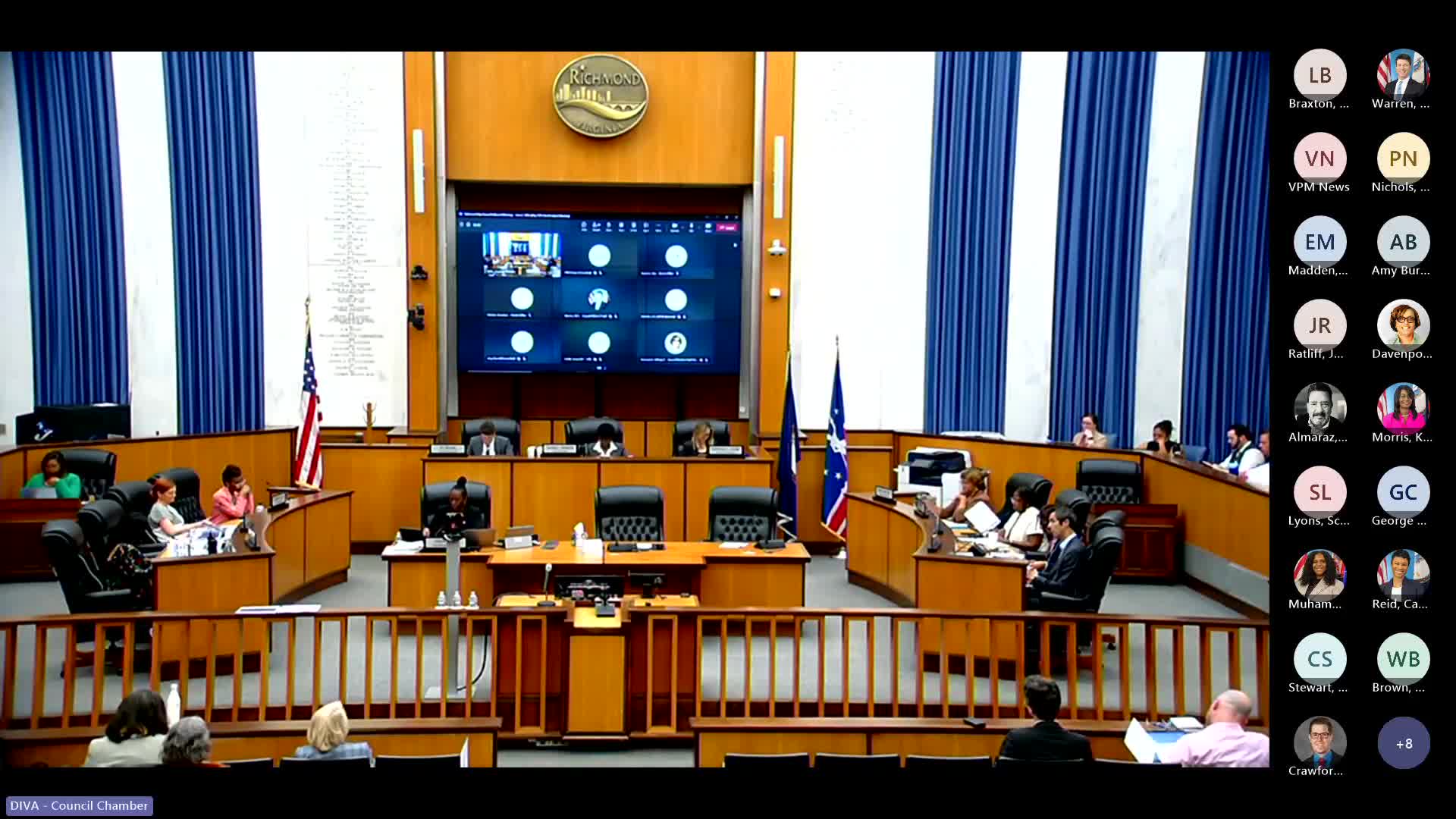
Richmond City Council heard an update from the Department of Public Utilities on a turbidity incident at the city water treatment plant that led to two boil‑water advisories and temporary reductions in production.
Department staff said the plant took filters offline after a large release of accumulated alum sludge clogged filters. "We did have an incident in Monday where we had a turbidity issue at the water treatment plant, which resulted in us having to take the filters down at the water treatment plant," Mr. Morris said, describing the sequence that led to the advisories. The boil advisories covered two separate distribution zones and were lifted around 2:30 a.m. Thursday, officials said.
City and regional reviews identified two primary factors: poorer raw‑water quality in that segment of the James River and limited alkalinity in the raw water, and maintenance practices related to sedimentation plates where alum sludge accumulates. Morris said VDH (Virginia Department of Health) conducted a review of James River water quality and confirmed the lower alkalinity and related risks. He said the plate cleanings — previously performed as corrective maintenance or on demand — allowed sludge to build up and, when released, clogged filters.
To reduce the risk of recurrence, staff described three steps now in place or under way: instituting a routine preventative maintenance schedule to clean sedimentation basins weekly on a rotating schedule (four basins, one cleaned each week); ordering a task order for engineers to review maintenance items and incorporate manufacturer recommendations into the maintenance work order system; and studying alkalinity augmentation in the treatment process to reduce sediment instability. "That frequency has been set up to do weekly cleanings, rotating between each of the basins," Morris said of the new schedule.
Council members pressed for detail and ongoing metrics. Council Member Robertson asked how the multi‑phase master plan aligns with budget and staffing needs; Morris pointed to a 1–10 year plan included in the packet and promised a memo and follow‑up sessions with more detailed timelines, staffing requirements and capital needs. "We're going through the process now of going through and updating master plans on a very prescriptive time frame," Morris said when asked about plan updates.
Technical and operational follow‑ups reported during the discussion included: inspecting all 22 filters (staff said 19 were back in service at the time of the briefing and parts were on order for the remaining units); reviewing backwash cycle procedures to improve emergency recovery time; and re‑evaluating the plant's oxidation agent system (potassium permanganate), which Morris said was taken offline in December 2024 and will require piping flushing and pump verifications before being returned to service.
Council members also asked about an April chemical event related to fluoride. Morris said that event involved the fluoride tank only and cited the VDH notice of alleged violation and an approximate volume of 5,900 gallons involved in that incident.
On distribution‑system repairs, Morris provided an update on Canal Street work: crews installed multiple line stops, discovered a failed valve that required an additional line stop, and anticipated completing repairs that evening during low demand. He said the city coordinated with regional partners to keep tanks topped off and to avoid customer impacts.
Morris described improvements in communication and oversight during the event, including more proactive outreach to regional partners and regulators and an intention to provide quarterly performance reporting and an annual DPU report. He acknowledged challenges ahead. "This is going to be a bumpy road, but I'm here for the long haul," he said. Morris offered to return for more detailed, focused sessions and recommended the council narrow topics for follow‑up so staff can provide detailed briefings on specific items.
The council asked for a table of issues showing question raised, current status and timelines; Morris said he had a draft and would expand it and provide a memo and additional presentations, including the forthcoming Hagerty report referenced in the packet.
Council members and staff emphasized regional coordination with Henrico, Chesterfield and Hanover utilities and noted limits on the city’s ability to immediately curtail flows to partners because of system hydraulics and the risk of water hammer and infrastructure damage. Morris said some entry points could be fitted with flow‑control devices to make such transitions safer in the future.
The discussion concluded with council requests for more granular performance measures, budget and staffing estimates tied to the multi‑year plan and frequent updates to the council as remediation and capital projects proceed.