Get Full Government Meeting Transcripts, Videos, & Alerts Forever!
Get email alerts on the Municipal Finance topic
No spam. Unsubscribe anytime.
Fort Thomas audit flags $322,000 cash discrepancy; auditors issue qualified opinion and recommend tighter controls
Summary
An independent audit of Fort Thomas's financial statements for the year ending June 30, 2024, found accounting problems that led auditors to issue a qualified opinion limited to the city's general-fund cash account and recommended several control improvements.
An independent audit of Fort Thomas's financial statements for the year ending June 30, 2024, found significant accounting problems that prompted auditors to issue a qualified opinion and recommend multiple internal-control improvements.
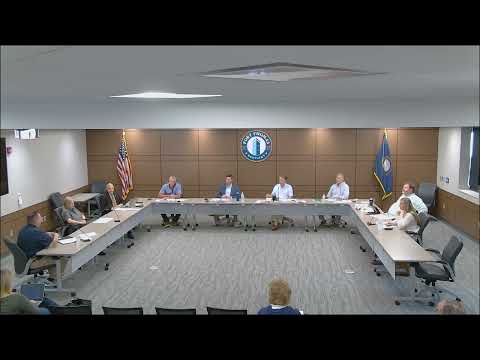
John Chamberlain, a partner at Chamberlain Owen and Company, told the Fort Thomas council and finance committee on Sept. 30 that auditors discovered multiple red flags during fieldwork that began in January 2025, including an unreconciled general-fund cash balance that auditors and staff ultimately treated as a prior-period error. "We noticed it was $11,000,000 off," Chamberlain said, summarizing the initial fund-balance discrepancies auditors encountered. He said the year-end financial statements required a prior-period adjustment of about $1,150,000 and the write-off of approximately $322,000 that could not be reconciled to the general-fund cash balance.
The prior-period adjustment recognized previously unrecorded items, including amounts related to federal American Rescue Plan Act (ARPA) receipts and an $850,000 development receivable the city had paid but not recorded. Chamberlain said those steps, together with work by temporary finance director Linda Chapman, allowed the auditors to complete their work but required a qualified opinion limited to the cash account. "That $322,000 in an accounting term, we'd say that's unaccounted for," Chamberlain said. He added, "We have no reason to believe it's been misappropriated," but characterized the condition as a serious accounting failure that merited a qualification and management findings.
Chamberlain and Chapman described multiple specific problems that led to the findings: prior-year balances that did not roll forward correctly, missing fixed-asset schedules, unreconciled interfund "due to/due from" balances, and revenues from opioid settlements and ARPA that had not been recognized properly. The auditors also reported that the prior auditor's workpapers did not meet professional standards and were difficult to follow, which complicated the review of earlier years.
City staff and auditors said corrective work was already underway. Chapman, hired on a temporary basis after the city's finance function lost continuity during an employee illness, reconciled numerous accounts, separated 13 aggregated cash accounts into individual accounts in the city's Springbrook software, and began monthly reconciliations for 2024 and 2025. Chamberlain credited Chapman's work with allowing the audit to be completed.
The audit also reported a lack of internal control over financial reporting and disclosed noncompliance with Kentucky law because the city expended roughly $1,000,000 more from the general fund than was budgeted. Chamberlain said approximately $600,000 of that overage traced to long-standing reconciling items (due tos/due froms) and that after adjustments the remaining variance was closer to $400,000 and related in part to Tower Park funding.
Council and staff discussed next steps. City administration has adopted several process changes already, including publishing monthly financial reports for council, formalizing check-signer authority to place primary signing responsibility with the mayor and finance director (rather than council members), updating the investment policy and capital-asset procedures, and tightening credit-card and fuel-site controls. Chamberlain and others also discussed options for long-term staffing: hiring a full-time finance director versus contracting periodic outside accounting services similar to arrangements used by nearby cities. "When I got here in '23, that was one of the things I brought to council at the time about Springbrook," Matt, the city administrator, said, describing the move to the Springbrook accounting system and the need for an experienced finance director to use its controls effectively.
Auditors recommended six additional management comments and corrective actions beyond the two formal findings (the qualified opinion and lack of internal control). Chamberlain said the firm had not previously issued a qualified opinion in his roughly 20 years of governmental-audit work, underscoring how uncommon the finding is.
On fund balance and reserves, auditors and staff cited Government Finance Officers Association (GFOA) guidance that typically recommends a minimum unassigned fund balance of roughly one-fourth to one-third of operating expenditures. Fort Thomas staff said the city's operating budget is roughly $24 million and noted that the council has already allocated about $4 million of reserves to capital projects, leaving the city with an unrestricted balance above minimum recommended levels.
Staff said the fiscal 2025 audit work is underway, with the city's 2025 audit workpapers mostly submitted and final fieldwork scheduled. Chamberlain said the team plans to begin the FY2025 fieldwork around January, and city staff said monthly financial reports and other process improvements will be available to council in October and November.
The audit discussion included questions about ARPA and opioid settlement accounting. Auditors said ARPA receipts had been set up correctly and that opioid-settlement receipts should be recorded as long-term receivables and deferred revenue until spent. Auditors said the city had recognized roughly $493,000 from opioid settlements through June 30, 2025, and that additional settlement receipts had arrived in August.
No formal council votes on audit items were recorded during the session; the meeting served as an audit presentation and a check on progress and corrective actions. Council members pressed for continued monthly reconciliations, clearer line-item reporting for large events and programs, and active recruitment for a permanent finance director.
The audit and staff discussion leave Fort Thomas with immediate next steps: finalize the FY2024 audit reporting, complete FY2025 fieldwork, implement the recommended controls, and recruit a permanent finance director or decide on a long-term outsourced solution. City staff said it will return to council with the monthly reporting package and policy drafts in coming meetings.