
Zoning board denies owner’s request for fourth‑floor rooftop deck at 677 Dame Street
Get AI-powered insights, summaries, and transcripts
Subscribe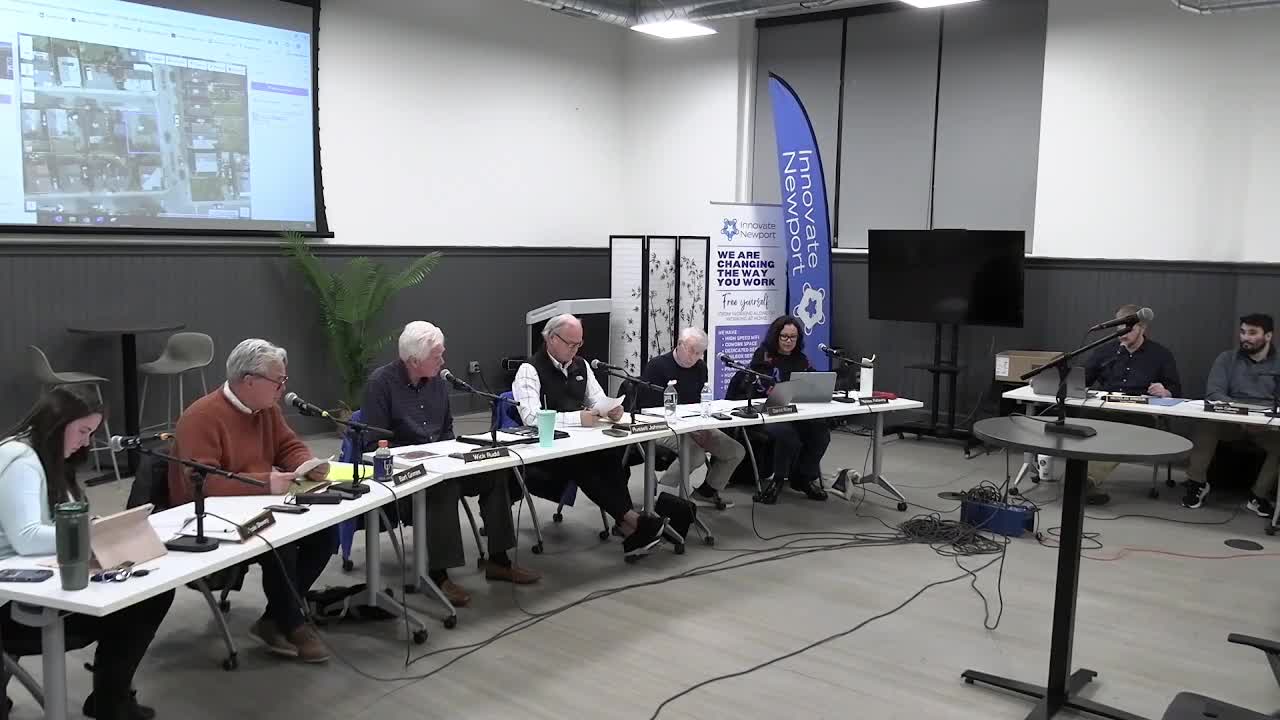
Summary
After objections from nearby residents, the Newport Zoning Board denied a special‑use permit request for a fourth‑floor rooftop deck at 677 Dame St., ruling the structure would alter the character of the surrounding area. The vote was 5–0 against the permit.
The Newport Zoning Board of Review on Jan. 27 denied a request to build a fourth‑floor rooftop deck at 677 Dame Street, a petition brought by Byron Earhart. The board voted 5–0 against granting the Category‑6 special‑use permit that the property owner needed because the lot is substandard.
Attorney Richard Daddario presented the application and architect Greg Yolanes described the design: a multi‑story single‑family residence built above an elevated ground level (required because the site sits in a flood zone) with a rooftop recreation area at the top of the living floors. The architects said the lot and flood‑zone rules compelled placement of living spaces above grade and that a rooftop deck provides the owner usable outdoor space without further increasing on‑site impervious area.
Neighbors Timothy Carroll and Loretta Burke testified in opposition. They said the neighborhood south of Narragansett Avenue has few if any rooftop decks, raised concerns about loss of privacy and sightlines into small rear yards, and expressed worries about amplified noise if a rooftop amenity were used for gatherings. Burke also said several nearby owners had not received separate mailed notices after the application was continued from the December meeting and asked for a continuance; zoning staff explained the board’s standard practice is to send the initial abutter notice and to show continued cases on subsequent agendas rather than re‑mail notices unless the application changes.
Board members spent substantial time on the central legal question for a Category‑6 special use: whether the proposed rooftop deck would alter the character of the area within 200 feet. Several members found the immediate neighborhood does not feature comparable rooftop decks and concluded approving the rooftop deck would amount to an intensification and a visual change out of character with the surrounding lots. Members also noted the site’s constrained footprint and the property’s location within a limited business zone abutting residential lots makes the application distinct from cases where rooftop decks have been allowed.
After deliberation the board took a 5–0 vote to deny the special‑use permit. The board rejected the applicant’s motion to approve; no conditions were applied because the motion failed. The record shows the denial rests on the board’s determination that the proposed rooftop deck would alter neighborhood character and therefore failed the Category‑6 standard.
The owner was not present; Daddario said the owner intends to continue using the site as a single‑family residence. The board did not rule on the larger building design or floodplain compliance; its action was limited to the rooftop‑deck special‑use permit consideration.