Get Full Government Meeting Transcripts, Videos, & Alerts Forever!
Get email alerts on the Sanctuary Policy Legal Framework topic
No spam. Unsubscribe anytime.
ACLU and city solicitor say Philadelphia’s detainer and privacy policies constrain federal immigration enforcement
Summary
Legal experts at a Council hearing defended the city’s longstanding limits on honoring ICE detainers and on collecting immigration status, arguing those restraints follow constitutional law and reduce liability for the city.
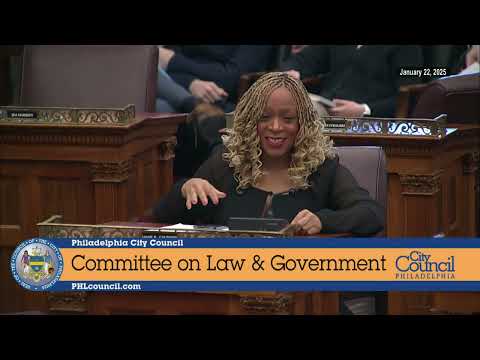
Legal experts from the American Civil Liberties Union and the city’s law department described at a City Council hearing Jan. 22 how Philadelphia’s policies on ICE detainer requests and privacy are designed to protect residents and reduce municipal liability.
Vanessa Stein, senior staff attorney at the ACLU of Pennsylvania, described the city’s ‘‘ICE holds’’ policy — commonly referenced as the municipal response to ICE detainer requests — and said the policy, and related memoranda that limit immigration inquiries by city employees, have legal and practical bases. “These hold requests are not mandatory,” Stein said. “Philadelphia’s power to detain people rests on its power to enforce criminal laws… When ICE sends a hold request, they are effectively asking Philadelphia to detain someone for no legitimate basis.”
Stein and other legal witnesses warned that complying with hold requests without a judicial warrant can expose the city to Fourth Amendment challenges and to civil liability. The ACLU urged the city to continue defending its policies against federal pressure and to consider strengthening local protections where possible.
City Solicitor Renee Garcia summarized two city executive orders and a police memorandum: EO0809 ensures access to city services regardless of immigration status and limits collection/sharing of immigration information; EO0516 makes clear the city will not honor ICE detainer requests absent judicial warrants; and Police Memorandum 0106 restricts officers from sharing confidential immigrant information except in limited circumstances. Garcia said these policies have guided practice for more than a decade and that the law department is reviewing newly issued federal orders to identify any legal effects on city practice.
The hearing did not produce immediate legal actions by the city. Councilmembers asked the solicitor to circulate executive-order texts to council staff and to coordinate deeper briefings with police and other agencies to clarify operational implications.