Get Full Government Meeting Transcripts, Videos, & Alerts Forever!
Get email alerts on the Water Rates topic
No spam. Unsubscribe anytime.
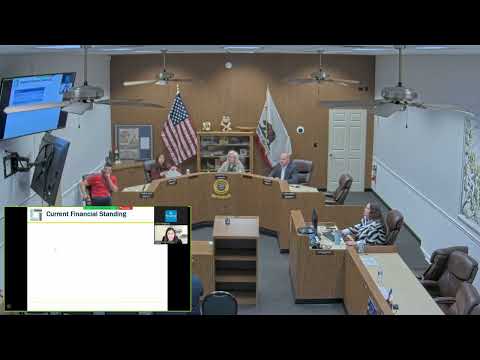
Kingsburg finance committee reviews draft water rate plan that would raise revenues and reshape charges
Summary
Consultant and city staff presented three five-year rate options to the Kingsburg Finance Committee on Feb. 11, proposing a shift from a base-allotment model to fully volumetric charges, new meter-size-based fixed fees, and rate increases intended to rebuild reserves and fund $3.9 million in capital work.
Kingsburg Finance Committee — Feb. 11 — The Kingsburg Finance Committee heard a presentation from consultant Lisonbee Lekwitz and city staff on a draft 2024–29 water rate study that proposes shifting the utility from a base-fee model with an 11,000-gallon allotment to fully volumetric billing and raising revenues over five years to cover operations, capital projects and reserves.
The study, presented by Lisonbee Lekwitz of Lekwitz (municipal consultant), lays out three options. All three seek to raise revenues roughly to the same cumulative level over five years: to cover a projected operating shortfall, fund about $3.9 million in capital improvements, and grow the water fund balance from about $1.2 million to just over $2 million. ‘‘Your water rates have not been increased in a few years now,’’ Lekwitz said during the presentation, noting the increases are partly to ‘‘play catch up’’ for higher operating and supply costs.
Why it matters: the city’s water enterprise must be self-supporting and show cost-of-service under California’s Proposition 218 process. The plan the committee reviewed would become the administrative record for Prop. 218 noticing and public protest procedures. Staff and the consultant described a tentative timeline to mail notices, set a May 16 written-objection deadline under recent administrative-procedure changes, hold a Prop. 218 hearing in June and—absent a majority protest—implement rates July 1 with the first bill impact on the Aug. 1 statement.
Key details and proposed changes
- Current structure: a fixed base fee of $32.25 per month that includes the first 11,000 gallons; higher usage is billed in tiers above that allotment. City staff said the water fund currently collects about $2.5 million in rates and miscellaneous revenues while budgeted operating costs and debt total roughly $2.7 million, leaving an approximate $200,000 shortfall in the near term.
- Capital needs and reserves: the study lists roughly $3.9 million in capital improvements over five years and recommends bolstering reserves so the fund holds at least six months of operating costs and a year of debt service; the preferred options aim for a year-end fund balance a little over $2 million.
- Rate design: the consultant proposes (a) phasing out the base allotment and billing all volume (per 1,000 gallons) under a uniform usage charge (example: $1.23 per 1,000 gallons in year one of Option 1), and (b) differentiating fixed monthly meter fees by meter size (1-inch, 2-inch, 4-inch) so large connections pay higher base charges tied to capacity. The consultant described this as the industry standard recommended by the American Water Works association.
- Options assessed: Option 1 (no new debt) front-loads increases to capture compounding revenue early and rebuild reserves faster; Option 2 phases increases more gradually; Option 3 pairs rate increases with a proposed $2 million debt issuance and adds long-term debt service costs. The consultant recommended against the debt option as the best fit because the listed projects are mostly ongoing maintenance rather than a single, large, one-time capital spike.
Committee discussion and public comment
Committee members pressed staff and the consultant on drought-declaration triggers, how drought rates would be implemented, and impacts on multifamily properties and apartments that are not individually metered. City staff (Allison) explained multifamily properties currently are typically billed a single account tied to the complex’s meter and that retrofitting individual unit meters would be costly.
Allison, a city staff member, said the city’s current water reserve is about $1,200,000 and that rate choices in the study would raise it to the $2.2–$2.4 million range by the end of the five-year plan. ‘‘We have the reserve; it’s at about $1,200,000,’’ Allison said during the meeting.
A resident in public comment criticized the proposed increases and raised quality and preservation concerns, saying, ‘‘The water now tastes horrible. It’s absolutely disgusting,’’ and warning that higher bills could lead residents to remove front-yard landscaping that helps define Kingsburg’s character.
Direction, next steps and constraints
- No formal rate decision or vote was taken. Committee members generally asked staff to present the draft options to the full City Council for input. Several committee members said they prefer Option 1 (the no-new-debt option) because it yields a larger reserve sooner; others advised caution on the size and pace of increases.
- Timing: staff and the consultant proposed a Prop. 218 mailer and written-objection deadline in mid-May, the Prop. 218 hearing in June, a potential July 1 effective date and the first bill impacts appearing on the Aug. 1 billing cycle, contingent on the protest outcome.
- Affordability: the committee discussed options to assist low-income or senior customers. The consultant said Prop. 218 prevents using rate revenue from one group to subsidize another; however, non-rate utility revenues (penalties, interest, certain fees) or general-fund allocations could be used to fund a targeted assistance program. The consultant estimated about $90,000 in non-rate revenues that could be repurposed for such a program.
What the committee heard not decided
The committee did not adopt any ordinance, set final rates, or formally select an option. Staff will present the draft options to City Council (an informational item was planned for the next council meeting) and will return with a final report if Council requests changes. Any final adoption will follow the Prop. 218 noticing and hearing process.
Ending
Staff and consultant said they will refine the preferred option based on committee and Council feedback and complete the administrative record required for Prop. 218 notice and protest procedures. If the Council and subsequent public process proceed without a majority protest, the earliest implementation would be July 1 with bills reflecting the change in August.