Get Full Government Meeting Transcripts, Videos, & Alerts Forever!
Get email alerts on the Local Legislation topic
No spam. Unsubscribe anytime.
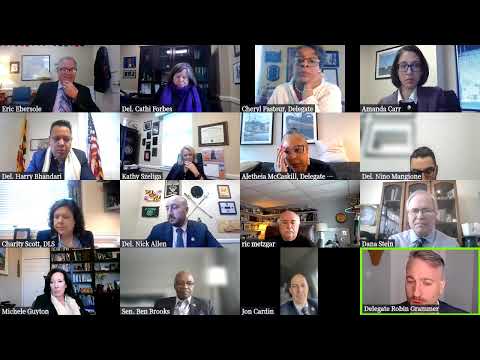
Delegate Grammer presents House Bill 335 to alter Baltimore County nuisance-action standing for community associations
Summary
House Bill 335 would change the standing criteria that community associations must meet to bring nuisance actions in Baltimore County, altering dues and bonding requirements that sponsors say have made the 1997 statute impractical.
Delegate Robin Grammer presented House Bill 335 to the Baltimore County delegation during a bill hearing at the delegation’s first meeting of the 2025 session. The bill would change the qualifications community associations must meet to pursue judicial relief under the county's nuisance-action statute.
Why it matters: Sponsors say the current standing rules, which date to a 1997 enactment, make it difficult for modern community associations to use the statute to address blight and neglected properties; the bill seeks to update those eligibility criteria.
Grammer told the delegation the statute was adopted in 1997 to address growing community blight and that the current dues and bonding requirements make the code “impractical and out of step with how modern community associations work.” He said the bill “almost identically mirrors changes adopted by Baltimore City, which has found these provisions to be appropriate and effective.”
Grammer said the county frequently contends with blighted properties that contribute to trash, rodent problems and other nuisances. He said that legitimate community concerns have been dismissed because associations lack standing under the current language.
The presenter said the measure has passed the House and the Senate in different years but has not yet taken effect because it did not pass both chambers in the same legislative year. He offered to answer questions; none were raised during the hearing and the chair closed the item and said the delegation would take the bill up at a future meeting for a vote.
Ending: The delegation closed the hearing with no immediate vote; Grammer said he would be available for follow-up when the bill returns to the delegation’s agenda.