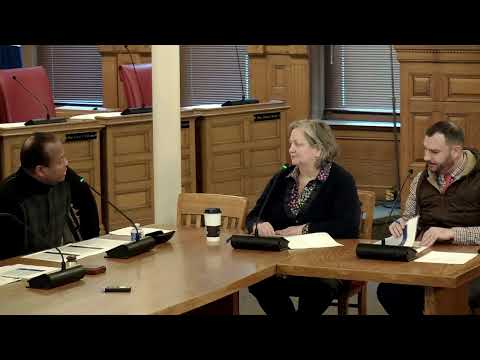
Syracuse board approves parking variance for 75,000‑square‑foot Children’s Rising Center
Loading...
Summary
City board granted a use variance and issued a negative SEQR declaration allowing a 65‑space lot with 16 varianced spaces for a new early‑learning facility; applicants said altering the parking layout could jeopardize New Markets Tax Credit funding.
A Syracuse City board on Oct. 27 approved a use variance for the proposed Children’s Rising Center and issued a negative declaration under the State Environmental Quality Review Act (SEQR), clearing the way for a 75,000‑square‑foot early learning facility with a 65‑space parking lot that includes 16 varianced spaces.
The board’s action followed a presentation by Robert Seeley, a landscape architect with EDR, and statements from project partners that moving the parking would reduce usable building area and threaten financing. The board voted unanimously to adopt the SEQR negative declaration and to approve the use variance subject to staff recommendations, including continuous maintenance of a landscaping buffer along East Taylor and South Townsend streets.
City staff summarized its review of the four legal criteria for a use variance — reasonable return, unique circumstances, neighborhood character and self‑created hardship — and recommended approval, concluding the hardship stems from preexisting physical and regulatory constraints rather than being self‑created. After discussion, board members voted to accept staff’s findings and the conditions of approval.
“From a site‑design standpoint the building had to be maxed out to that size in order to fit the programmatic requirements and the feasibility for the project,” Robert Seeley said, describing the layout and the decision to add a landscaped island that reduced the varianced spaces from 18 to 16. Seeley said the design locates a secure, well‑lit drop‑off area near the main entrance, places parking close to the entrance for safety, and includes a privet hedge, large trees and shrub plantings to screen parking from the street.
Cal Quarters, an Allen Foundation executive on loan to Blueprint 15 and a project lead, told the board the project is focused on children ages 0 to 5 and that moving parking to the rear would force the building to face a narrow railway corridor. “Moving that parking . . . could result in a significant reduction of square footage for the building, which is a loss in programming for the youth,” Quarters said. He said the project team is pursuing New Markets Tax Credit financing and is seeking approximately $5.5 million in equity; Quarters estimated a $150,000 annual revenue reduction and “over a million dollar loss in revenue” across the NMTC seven‑year compliance period if the parking configuration were altered.
Madonna Millershen of King and King Architects described the project phasing and neighborhood connections, saying a future phase could create a neighborhood park and an additional access road that would eventually give the site four bordering streets. Millershen reiterated that no curb cuts are proposed on Townsend Street.
The site plan shows a 65‑space lot fronting Taylor and State streets, a dedicated parent and bus drop‑off area, 30 bike racks, benches, and dumpster enclosures to be screened with masonry units and gates. Seeley said the site is bounded to the south by an elevated railway that limits pedestrian connections from adjoining neighborhoods, which influenced the placement of entrances and landscaping.
Board discussion noted staff packet materials addressing the variance criteria, including financial details supplied by the applicant about potential revenue impacts and funding sources. A board member asked whether staff had performed an independent financial analysis; staff and other members said the packet includes applicant‑provided detail and staff’s legal analysis of the variance criteria.
The board first voted to adopt a negative SEQR declaration and complete the Part 3 environmental assessment form, then voted to approve the use variance with the conditions recommended by staff, including adherence to general use variance conditions and a required landscaping buffer maintenance plan along East Taylor and South Townsend streets. Both votes were unanimous.
The meeting concluded with no public speakers for or against the project and the board adjourning shortly after the votes.