Get Full Government Meeting Transcripts, Videos, & Alerts Forever!
Get email alerts on the Surveillance And Parking Enforcement topic
No spam. Unsubscribe anytime.
Commission approves first reading of ordinance allowing license-plate readers for parking enforcement
Summary
On first reading the commission amended city code to permit use of video and license-plate reader (LPR) technology for parking enforcement in garages and lots and to allow mailing citations to registered owners.
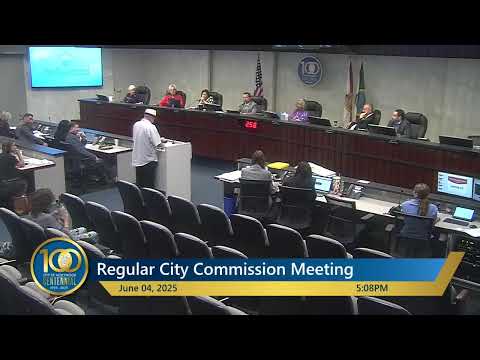
The Hollywood City Commission on June 4 approved on first reading an ordinance amending Chapter 72 of the city code to allow limited use of video and automated license-plate reader (LPR) technology for parking enforcement and to permit citations to be mailed to the registered owner of a vehicle.
The proposal, presented by Jovan Douglas, director of parking and code compliance, would let the parking-management system automatically check license-plate reads against pay-station and permit databases; staff would review flagged events and, when confirmed, the city would mail a citation to the vehicle’s registered owner. The system includes a short grace period for garage entry to allow payment or validation.
Why it matters: Staff said the system will improve efficiency and reduce human error in busy mixed-use garages that host hourly users, permit holders and transit parkers. City staff emphasized the system would be used only in garages and lots (not for on-street enforcement), and that citations would be issued only after back-office review by staff.
What the Commission decided The ordinance passed on first reading by unanimous roll-call vote. Commissioner Shuham made the motion; Commissioner Biederman seconded. The commission asked staff to confirm that the technology would be used only in garages and surface lots (not on public streets) and to coordinate with the police department regarding any law-enforcement links to LPR systems.
Key details and safeguards mentioned in the meeting - Use case: Jovan Douglas said the LPR module will primarily manage complex mixed-use garages (example: University Station) and automate monitoring of payments, permits and reserved spaces. - Back-office review: Potential violations are queued for staff review before any citation is mailed; photographic evidence of the plate entry/exit will be included with mailed notices. - Geographic limits: Douglas told the commission the system was intended for garages and lots, not street-side meters; commissioners requested staff to confirm technical and legal limits and consult HPD about possible law-enforcement integrations.
What happens next The ordinance will return for a second reading (final adoption) after staff refines the implementing code sections and operational controls. The Commission requested that staff provide final language on data retention, evidence review steps, and a description of how the system will be integrated with HPD or other public-safety systems, if applicable.
Ending note: Commissioners praised the technology’s potential to reduce routine enforcement burdens — but they consistently stressed the need for strict controls, staff review of flagged events and transparency about where the cameras/LPRs will be used.