Get Full Government Meeting Transcripts, Videos, & Alerts Forever!
Get email alerts on the Public Health On Site Wastewater topic
No spam. Unsubscribe anytime.
County health staff seek support for statewide on-site wastewater licensing; commissioners table proposal for two weeks
Summary
Grand Forks County public-health staff asked the commission to support standardizing on-site wastewater installer licensing and training statewide; commissioners asked for more information and voted to table the matter for two weeks.
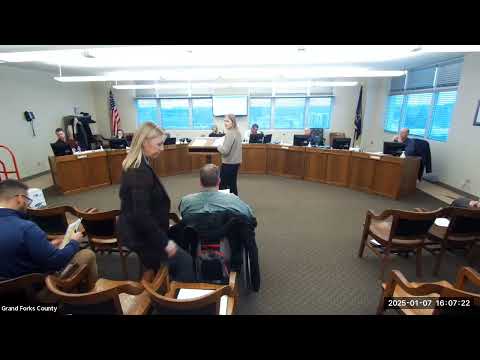
Grand Forks County environmental-health staff presented a legislative priority on Jan. 7 asking the commission to support a statewide standard for licensing, training and oversight of on-site wastewater (septic) system installers.
Jason (Jay) Anderson, the county’s environmental-health supervisor, briefed commissioners on past statewide efforts to standardize on-site rules and said prior bills proposing installer certification and uniform oversight (referenced in discussion as 2022–2023 efforts) had failed in earlier legislative sessions. Anderson and staff argued a statewide approach would reduce costs, ensure consistent installation and protect groundwater and property values. He said a uniform standard would ease work for contractors operating across county lines and could prevent public-health emergencies.
Commissioners raised objections and questions about local control, grandfathering of existing functioning systems and the potential for unfunded mandates. One commissioner asked whether county residents with functioning older systems would be forced to upgrade; Anderson said the proposal would focus on new development and systems posing a public-health hazard rather than automatically requiring upgrades for functioning systems.
County staff explained that some counties have adopted newer uniform on-site codes while others have not; local inspection authority varies. Commissioners asked to hear additional detail from staff and from Wayne (county staff referenced as the inspector for systems in unincorporated areas). After discussion, a commissioner moved to table the item for two weeks to allow staff and the referenced inspector to attend and provide more information; the motion to table passed unanimously.
Why it matters: Standardizing installer licensing and on-site wastewater code would affect developers, homeowners with new systems, septic contractors and county inspection responsibilities. Commissioners said they wanted more local data before signaling support for a legislative change.
Next steps: The commission requested that county staff return in two weeks with additional information, including the county’s current inspection practices, examples from neighboring counties and potential fiscal impacts or unfunded-mandate concerns.