Get Full Government Meeting Transcripts, Videos, & Alerts Forever!
Get email alerts on the Jmoud Grant Mat topic
No spam. Unsubscribe anytime.
Jail commander details $332,389 MOUD grant plan; commissioners raise liability and oversight concerns
Summary
The county's jail commander described a Criminal Justice Commission grant award for up to $332,389 to establish medications for opioid use disorder (MOUD) in the jail; commissioners sought a workshop with medical and legal staff to resolve liability, billing and oversight questions before accepting funds.
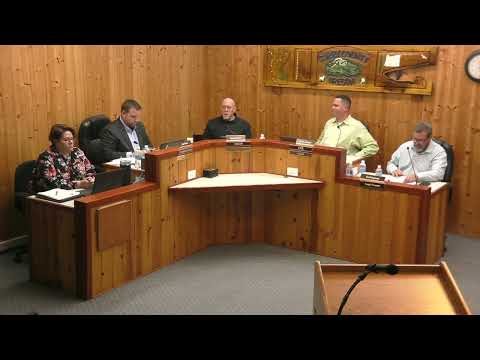
At the Jan. 9 Curry County Board of Commissioners meeting, jail commander Jeremy Kron outlined a Criminal Justice Commission (CJC) formula grant that allocated Curry County a maximum of $332,389 to develop medications for opioid use disorder (MOUD) and medication‑assisted treatment (MAT) in the county jail.
Kron said the grant is retroactive to Oct. 1, 2024, and that the CJC was expected to send a first allocation of about $160,000 around Jan. 25. "Curry County's allocation through this grant was 332,003 sorry. $332,389. That is the maximum allowable that I was allowed to apply for," Kron said.
Planned uses described by Kron included pay for a MAT nurse (staff salary and fringe, estimated at about $41.65 an hour in recruitment estimates), electronic health records ($37,250), double‑lock medication refrigeration and secure storage, pharmacy inspection expenses, and medication purchases — including SUBLOCADE injectable doses. Kron said the submitted budget included $151,200 for SUBLOCADE medication and other program and administrative costs within the grant maximum.
Commissioners' concerns: Commissioners raised questions about operational liability, continuity of care after release, local pharmacy availability for SUBLOCADE, and whether deputies were being used to dispense medications without clinical oversight. Commissioner Jay Trost called for immediate legal and medical review; Commissioner Patrick Hollinger sought a workshop that included the county's medical provider and county counsel and requested clear documentation and reporting protocols.
Billing and sustainability: Kron said the grant will seed operations until Medicaid billing under a 1115 waiver becomes viable in 2026; he said the jail does not plan to bill Medicaid directly immediately and that state and regional discussions are underway about third‑party or centralized billers. He noted the grant requires separate tracking of grant funds and quarterly reporting to the CJC.
Next steps and controls: Commissioners asked for a workshop with the jail medical director, the nurse practitioner who oversees jail medical services (identified in the packet as Stacy Krieger), county counsel and finance to address liability, insurance/indemnity language in the grant agreement, staffing (county employee vs. contractor), electronic health records, and transitional services for people leaving custody. The board tentatively scheduled a workshop for the coming Monday at 6 p.m. to gather medical and legal detail before accepting funds or implementing components of the program.
Ending: Command staff emphasized intent to follow reporting and tracking requirements and to avoid buying a stockpile of expensive medications; staff said medications would be purchased as prescribed and held only when prescribed. Commissioners asked that finance and legal be included in all next steps before any large expenditures are made.