Get Full Government Meeting Transcripts, Videos, & Alerts Forever!
Get email alerts on the State Legislation topic
No spam. Unsubscribe anytime.
City staff outlines General Assembly changes affecting zoning, procurement and public safety
Summary
Michelle Shelton, city staff, summarized recent General Assembly bills and studies that touch city practice, from tax‑deferral rules to shortened review deadlines and required contract provisions.
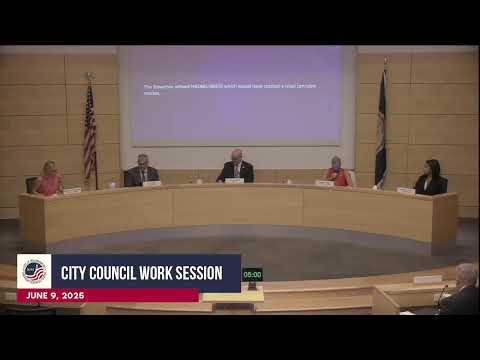
City staff on Monday summarized actions from the recent General Assembly session and flagged several bills that may require changes to Williamsburg’s code, contracts and procedures.
Michelle Shelton, city staff, told the council the session produced a number of laws and studies that will affect local practice, from a new requirement to post the city’s real property tax‑deferral program online to shortened review deadlines for plats and site plans and statutory changes that allow a locality to designate an employee to review certain development submissions.
Key items highlighted
- Real property tax deferral (House Bill 2029): The law tightens entry rules for the city’s tax‑deferral program for elderly and disabled residents, including requirements that delinquent taxes be paid or an installment agreement be in place before entering the program, that the program be posted “in a clear and conspicuous way” on the city website and that notices be included in annual real property tax bills. The statute also allows prorated mid‑year entries for the deferral program.
- Development review and designated agent (House Bill 2660 series noted in presentation): The General Assembly shortened time frames for local review of plats, site plans and development plans (in many cases from 60 days to 40 or 30 days) and added an administrative review step. Senate Bill 974 permits the locality to designate an employee (commonly the planning director) to review and act on some submissions in place of the planning commission. Shelton said the city will have to amend its subdivision and zoning ordinances and purchasing manual and update standard contract templates to comply with several bills.
- Assessment methodology for certain affordable housing (House Bill 2245): The bill limits the assessor’s methodology for projects in certain federal affordable‑housing programs to the income approach if the property owner provides the required data, with a uniform reporting schedule to be provided by the Department of Taxation.
- Procurement and contractor requirements (Senate/House procurement bills): Several bills require additional language in city contracts, such as prohibiting forced labor or child indentured labor in contract performance; other bills add preferences or protections for military family–owned businesses and require that some IT contract choice‑of‑law clauses be Virginia law.
- License‑plate readers and surveillance reporting (House bills noted): The session added requirements to adopt policies governing license‑plate‑reader systems, purge data after specified periods, and report systems’ use to state agencies; in some cases LPR data are exempt from release under FOIA.
- Local tools and optional authorities: Senate Bill 1263 permits localities to reimburse water and sewer connection fees for new residential development; other bills clarify group‑home rules and establish penalties for certain code violations. Shelton noted some increases in permissible civil penalties for zoning violations are permissive rather than mandatory.
Failed and monitored bills
Shelton identified a set of bills that failed but are likely to reappear, including a proposed mandatory 7.5% housing stock increase over five years (a bill the city tracked closely) and several bills that would have affected local authority over zoning and review processes. She also noted that retail cannabis bills did not pass and the governor vetoed some proposals including a collective‑bargaining bill.
Council questions and context
Council members asked several clarifying questions. When Vice Mayor Dent asked about consequences if a locality misses the shortened review window, Shelton said a submission may be “deemed approved” under state time‑frame rules. Council members discussed whether the designated agent would be required to follow existing city code and Shelton confirmed the agent must apply the city code as the planning commission would.
What happens next
Shelton said staff will prepare code and purchasing manual revisions where required and that the city’s legislative agenda will continue to emphasize the council’s position that zoning decisions should remain local. Several council members asked staff to track the bills that failed so they can be considered again in the next session.
Speakers and attribution
- Michelle Shelton — City staff presenter; provided the legislative summary and answered council questions. - Council members who asked questions included Vice Mayor Dent, Miss Curran Shear and others who participated in clarifying discussion.
Authorities and statutes mentioned (selected)
- House Bill 2029 — real property tax deferral program requirements - House Bill 1743 — study group on out‑of‑state business activities (as summarized) - House Bill 1792 — raised limits on value of property that can be sold without court for tax sale (as summarized) - House Bill 2245 — assessment methodology for certain affordable housing programs - Senate Bill 974 — designated agent for development review process - Senate Bill 1263 — allowance for reimbursement of water/sewer connection fees - Multiple procurement and public‑safety bills (various HB/SB numbers cited in presentation)
Searchable tags:["General Assembly","zoning","planning","procurement","license‑plate readers","Williamsburg City"]
provenance:{"transcript_segments":[{"block_id":"block_2663.19","local_start":0,"local_end":160,"evidence_excerpt":"Good afternoon, mayor and members of council. Every year we do this where I give you highlights from the general assembly session.","reason_code":"topicintro"},{"block_id":"block_4440.505","local_start":0,"local_end":112,"evidence_excerpt":"I started last year's legislative update by telling you that the retail cannabis regulations did not pass last year. They did not pass this year. The governor vetoed the bills.","reason_code":"topicfinish"}]}
ending:City staff will prepare ordinance and procedure changes where required and continue to monitor bills that failed for potential reintroduction in the next General Assembly session.