Get Full Government Meeting Transcripts, Videos, & Alerts Forever!
Get email alerts on the Neighborhoods Housing topic
No spam. Unsubscribe anytime.
Williamsburg residents press council to curb student rentals, large parties in Indian Springs neighborhood
Summary
Dozens of Indian Springs residents told the Williamsburg City Council on Monday that a rise in purpose‑built student rental properties and large off‑campus parties are eroding the neighborhood’s residential character and raising safety and access concerns.
Dozens of Indian Springs residents told the Williamsburg City Council on Monday that a rise in purpose‑built student rental properties and large off‑campus parties are eroding the neighborhood’s residential character and raising safety and access concerns.
Speakers said clusters of rentals — including a plan to redevelop the former Hornsby House site into three new houses intended for student tenancy — are producing frequent loud parties, public urination, blocked streets and parked cars that sometimes prevent school buses and trash trucks from reaching homes. “When four or five students live in a house without a landlord, the house is sometimes used as an off‑campus fraternity or sorority,” resident Henry Hart said. “Hundreds of students attend the parties and then drunken students block the street, shout obscenities at residents, urinate in public, and generally create mayhem until the police arrive.”
Why it matters: Residents said the change is fast and affects daily life and safety. Rowan Lockwood, who lives on Indian Springs Road and identified herself as a College of William & Mary professor, said the percentage of student rentals in her block rose from “about 5%” when she moved in to “closer to 50%,” and described repeated 100‑plus person parties this spring that left neighbors concerned about emergency access and children’s safety. John Swaddell, also a William & Mary professor, told council the clustering of student‑targeted rental properties “will then house at least a dozen or so students right next to each other with shared common spaces, that will change the characteristic of the neighborhood fundamentally.”
What residents asked council to do
Speakers urged the city to enforce existing rules and to consider new local measures. Jim Heller cited provisions of the city’s zoning and architectural review regulations (including single‑family districts and the Architectural Review Board standards) and said those regulations are intended to “stabilize and protect the essential characteristics of the land and promote and encourage a suitable environment for family life.” Bill Carr offered a specific regulatory idea: a permit system for large parties, requiring a filed application with contact information for all tenants, posting of the city and ABC permits on site, a $25 fee, limits on duration and an attendee cap (Carr suggested 150), and a condition barring future permits for violators for one year.
Speakers also described physical impacts. Rowan Lockwood and others said heavy curbside parking now blocks the school bus route; Lockwood asked explicitly whether a bus, fire engine or ambulance could fit down some streets when cars line both sides. Jim Heller and others described property‑maintenance concerns and questioned why absentee owners can rent whole houses while owner‑occupied bedroom rentals are restricted by code.
What the council did at the meeting
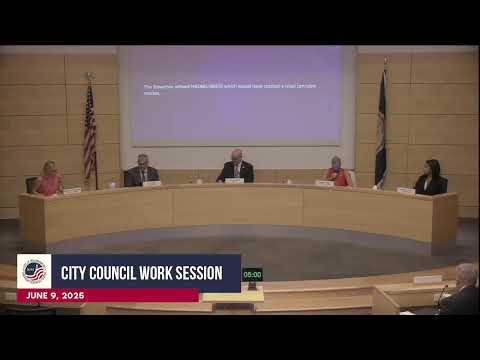
The public comments on Indian Springs were made during the meeting’s public‑comment period; councilors did not take immediate action on the requests during the work session. Council members thanked speakers and proceeded with the agenda. No ordinance, motion or staff direction regarding Indian Springs enforcement or new rules was recorded in the meeting minutes.
Clarifying details from speakers
- Bill Carr, 316 Indian Springs Road, gave neighborhood counts: “47 occupants,” reported student rentals “19,” legal student capacity “58,” suspected current student count “67,” and projected counts of up to “70–85” including the proposed development; Carr said these figures were based on his neighborhood walk‑through and his calculations. (Carr’s numbers were presented as his estimate.)
- Jim Heller said the two proposed new houses in the Hornsby parcel would each be about 2,000 square feet with four upstairs bedrooms, each bedroom with a bathroom, and described the combined site (the Hornsby property plus the two new builds) as likely to house “as many as 18 or 20” students across three properties.
- Multiple speakers identified the College of William & Mary as a factor in off‑campus housing demand and noted the college’s on‑campus alcohol and conduct rules, but they said enforcement falls to landlords, the college and city authorities.
Speaker list (attributed quotes in this article come only from the people listed)
- Henry Hart — Resident (Indian Springs); spoke about frequent parties and nuisance behavior. - Susanna Livingston — Resident (309 Indian Springs Road); spoke about property‑maintenance and safety concerns. - Dennis Hines — Resident; described similar experiences and urged code enforcement. - Joseph Haman — Resident (130 Indian Springs); long‑time resident expressing neighborhood loss. - Jim Heller — Resident; cited specific zoning/ARB code language, property dimensions and housing‑type concerns. - John Swaddell — Professor, College of William & Mary; discussed clustering of rentals and large parties this spring. - Rowan Lockwood — Professor, College of William & Mary; described growth in student rentals and blocked buses/emergency access concerns. - Bill Carr — Resident (316 Indian Springs Road); presented neighborhood counts and proposed a party‑permit system.
Authorities cited by speakers
- Williamsburg City zoning ordinance and related provisions (referenced by Jim Heller): single‑family dwelling district (RS‑2), Architectural Review Board (Article 9/design review guidelines), special exemptions referenced as “21‑2‑38” and other local code sections mentioned during public comment. These were cited by multiple speakers during remarks.
Clarifying details (structured)
- {"category":"proposed development","detail":"Redevelopment of former Hornsby House plus two new houses intended for student rentals; speakers said each new house ~2,000 sq ft with four upstairs bedrooms each with a bathroom","source_speaker":"Jim Heller"} - {"category":"neighborhood counts","detail":"Resident estimate: current legal student capacity 58; suspected students 67; projected 70–85 if proposed development proceeds","source_speaker":"Bill Carr"} - {"category":"public safety","detail":"Speakers reported blocked school bus access and concern whether emergency vehicles could pass when cars are parked on both sides of street","source_speaker":"Rowan Lockwood"} - {"category":"party-permit proposal","detail":"Permit filed 10 days prior, $25 fee, attendee cap 150, tenant names and contact info required, adjacent homeowner signatures on application, posting of City and ABC permits on site; violators banned from permits for one year","source_speaker":"Bill Carr"}
Community relevance
- Geographies: Indian Springs neighborhood and adjacent blocks near College of William & Mary, Williamsburg City. - Impact groups: long‑term residents, families with young children, school bus riders, students, landlords/absentee owners. - Funding sources: not specified in public comments.
Meeting context
- Engagement level: high public engagement for a single agenda item — the council’s public‑comment period filled with at least nine speakers focused on a single neighborhood issue; speakers recounted multiple incidents and presented proposed remedies. - Implementation risk: medium — many remedies discussed (permit rules, enforcement changes, development approvals) would require city code changes, enforcement capacity, or coordination with the college and property owners. - History: speakers repeatedly framed the issue as ongoing and worsening over several years; some said the neighborhood’s character had been changing for a decade.
Searchable tags:["Indian Springs","student rentals","housing","noise","parking","College of William & Mary","Hornsby House","Williamsburg City"]
provenance:{"transcript_segments":[{"block_id":"block_268.275","local_start":0,"local_end":128,"evidence_excerpt":"As you know, the problem we've been having in the Indian Springs neighborhood is a result of student rental houses.","reason_code":"topicintro"},{"block_id":"block_2643.4849","local_start":0,"local_end":144,"evidence_excerpt":"This town is losing permanent homeowners right and left as your charming neighborhood home is what happens when our once charming neighborhood homes are turned into student rentals.","reason_code":"topicfinish"}]}
ending:Residents asked the council for enforcement of existing codes and for new limits on large gatherings and developer‑targeted student rentals. Councilors did not take formal action on those requests during the work session; city staff and council members may consider the matters in future agenda items or work sessions.