Get Full Government Meeting Transcripts, Videos, & Alerts Forever!
Get email alerts on the Lodgers Tax Grants topic
No spam. Unsubscribe anytime.
Littleton board revises lodging‑tax grant application; sets feedback deadline
Summary
Board members reviewed the draft application for the 2025–26 lodgers tax arts and culture grant round, discussed word limits, applicant eligibility and partial‑funding questions, and asked staff to collect feedback by Jan. 31.
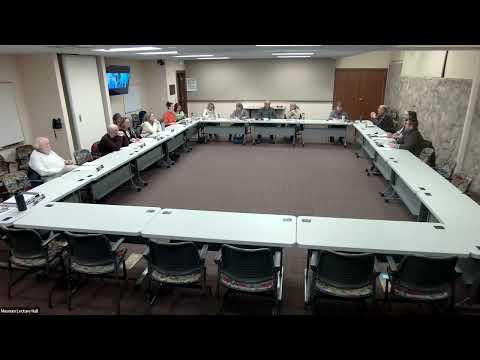
At its Jan. 9 meeting, the Littleton Arts & Culture Board spent substantial time reviewing a draft application for the citys 2025–26 Lodgers Tax arts and culture grants and directed staff to refine several application elements before it opens in February.
Anna (public art administrator and staff lead on the application) told the board she will collect member comments and asked for feedback by Jan. 31, 2025. “By January 31 … Id like your feedback so that we have time to condense it and put it all in some kind of form that we can then present at the February meeting,” Anna said.
Board discussion covered applicant eligibility, application layout and evaluation details. Members asked that the application clearly state that eligible applicants must be nonprofit or tax‑exempt organizations (the staff agreed to add an explicit pre‑screening prompt). Staff will also clarify whether an applicant must be headquartered in Littleton or only deliver programming inside city limits; the prevailing direction was to allow organizations that provide programming within city limits to apply even if their headquarters are outside the city.
The group agreed to add practical limits and guidance for narrative answers. Board members proposed a short word‑limit for project descriptions (roughly 250 words or about four sentences) and asked staff to flag that answers beyond the limit may not be read in full. Anna said Microsoft Forms cannot strictly enforce character limits for every field, but staff will add instructions and visible limits in the form.
On budget questions, members requested clearer line‑item budgets and asked for a short field indicating whether the grant would fully or partially fund the project and, if partial, what minimum award would be required to make the project viable. Board members said that information helps prioritize awards when funds are limited; staff proposed adding a required budget line and a short narrative box for contingency planning.
Members discussed whether applications should be tiered by requested amount but the board generally favored a single application standard for all applicants to keep the process uniform. Staff agreed to prepare a summarized spreadsheet of recent grantees and current year extension requests for the board to review when awarding future rounds.
The board asked staff to move a handful of budget and category questions earlier in the form to help reviewers quickly assess proposals. Anna said she would circulate an updated application and instructions to the board in writing and make available a digital copy and printed hard copies on request.