Get Full Government Meeting Transcripts, Videos, & Alerts Forever!
Get email alerts on the Short Term Rental Regulation topic
No spam. Unsubscribe anytime.
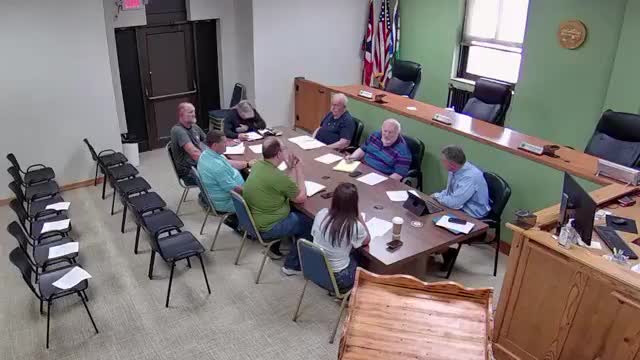
Hocking County zoning commission outlines proposed short‑term rental rules and related safety measures
Summary
The Hocking County Zoning Commission reviewed draft land‑use tools aimed at short‑term rentals — including 24‑hour contact rules, address numbering, driveway and parking standards, insurance and noise controls — and asked staff to refine proposals with first responders and county offices.
The Hocking County Zoning Commission on May 29 reviewed a package of proposed land‑use tools aimed primarily at short‑term rentals and other commercial uses in rural areas, emphasizing emergency access, occupant limits, and clearer enforcement mechanisms.
The meeting chair said public engagement and surveys showed broad support for some action: “over 90% of the people that responded and attended feels like there's a need for something,” and commissioners discussed measures ranging from mandatory local emergency contacts to standardized address numbering and driveway standards for first responders.
Commissioners and staff summarized the outreach and planning process. The commission retained consultant American StructurePoint after interviews and held stakeholder meetings that included first responders, developers, short‑term rental operators and residents. Commissioners said the county’s questionnaire produced more than 400 responses; the Hocking Hills Tourism Association separately mailed about 17,000 households and received roughly 700 returns, officials said.
Why it matters: Commissioners framed the proposals as “land‑use tools” rather than full zoning maps — rules that would require operators to meet standards rather than prescribe which parcels can be used for which purposes. Several measures discussed are intended to reduce emergency‑response delays and nuisance complaints as visitor numbers and short‑term rentals increase near Hocking Hills recreation areas.
Key proposals discussed
24‑hour local contact and emergency notification: Commissioners discussed a requirement that every short‑term rental list a local contact who can respond quickly and provide location details to first responders. The group repeatedly raised concerns about cabins without reliable cell service and suggested alternatives such as an on‑site phone, radio or emergency notification system and a response time (participants suggested “within an hour”). Officials said this local contact requirement would be part of any permit/registry.
Address numbering and mapping: The commission reviewed the county house‑numbering grid maintained by the map room and discussed requiring visible street numbers on buildings or property so 911 dispatchers and responders can find sites. Staff noted the existing grid allows sequential numbering in small increments and said the county will consult 911 director Sandy Wintermute about options for private drives and clustered cabin developments.
Driveway and turnaround standards: Commissioners said private driveways serving multiple cabins should meet minimum width, grade and turning‑radius standards acceptable to local fire chiefs before a permit is issued. Participants proposed a two‑phase review (preliminary approval before road work and a final inspection afterward) and suggested township or volunteer fire chiefs could perform approvals in many cases.
Occupancy limits, parking and inspection: The draft would require occupancy limits to be stated in contracts and enforceable through the registration process. Commissioners also discussed requiring off‑street parking sufficient for advertised sleeping capacity and initial inspections for permit issuance, with periodic follow‑ups.
Insurance and building code enforcement: The commission discussed requiring proof of liability insurance as part of registration and asked the county to consult CORSA (the county risk‑sharing authority) on minimum coverages. Members also said the county should verify that state of Ohio building‑code and health‑department requirements for transient lodging are being applied consistently, particularly where residential houses are converted into rentals.
Noise, nuisance and eviction procedures: Commissioners discussed adopting countywide nuisance and noise rules that apply regardless of property type, with a suggested curfew and clearer standards for eviction and police involvement. The group noted past civil‑law remedies, potential case law and that some neighborhood covenants can already restrict certain uses.
Impact fees and cost recovery for first responders: Staff outlined the idea of an impact fee to help offset costs to EMS and fire services, noting recent service volumes cited at the meeting (an EMS run total figure and 900 Logan fire runs in one recent year were referenced). Commissioners asked staff to research how other jurisdictions structure and collect such fees, and whether platforms (Airbnb/VRBO) can remit lodging or bed taxes automatically.
Process and scope: Commissioners emphasized that these measures are intended as tools that can be adopted administratively rather than a countywide zoning map; the meeting chair said full zoning questions (which would be subject to separate voting processes) were not the immediate plan. The group said the county prosecutor has reviewed proposals to ensure legal conformity and that further consultation with 911, health, township fire chiefs, the tax/bed‑tax administrator (Josh), and EMA will inform final draft language.
What’s next: Staff and the consultant were asked to refine draft language, consult first responders on technical driveway and signage standards, check consistent application of state building codes and health rules, and return recommended permit and enforcement procedures to the commission. No final votes or ordinance adoptions occurred at the May 29 meeting.
Full quote examples from the meeting: “over 90% of the people that responded and attended feels like there's a need for something,” the meeting chair said when summarizing survey and public‑meeting responses. On local emergency contacts, commissioners said short‑term rental rules should require “a 24‑hour local contact person” and discussed a target that the person be reachable and able to respond within an hour.
Ending note: Commissioners set a follow‑up engagement schedule and asked staff to gather specific templates and examples from other counties for impact fees, enforcement language and address/signage standards. They scheduled the next meeting for late June.