
Littleton updates 2025 budget, carries forward capital items and adds procurement legal staff to manage surge in contracts
Get AI-powered insights, summaries, and transcripts
Sign Up Free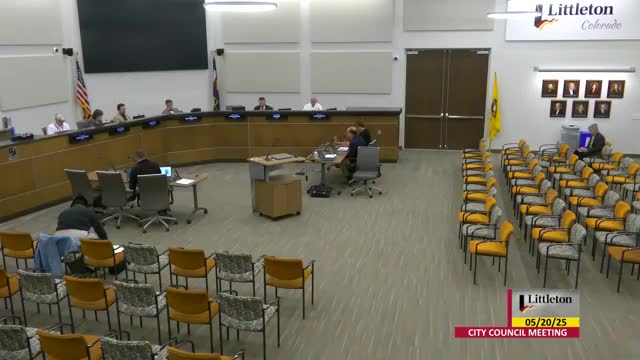
Summary
Council approved budget amendments to reappropriate unspent 2024 purchase orders and capital project balances into 2025, and authorized two new staff positions to support procurement and contracts in finance and the city attorney's office amid a growing workload tied to 3A projects and grant management.
On May 20 the Littleton City Council adopted several ordinances that reallocated unspent 2024 appropriations to 2025 and approved staffing additions to address an expanded contracting workload.
What council approved: ordinances on second reading carried forward approximately $9.2 million in open purchase orders from 2024 into 2025 and adjusted about $21 million in multi‑year capital project budgets to reflect timing changes and newly appropriated grant reimbursements. Council also approved the city‑enterprise budget amendments for sewer and stormwater enterprises.
Procurement and legal staffing: staff reported the city’s contracting workload has grown from roughly 200 active contracts in 2019 to about 600 in recent years as the city undertook more capital work and grant‑funded projects. To reduce program risk and avoid staff burnout, council approved adding two full‑time positions — one in the finance/procurement area and one in the city attorney’s office — to provide contract administration, training and risk management support. The city manager said portions of those positions’ costs will be charged to projects in the 3A capital fund because much of the workload is tied to those projects.
Budget outlook and risks: staff presented updated general fund projections showing slower sales‑tax growth than previously forecast; year‑end 2024 results were about $1.5 million lower than earlier estimates. The staff forecast showed a modest operating gap in 2025 that narrows later in the five‑year model if expected development‑related revenues (including Mineral Place) materialize; staff said they plan careful vacancy management and timing adjustments on capital projects to limit structural drawdown of fund balances.
Why it matters: councilors and staff said the new procurement resources are necessary to manage increasing contract complexity and to protect the city’s exposure on insurance, compliance and grant reporting. Councilor comments praised the funding of essential administration and encouraged conservative budgeting while monitoring economic indicators.
Next steps: staff will implement the reappropriations, advertise and recruit for the approved positions, and return with construction schedules and grant‑reimbursement updates for specific capital projects.