Get Full Government Meeting Transcripts, Videos, & Alerts Forever!
Get email alerts on the Housing Code Enforcement topic
No spam. Unsubscribe anytime.
West Warwick council urges state law allowing housing-code fines to become tax liens
Summary
A council member asked the Town Council to send a resolution to state legislators and municipal partners seeking authorization to convert unpaid housing-code fines into a tax lien after 90 days to strengthen enforcement and encourage repairs; council approved the resolution and a clerical amendment unanimously.
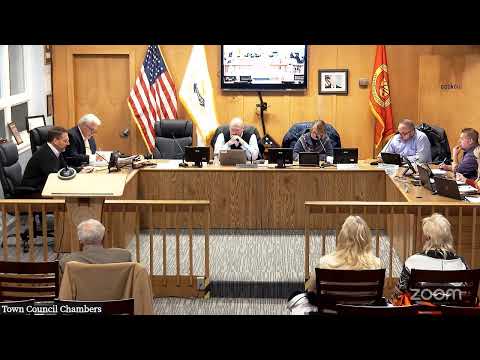
An unnamed council member asked the West Warwick Town Council on Jan. 7 to send a resolution to state legislators and municipal partners urging a change in state law that would allow unpaid municipal housing-code fines to be enforced as part of a property tax assessment.
The resolution requests that the General Assembly consider legislation (transcript reference: “Rhode Island general law 40 five-six-two”) enabling municipalities to convert certain unpaid housing-code fines into a tax lien if the fine is not paid or the violation not remedied within 90 days. The proponent said the change would give municipalities another enforcement tool to prompt repairs, particularly where property owners are nonlocal or unresponsive.
The council member described the proposed process as giving notice to owners and mortgage holders, then, if the condition remains after 90 days, placing the outstanding fine onto the property tax roll so it would be treated like a tax lien. The member told the council the change is intended to encourage lenders or owners to address unsafe or substandard conditions rather than leave violations unresolved.
Council discussion noted the resolution is an advocacy step, not a local change in code: the council member said the resolution would be sent to the speaker of the House, the town’s legislative delegation and the League of Cities and Towns for consideration and that, if the legislature enacts a statute, the council would return to discuss municipal implementation details. The proponent emphasized that the resolution is meant to spur state action and to give the town legislative authority it does not currently have.
The council approved the resolution by voice vote. The council also adopted a clerical amendment replacing a named recipient (transcript: “Ernie El Monte”) with the updated name (transcript: “Randy Rossi”) in the list of officials to receive the resolution; the amendment passed by voice vote.
The councilmember cited a prior bill introduced in 2024 (transcript: “Jose Bautista introduced it on 01/26/2024; referred to the House Municipal Government Committee”) as background and said earlier versions had been referred for study. The member recommended resuming advocacy this legislative session so the legislature can consider a statutory change.
The action does not itself change town code or create a local tax assessment mechanism; it is a formal request that the town ask the state legislature and municipal stakeholders to pursue enabling legislation.