Get Full Government Meeting Transcripts, Videos, & Alerts Forever!
Get email alerts on the Gaza Humanitarian Access topic
No spam. Unsubscribe anytime.
UN says limited aid reached Gaza from Kerem Shalom; warns of famine risk
Summary
The United Nations reported that roughly 90 loaded trucks left Kerem Shalom carrying nutrition, flour and medical supplies but said deliveries remain far short of needs for Gaza's population and that fuel and many essential items have been blocked for about 80 days.
The United Nations said humanitarian convoys departed Kerem Shalom on a recent day, carrying nutrition products, flour and medical supplies, but warned that the shipments are “nowhere near sufficient” to meet the needs of Gaza’s population.
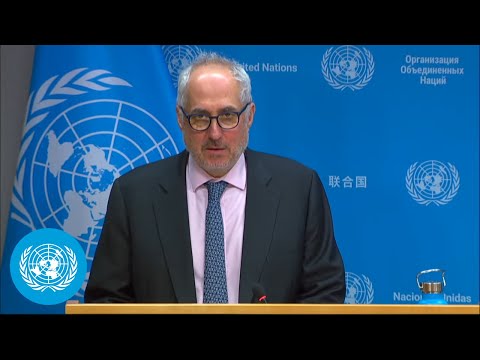
The secretary-general “strongly condemns” the killing of two Israeli embassy officials in Washington, D.C., the briefing began, and then turned to the humanitarian situation in the occupied Palestinian territory. The U.N. Office for the Coordination of Humanitarian Affairs (OCHA) told the briefing that about 90 loaded trucks left Kerem Shalom for multiple destinations inside Gaza, carrying nutrition supplies, flour, medicines and other stocks that were allowed through. OCHA said the shipment was limited in quantity.
Tom Fletcher, the U.N. emergency relief coordinator, commended humanitarian workers “for their courage,” saying they “continue to face huge challenges” getting goods from crossings to people in need. The U.N. said more than 500 pallets of nutrition supplies from the shipment were offloaded into a UNICEF warehouse in Darrel Bala — described in the briefing as nearly 20 truckloads — and are being repackaged for distribution through dozens of points inside Gaza.
The World Food Programme-supported bakeries in southern and central Gaza have resumed bread production after a recent delivery of flour, the U.N. said. The briefing said about 50 truckloads of flour recently arrived and helped bakeries restart operations, which the WFP is using to provide hot meals.
Despite these arrivals, the U.N. repeated warnings that hundreds of thousands of people in Gaza face acute food insecurity. The briefing cited the Integrated Food Security Phase Classification (IPC) analysis saying people across Gaza are at risk of famine, with nearly half a million “teetering on the edge of starvation.” The U.N. said roughly 2,100,000 people live in the Gaza Strip.
The U.N. said some categories of assistance — fresh food, hygiene items, water‑purification agents and fuel to power hospitals — had not been allowed in for about 80 days. OCHA told the briefing that accessing Kerem Shalom on the Palestinian side requires travel through an Israeli‑militarized area; humanitarian convoys can be delayed while Israeli authorities pause military activity and provide a green light. The U.N. said it had asked for secure routes and used such a route on the night before the briefing.
The briefing also reported security problems inside Gaza during recent deliveries. U.N. staff said a small number of trucks carrying flour were intercepted by residents and the contents removed; the U.N. described those incidents as “self distribution” rather than armed looting and linked them to extreme anxiety among people who do not know when the next delivery will arrive.
The U.N. warned that fuel shortages are causing water wells to shut down and that hospitals face rising risk because fuel has not been allowed into Gaza for approximately 80 days. The briefing included no timetable for further deliveries and said the volume and destinations of future convoys remain subject to daily clearances by Israeli authorities.