Get Full Government Meeting Transcripts, Videos, & Alerts Forever!
Get email alerts on the Fleet And Electrification topic
No spam. Unsubscribe anytime.
Fleet officials outline service center, fuel and EV charging needs for bond projects
Summary
Fleet Mobility Services presented a plan for new service centers, fuel depots and EV charging depots to support a growing and electrifying municipal fleet and said existing service centers are outdated and misaligned with current operations.
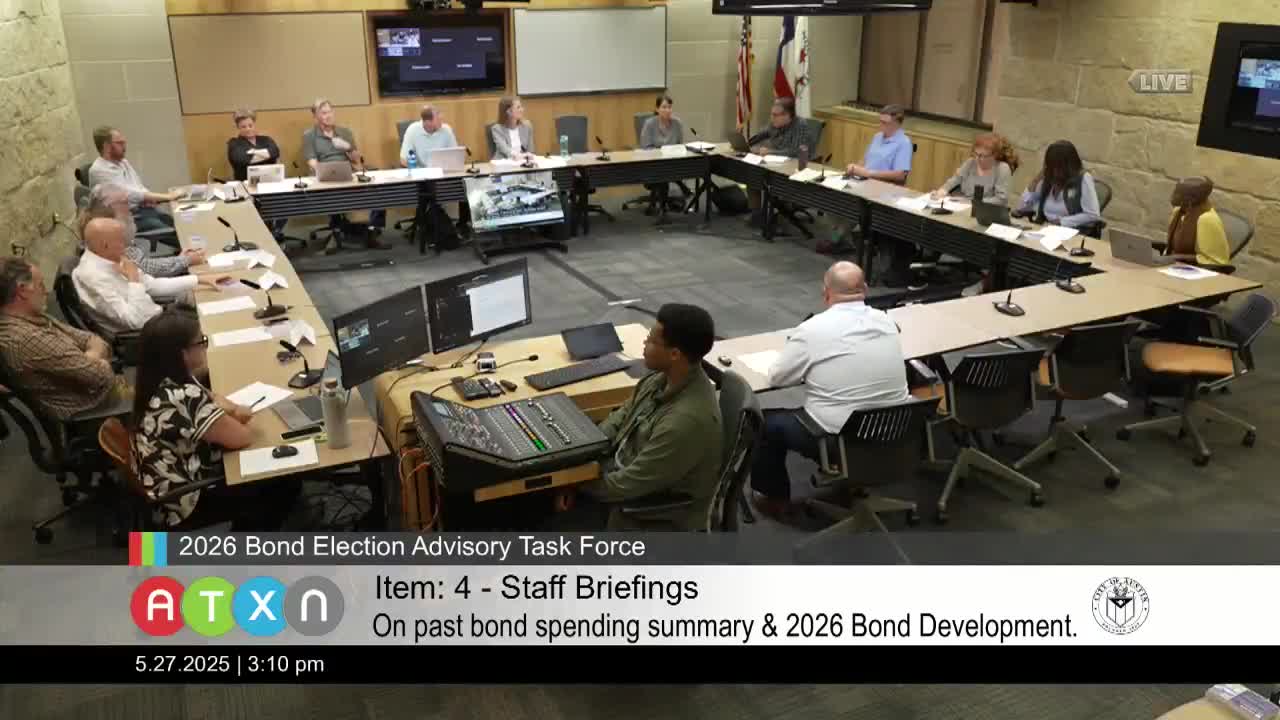
Fleet Mobility Services staff told the bond task force on May 27 that the city's current service center footprint and fuel infrastructure are insufficient to meet fleet needs now and for the future electrified fleet.
Rick Harland, assistant director of Fleet Mobility Services, said fleet manages about 7,800 pieces of equipment, processes roughly 47,000 annual repair orders, issues about 5 million gallons of fuel yearly and drives about 43 million miles annually. He described overcrowded, aging service centers (six core service centers under current naming conventions), vehicles parked or repaired on streets near facilities, and sites located where future redevelopment (Waller Creek, I‑35) complicates operations and environmental risk.
Fleet proposed a network of consolidated service centers and three depot sites that would combine conventional fueling and depot‑grade EV charging infrastructure to support light, medium and heavy duty electrification. Staff said they have a designed northeast service center that will supply an estimated 30% of that facility's power via on‑site solar and that the city currently operates a small but growing battery electric fleet (373 BEVs now with a goal of 400 by year end) and is piloting electric refuse and police pursuit vehicles.
Why it matters: Fleet said electrification reduces fuel and maintenance costs but requires depot charging and strategic site siting; staff reported $2.5 million in operational savings to date from BEV deployments and nearly 6,800 metric tons of avoided CO2. Fleet noted only about 29% of the current fleet has an available BEV replacement on the market today, so pilots target high‑cost, high‑pollution vehicle classes.
Next steps: Fleet asked the task force to consider funding depot charging, fueling site consolidation, and service center replacements as part of the bond, and offered site visits and additional technical briefings.