Get Full Government Meeting Transcripts, Videos, & Alerts Forever!
Get email alerts on the Animal Services topic
No spam. Unsubscribe anytime.
Animal Services warns of kennel, medical and staffing space limits; proposes project scoping for bond
Summary
Austin Animal Center officials described capacity constraints—nearly year‑round full medium/large dog kennels, limited surgical/recovery space and staff workspace shortages—and said bond funds would be scoped to expand capacity, medical facilities and operational resilience.
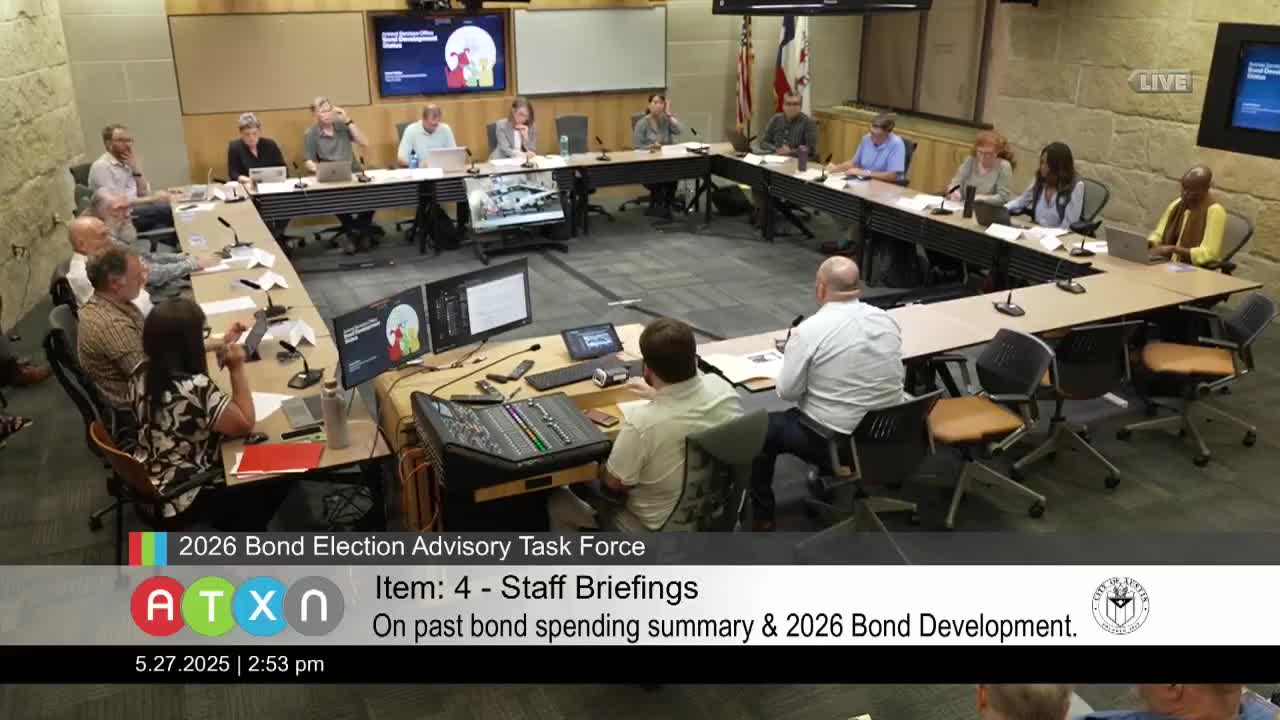
Deputy Chief Jason Garza of Austin Animal Services briefed the bond task force on May 27 about facility constraints at the Austin Animal Center and outlined how the department is developing project criteria for bond requests.
Garza said the center processed about 11,000 animals last year and achieved a live outcome rate of 96.79 percent, but that limited kennel space—particularly for medium and large dogs—means those populations are at capacity for more than 90 percent of the year. The facility has two operating tables, one medium/large recovery kennel for surgical patients, and limited isolation rooms, Garza said; staff sometimes use floor space and volunteers for post‑op recovery.
Garza said the center's final design predated the council's no‑kill plan and current operations have stretched staff and facility design. He described small operational modifications already made (saloon‑style doors, modified kennels, a find‑to‑foster program) and said the department's five‑year strategic plan is being implemented alongside periodic dashboard reporting.
What the department is asking: Animal Services said it is developing project lists and technical criteria tied to the city's six guiding principles and to the climate equity plan and will present potential capital projects to the city manager's office for consideration. Garza said proposals will prioritize proactive prevention and community trust, and include O&M implications.
Task force members asked about spay/neuter capacity, the possibility of expanding the current facility versus building additional sites, intermunicipal partnerships and whether operating and maintenance costs would be included in project proposals. Garza said expansion and alternatives are being considered and that O&M effects will be reported when projects are presented to the manager.