
District describes damage and repairs after Pebble Creek Elementary flood; no mold detected in initial tests
Get AI-powered insights, summaries, and transcripts
Sign Up Free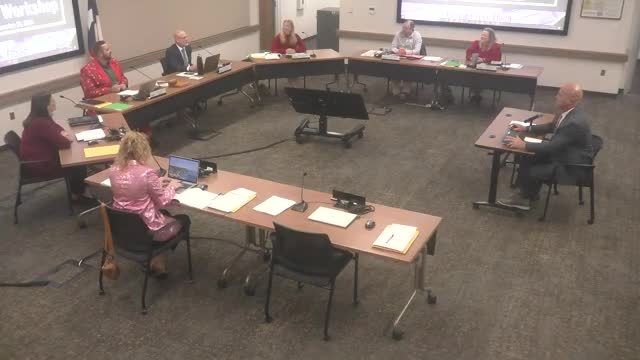
Summary
District staff outlined cause and response to a major water intrusion at Pebble Creek Elementary, described repair steps and initial air-quality and moisture testing that found no black mold; crews will perform flood cuts and continue testing over the winter break.
At a Dec. 17 College Station ISD board workshop, district staff described a substantial water intrusion at Pebble Creek Elementary earlier in December caused by a hole in a vertical fire main under the building and outlined repairs, ongoing moisture abatement and planned follow-up testing.
The presenter said the hole was roughly “the size of my fist” in a roughly 28-year-old cast-iron pipe beneath the building and that the vertical location prevented district staff from immediately isolating the water. The City of College Station located and shut off the city water valve, staff said, and Summit Fire and Security and contracted restoration crews responded quickly.
District staff described a large, rapid response: maintenance and operations staff, nutrition-services personnel and contractors worked through the night to remove water and salvage food and books; the district reported more than 50 restoration workers on site at one point. Staff said the gymnasium, main hallways, the library and the music room were the most affected areas; the kindergarten wing and most first-grade classrooms were largely untouched.
To dry the facility, the district deployed industrial dehumidifiers and high-volume fans, ran round-the-clock moisture testing and prepared to perform two-foot flood cuts in impacted areas over the winter break. Staff said they removed books and shelving from the library and closed the library pending repairs.
Air-quality testing conducted about four days after the event sampled 20 locations across the building. District staff said indoor mold-spore counts were lower than outdoor comparison samples and that no black mold was detected; they also said additional air-quality tests will be performed before staff and students return after the winter break. An adjuster visit and an on-site meeting with contractors were planned for the days immediately following the workshop.
"The response from our team was impressive," the presenter said, praising campus staff, maintenance and outside contractors for quickly removing material and stabilizing the building. "By 3 a.m. that morning, you would not have known there was water in that building, with the exception of dehumidifiers and fans running."
Staff said they replaced as much of the deteriorated piping as engineers and contractors recommended and ran new pipe out beneath the porch until they reached a large concrete utility box. The presenter said the team replaced more pipe than strictly necessary to reduce the risk of a repeat failure.
Board members thanked staff for the rapid response and asked about preventive inspections of older campus infrastructure and insurance implications. District staff said they are reviewing as-built plans, locating valves and adding items to deferred-maintenance work lists but noted that some failures cannot be predicted.
District staff said they will continue daily checks of the site over winter break and that the adjuster will review repair scope and covered items with district representatives.