Get Full Government Meeting Transcripts, Videos, & Alerts Forever!
Get email alerts on the Parks And Open Space topic
No spam. Unsubscribe anytime.
Advocates urge bond dollars for parks, tree canopy and green infrastructure
Summary
Representatives from Evergreen Austin, TreeFolks and allied experts told the task force that investing in parkland, tree canopy and green infrastructure addresses heat, air quality and equity and yields economic returns.
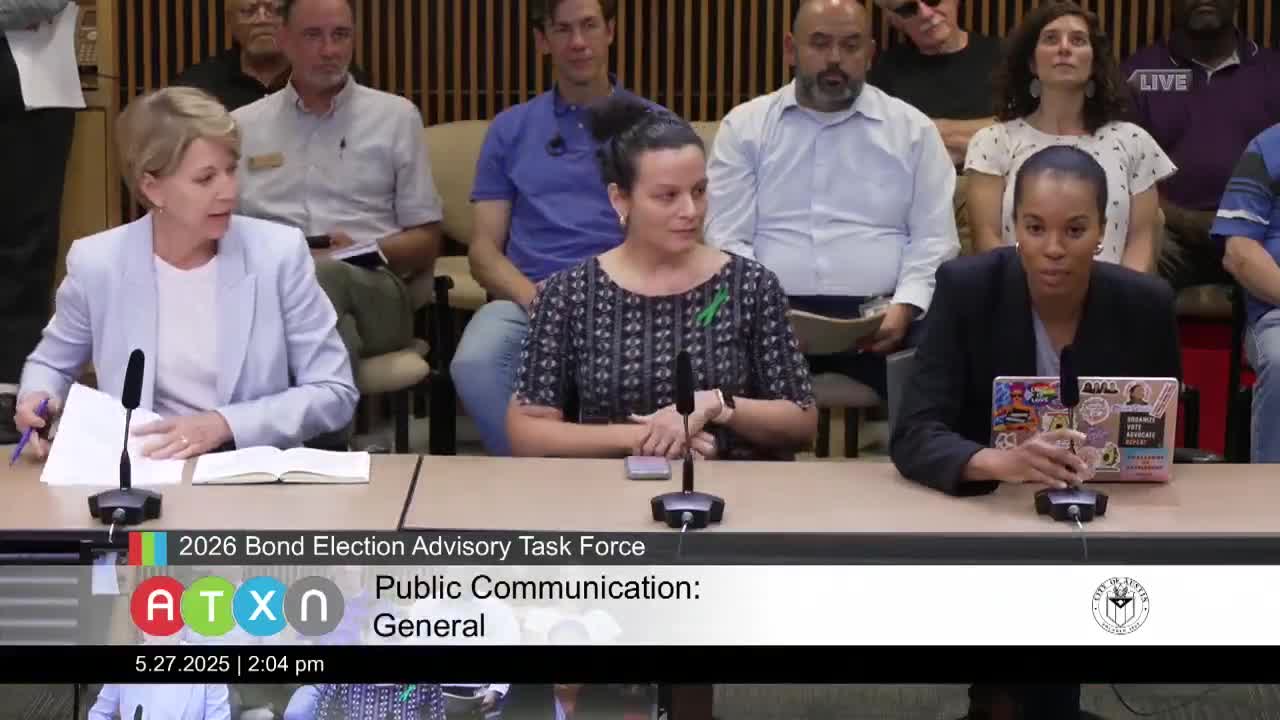
Representatives from Evergreen Austin, TreeFolks and allied experts urged the 2026 Bond Election Advisory Task Force on May 27 to prioritize parkland acquisition, tree canopy and other green infrastructure in the 2026 bond package.
Alexandria Anderson, a board member of Evergreen Austin, told the group that Austin is becoming park‑deficient in every council district and argued the city should "protect and acquire as much parkland and open space as possible, as quickly as possible." Amanda Massino, a biology professor and Evergreen board member, cited studies showing urban tree cover can reduce local temperatures by 0.5 to 5.9 degrees Celsius in some cities, and noted health and equity benefits including reduced asthma incidence for children living near green space.
TreeFolks emphasized canopy goals and maintenance. A TreeFolks presenter said the city's 2050 target of 50% tree canopy citywide will require immediate action, and urged that proposals include budgets for renovating and sustaining tree canopy, community engagement and volunteer coordination.
Architect and Evergreen board member Wendy Tita said parks offer universal, no‑fee respite that benefits mental and physical health, local businesses and tourism. Speakers also cited Trust for Public Land findings on return on investment from park spending.
Why it matters: Witnesses framed green investment as a cross‑cutting tool to mitigate heat island effects, improve air and water quality, and achieve equity goals, saying those outcomes support public health and reduce climate risks. Task force members and staff noted green infrastructure elements already feature in departments' technical criteria and encouraged continued coordination.
What they asked for: advocates requested that the task force recommend bond language and project scoring that prioritize land acquisition in underserved districts, funding for tree canopy projects and long‑term maintenance, and collaboration between departments and community groups for implementation.