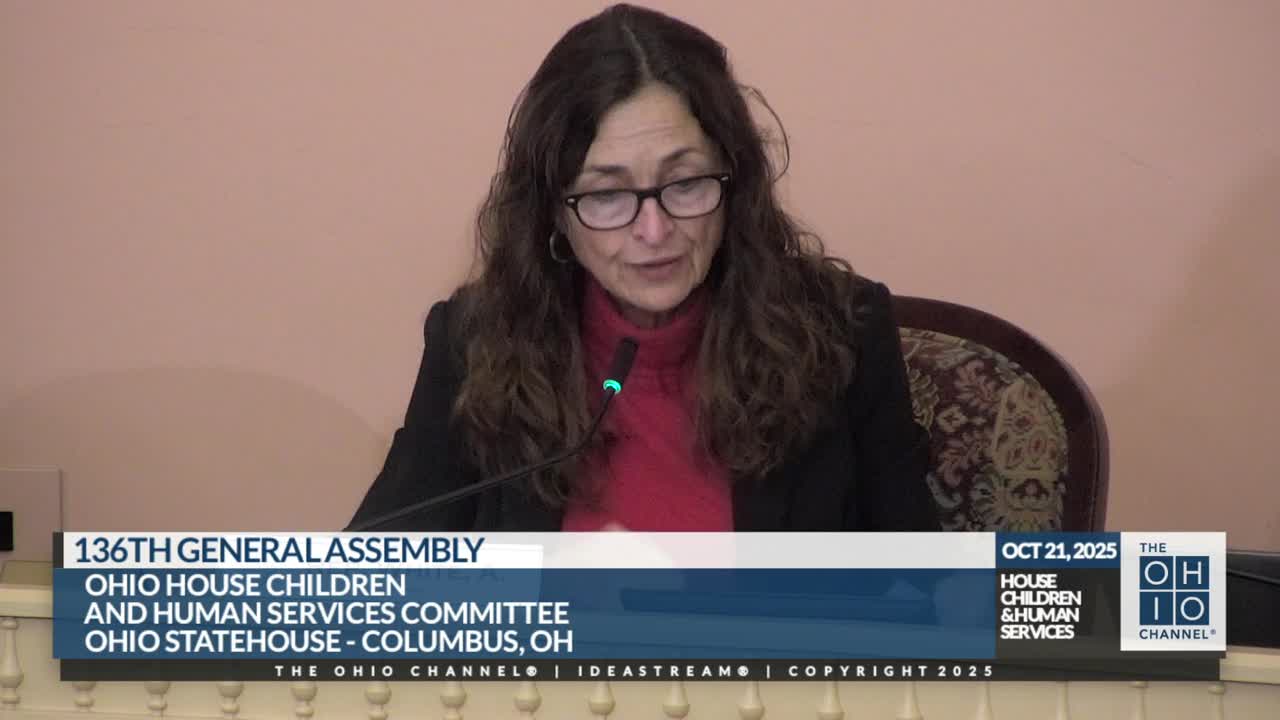
Committee advances Joshua Alert discussion after testimony from parents and advocates
Loading...
Summary
House Bill 359, the ‘Joshua Alert’, received a second hearing with emotional testimony from families and child-advocacy groups; sponsors offered two committee amendments—one expanding the definition of credible threat and another adjusting the timing requirement for alert activation—which were adopted without objection.
House Bill 359, known in testimony as the “Joshua Alert,” received a second hearing before the Children and Human Services Committee, where family members, child advocates and nonprofit witnesses urged immediate enactment and the committee accepted two sponsor amendments without objection.
The measure would allow law enforcement to rapidly notify the public when a child with autism or other developmental disabilities is reported missing, with the stated goal of tailoring searches to children who are more likely to wander and not respond to conventional search tactics.
Jonisa Cook, who identified herself throughout testimony as the mother of Joshua Alatif Jr., described her son as a “radiant, loving, joyful 6 year old” and said he went missing on 11/20/2024. Cook said the family called 911 and requested an alert but was told Joshua “did not meet the criteria.” She testified an alert “wasn’t issued until 5 to 6 hours later. By then, it was too late,” and urged lawmakers to enact HB 359 to give families “a system that can respond immediately, effectively, and that recognize the urgency of the situation.”
Susan Cavendish, the mother of a 4-year-old autistic child who testified in support, said the bill would “mean that if the unthinkable happens, if a child like my son goes missing, the public would know immediately and we'd have a chance to bring them home safely.” Brianna Booker of the Children’s Defense Fund of Ohio cited state education statistics and national research on wandering to support the policy.
During the hearing Vice Chair Jody Salvo moved to adopt AM1360988, described by sponsors as language “that expands on what would be constituted as credible threat of immediate danger.” Salvo then moved a second amendment (AM1360989-two), described as expanding “the timing requirement for when law enforcement would have to activate the alert system.” The chair announced both amendments were adopted “without objection,” and the amendments were incorporated into the bill during the committee session.
Sponsors reported they consulted with the Ohio Association of Chiefs of Police and local departments during drafting. Committee members raised questions about operational concerns, including the advisability of prescribing a specific time limit for sending alerts; sponsors and law-enforcement representatives reportedly suggested timing language could create challenges for some investigations, which is why the amendment language was refined with police input.
No roll-call votes were recorded; the committee accepted the two sponsor amendments by voice/without objection and concluded the second hearing. Written testimony was made available to members for further review; witnesses and sponsors said additional drafting and stakeholder engagement would continue.
Ending: Sponsors and advocates said they will continue to coordinate with law enforcement and stakeholders on the bill’s operational details as the committee advances consideration.