Get Full Government Meeting Transcripts, Videos, & Alerts Forever!
Get email alerts on the Homelessness Identification Fees topic
No spam. Unsubscribe anytime.
Ohio bill would waive ID and birth-certificate fees for people experiencing homelessness
Summary
Lawmakers held a first hearing on House Bill 472, which would eliminate fees for state identification cards and certified birth certificates for Ohioans experiencing homelessness; sponsors said verification would use existing homeless-service providers and that the measure focuses on minors left out by current practice.
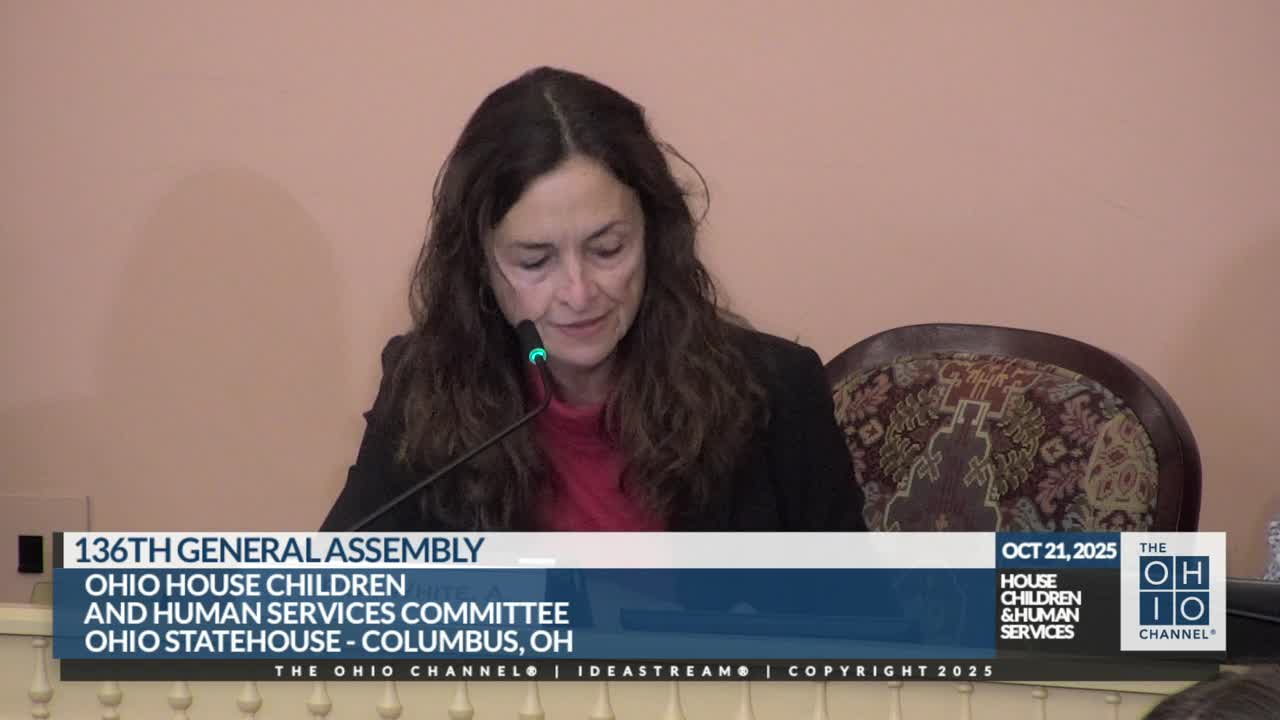
House Bill 472, which would eliminate fees for state identification cards and certified birth certificates for people experiencing homelessness, received its first hearing before the Ohio House Children and Human Services Committee on a full-committee quorum.
Sponsors and advocates told the committee the fees are a barrier to employment, housing and services and said the bill would close a gap for minors who currently lack access to fee waivers.
Representative Christine Coughley, presenting sponsor testimony, said the documents are “2 of the most essential documents a person can have, especially for Ohioans experiencing homelessness.” She said the fees “can be a significant financial barrier” and described the proposal as a way to remove an obstacle that “disproportionately affects our most vulnerable constituents.”
Vice Chair Jody Salvo, a cosponsor, said House Bill 472 aims to “reduce barriers that prevent individuals experiencing homelessness from obtaining identification documents required for work, housing, education, health care and participation in everyday life.” Salvo emphasized that while Ohio already allows adults experiencing homelessness to access a free state ID, the bill closes a gap for minors.
Sponsors told the committee the bill would amend the Revised Code sections that govern the Bureau of Motor Vehicles and the Department of Health to apply the waiver to both IDs and certified birth certificates. Salvo said verification would be done “through recognized homeless service providers or agencies familiar with a person's housing status, consistent with how adult waivers are already administered.” The sponsors also said they worked with homelessness providers to craft the bill’s homelessness definition, which they said appears on page 10 of the draft bill.
Committee members asked how homelessness would be verified, whether fees would be waived multiple times, and how costs would be absorbed. Representative Klick asked, “How do you verify or quantify homelessness? Can anyone just walk in and say I'm homeless and get this, or is there a verification process?” In response, the sponsors said the bill relies on documentation by designated social-service staff, shelter staff, school liaisons or other providers who can attest to a person’s housing status.
On costs, sponsors told the committee they have been in preliminary discussions with the Bureau of Motor Vehicles and the Department of Public Safety and that other states have absorbed similar costs with a minimal fiscal impact. The sponsors identified the certified birth certificate fee as the larger individual cost—about $23 to $25 in typical practice—and said waiving that fee would be among the most helpful changes.
Members raised implementation questions the sponsors said they will address in later drafting. Representative Brewer and others urged consideration of foster-care youth and guardianship gaps; sponsors said they are preparing an amendment to address situations where a parent or guardian is not available to sign for a minor. Ranking Member Lett asked the committee to include case-management time in any fiscal analysis, noting that staff hours to help clients obtain documents are sometimes billed to Medicaid.
No formal action or vote was taken on House Bill 472 at the first hearing; the committee closed the item and moved on to other business.
Ending: Sponsors asked the committee for favorable consideration at a later date and signaled they will return with technical amendments to address guardianship and implementation details.