Get Full Government Meeting Transcripts, Videos, & Alerts Forever!
Get email alerts on the Housing Development topic
No spam. Unsubscribe anytime.
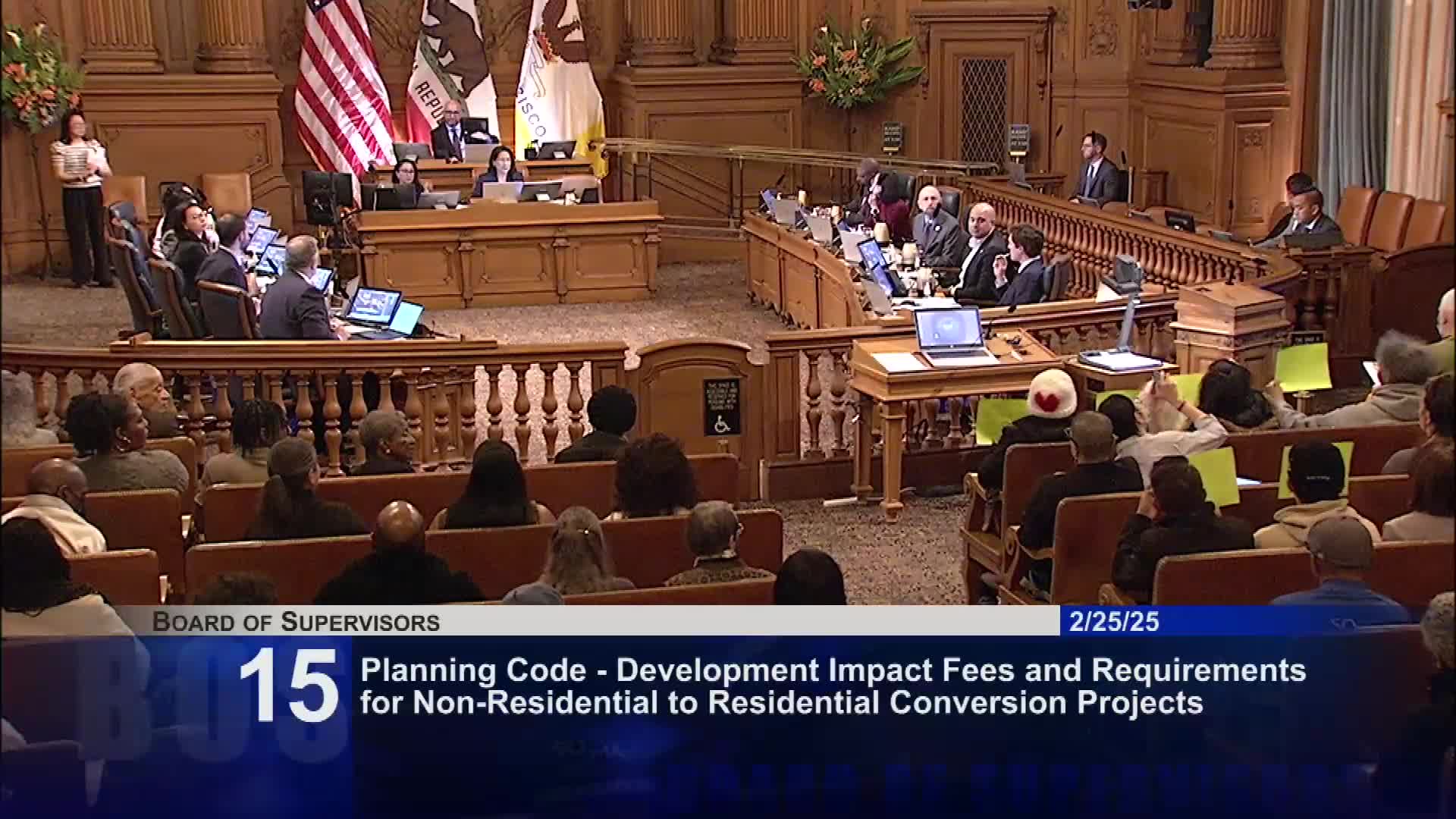
Supervisors pass first reading of downtown office‑to‑housing fee waiver with 7 million‑square‑foot cap
Summary
The board approved on first reading an ordinance to waive certain impact fees and inclusionary requirements for targeted downtown office‑to‑residential conversions, adding a 7,000,000‑square‑foot cap amid heated debate about displacement and fiscal tradeoffs.
The Board of Supervisors voted on first reading on Feb. 25 to advance an ordinance that would waive certain development impact fees, including some inclusionary housing fees, for a targeted set of downtown office‑to‑residential conversion projects.
The ordinance, introduced by Supervisor Matt Dorsey and carried by the Land Use Committee with amendments, seeks to encourage conversion of underused office space into housing in parts of downtown including C2 and C3 zoning districts. Supporters argued the waiver will spur construction and help downtown recover by turning vacant offices into homes. Opponents and several community groups warned that waiving inclusionary requirements and fees risks diverting funding from affordable housing and community services.
A compromise amendment adopted before the vote places a 7,000,000‑square‑foot cap on the total amount of office space that may be converted under the waiver; the sponsors said that cap translates to roughly 7,000 residential units and is designed to limit the fiscal impact while allowing the program to proceed. Land Use Chair Aaron Peskin (Sauter) said the cap “ensures that we do not prematurely short circuit these conversions at an arbitrary date,” while Supervisor Connie Chan urged additional committee review and protections for priority equity neighborhoods.
Why it matters: The ordinance reflects a broader strategy to accelerate downtown recovery and reduce vacancy by incentivizing conversion of offices into housing. The key tradeoff is whether the city should forgo near‑term impact fee revenue and on‑site inclusionary units in exchange for quicker production of market housing and reuse of vacant space.
Board debate and concerns: Speakers raised concerns about effects on cultural and priority equity geographies such as SoMa, the Tenderloin and the Transgender District. Supervisor Shamann Walton called for protections for communities experiencing displacement and urged caution about indefinite fee waivers in neighborhoods that need long‑term affordability safeguards. Several supervisors and community organizations asked for carve‑outs or protections for cultural districts and priority equity neighborhoods; some amendments sought to allow further committee deliberation and public comment.
Vote: The amended ordinance passed on first reading by a 9–2 vote, with Supervisors Walton and Jackie Fielder voting no. The clerk recorded: “There are 9 ayes and 2 nos with supervisors Walton and Fielder voting no.”
Next steps: The ordinance will return for a second reading and final passage at a future board meeting. The Land Use Committee will continue to monitor the program, including reporting requirements to the inclusionary housing technical advisory committee per the ordinance language.
Ending: Supporters characterized the measure as a targeted, temporary way to revive downtown; opponents said more safeguards were necessary to ensure the benefits of conversion flow to long‑term affordable housing and community infrastructure.